Business Card Paper Types Compared: Coated, Uncoated, and Premium Textured Stocks
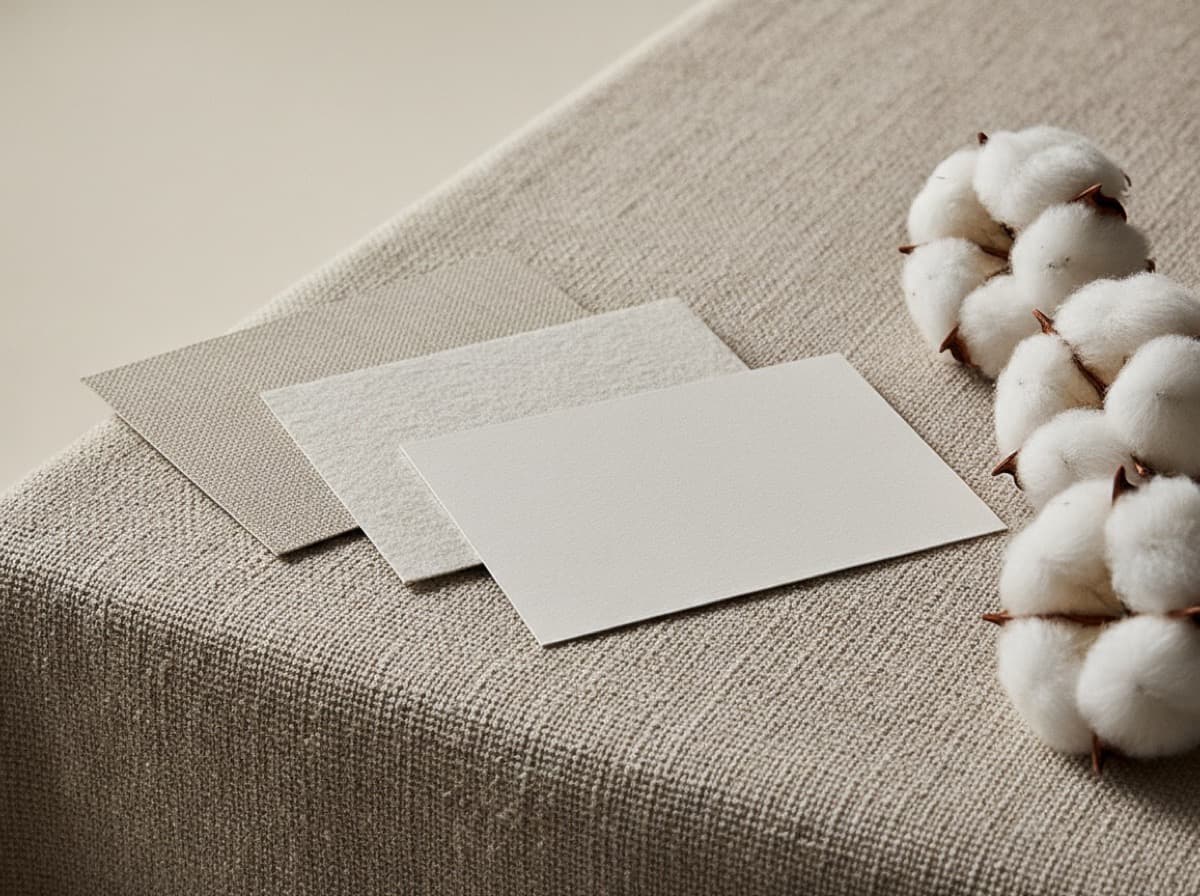
When ordering business cards, the very first decision is paper. The same design printed on different stocks produces a completely different feel in hand, a different color result, and a different brand impression. This guide compares the most widely used business card stocks by weight (gsm) and texture.

Coated Stock
Coated paper has a surface treatment that greatly improves ink holdout and color fidelity. It is ideal for cards that need vivid photos or crisp, saturated logos. High-gloss coated stock delivers strong shine, while silk-coated (semi-gloss) stock offers a subtler, satin sheen. Standard weights range from approximately 250 to 300 gsm.
Uncoated Stock
Uncoated paper has no surface coating, so ink absorbs into the fibers for a natural, organic feel. It is writable — useful if recipients need to jot notes — and projects a calm, professional impression favored by attorneys, consultants, and similar professionals. Colors appear somewhat less saturated on uncoated stock (roughly 10–15% less vivid than coated), so reviewing a proof is especially important.
Premium Textured Stock
Premium papers like felt, linen, or soft-touch specialty sheets feature subtle texture and a refined feel that signals quality the moment a card is touched. These stocks typically run 300 gsm or heavier and are a popular choice for luxury brands and creative professionals. They generally cost more than standard coated stock.
Paper Weight Guide
| Weight | Feel | Typical Use | |--------|------|-------------| | 200 gsm | Light | Flyers, coupons | | 250 gsm | Standard | Everyday business cards | | 300 gsm | Substantial | Premium business cards | | 350 gsm+ | Very heavy | Luxury and layered cards |
Paper Selection Checklist
- Logo or photo color accuracy is critical → coated stock
- Cards need to be writable → uncoated stock
- Premium brand impression is a priority → textured or specialty stock
- Standard business cards → 250–300 gsm recommended
- Planning foil stamping or embossing → 300 gsm or heavier
Frequently Asked Questions
Q. What weight do most business cards use?
The 250–300 gsm range is the most common for standard business cards. Cards below that weight tend to feel flimsy, while cards above 350 gsm may not slide easily into wallet slots.
Q. Is it true that colors look dull on uncoated paper?
Colors do reproduce with somewhat less saturation on uncoated stock. If vivid color is important, coated stock is the better choice. If you prefer a quiet, sophisticated matte look, uncoated is excellent.
Q. Can the same CMYK values look different on different papers?
Yes. A paper's brightness and surface treatment both affect how CMYK inks reproduce. For color-critical work, requesting a printed proof on your chosen stock before the full run is always recommended.
Get 10% off your first order
Join our list for practical printing guides, new finish ideas, and a welcome coupon for your first order.
No spam. Unsubscribe anytime.
Ready to print your business cards?
Order Business CardsNot sure which option fits? Ask Pro Card Crafters