Music Teacher and Music Instructor Business Cards for Private Lesson and School Music Professionals
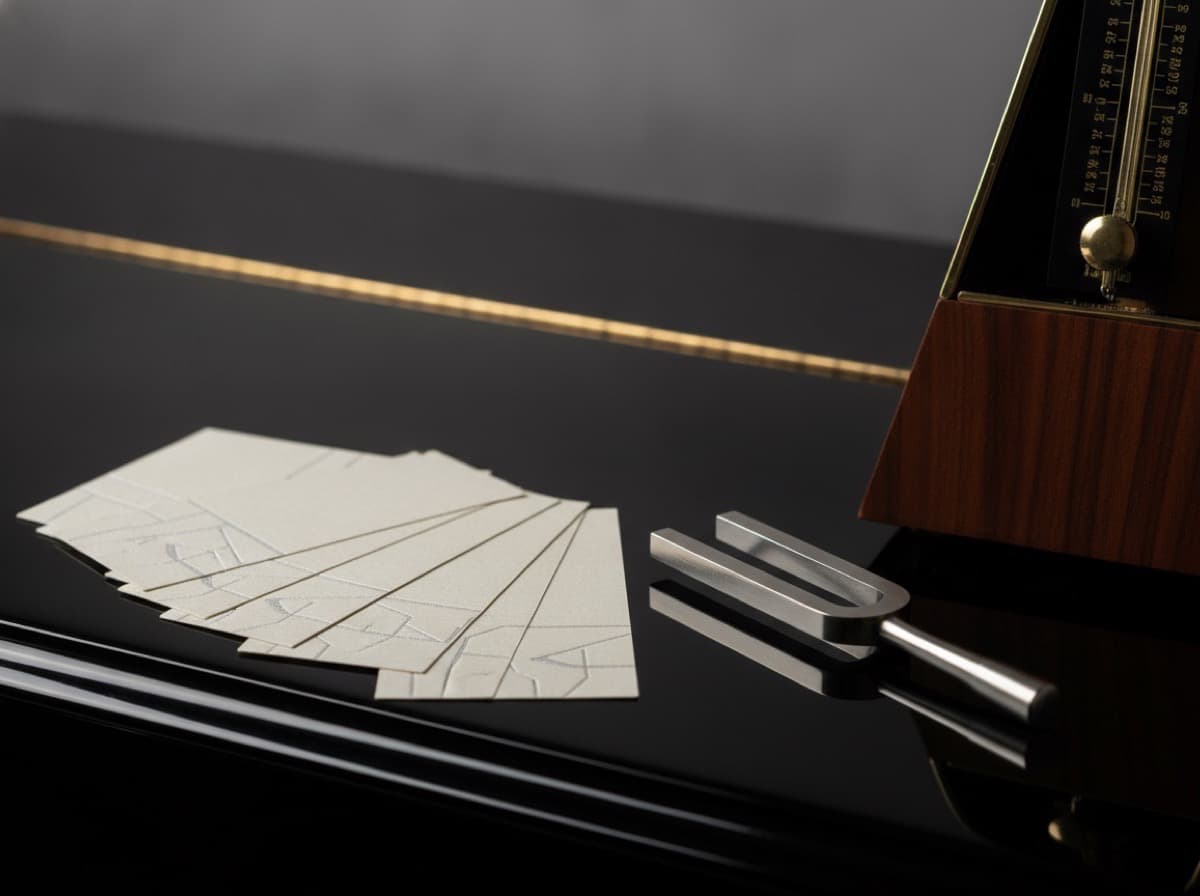
Music teachers and instructors bring the gift of musical literacy and performance skill to students of all ages — from early childhood music education and first piano lessons through advanced technique training, music theory, and performance preparation that can lead a student to a professional musical career or a lifetime of musical engagement. Music instruction is a relationship-centered, referral-driven business where your reputation, the quality of your students' progress, and the personal connections you build in local musical communities drive your studio's growth.
What Music Teacher Cards Include
Your Credentials and Training
Music education degrees:
- B.M. (Bachelor of Music) or B.Mus. — professional music degree; focus areas include Performance, Education, Music Theory, Composition, Jazz Studies, Music Technology
- B.M.Ed. (Bachelor of Music Education) — teacher certification track; prepares for licensed school music teaching
- M.M. (Master of Music) — graduate-level performance or pedagogy
- M.M.Ed. or M.M.E. (Master of Music Education) — graduate-level music education degree
- D.M.A. (Doctor of Musical Arts) — terminal performance degree
- Ph.D. in Music or Music Education — research degree
- B.A. in Music — liberal arts music degree
School teaching credentials:
- State Teaching License / Certificate (Music Education) — state-issued teaching credential for K–12 music education; required for public school teaching; "Certified K–12 Music Teacher" or "Licensed Music Teacher"
- Substitute Teaching Credential — some private lesson teachers also hold
- Orff Schulwerk certification (Level 1/2/3) — American Orff-Schulwerk Association; movement-based approach to music education; popular for early childhood and elementary music
- Kodály Certification (Level 1/2/3) — Organization of American Kodály Educators (OAKE); solfège-based methodology; widely used in elementary music
- Dalcroze certification — rhythmic movement and ear training; Dalcroze Society of America
Music theory and ear training credentials:
- Royal Conservatory of Music (RCM) Certificate / Diploma — Canadian system widely used for grade-level assessment of piano students in the US; "RCM Teacher" or "RCM certified instructor"
- ABRSM (Associated Board of the Royal Schools of Music) Diploma — UK-based grading system; internationally recognized
- Music Educators National Conference (MENC) / NAfME member — National Association for Music Education
Technique certifications (piano specific):
- NCTM (Nationally Certified Teacher of Music) — MTNA (Music Teachers National Association); the leading US certification for private music teachers; requires MTNA membership, teaching experience, and comprehensive professional competency assessment; the most credible voluntary credential for independent studio teachers
- MTNA member (Music Teachers National Association) — primary professional organization for private music teachers; state and local chapter membership also relevant
- Guild Certified (Music Teachers Guild) — varies by region
- Piano Guild (National Guild of Piano Teachers) — audition and recital organization
Performance credentials (often listed on cards):
- Conservatory training and performance background
- "Graduate of [conservatory name]" — Juilliard, New England Conservatory, Eastman, Curtis Institute, etc.
- Professional performance experience (orchestral, chamber, solo)
Your Instrument Specialties and Teaching Levels
Instruments:
- Piano (most common private lesson instrument)
- Classical guitar / acoustic guitar
- Electric guitar
- Bass guitar
- Violin / fiddle
- Viola
- Cello
- Double bass / upright bass
- Voice / singing (see also voice teacher card guide)
- Trumpet
- Saxophone
- Clarinet
- Flute
- Oboe / bassoon
- Drums / percussion
- Banjo
- Ukulele
- Harp
- French horn
- Trombone / tuba
Music theory and related subjects:
- Music theory (functional harmony, voice leading, form and analysis)
- Ear training and solfège
- Music composition
- Music history
- Sight-reading
- Music production (DAW — Ableton, GarageBand, Logic, FL Studio)
- Songwriting
Teaching methodologies:
- Suzuki Method — "Dr. Suzuki's mother tongue approach"; learning by ear first; early childhood
- Faber Piano Adventures — widely used piano curriculum for beginners
- Alfred Piano method — popular beginner piano curriculum
- Royal Conservatory curriculum (RCM)
- ABRSM grade-level curriculum
- Bastien Piano Basics — beginner piano
- Hal Leonard method books
- Orff (for general music / early childhood)
- Kodály (for ear training and solfège)
Student levels and ages:
- Early childhood (ages 3–5 — Little Gems, Musikgarten, etc.)
- Beginner (ages 5–8)
- Intermediate (grades 5–8; 2–5 years of study)
- Advanced (high school; 5+ years; audition preparation)
- Adult learners (returning students, lifelong learners)
- Professional and pre-professional (conservatory preparation, college auditions)
Teaching context:
- Private studio (home studio)
- Music school or conservatory affiliation
- After-school program
- School of music (community or independent)
- Online lessons (Zoom, FaceTime, Lessonface)
Design for Music Teachers
Color palette:
- Black + white: classical, elegant, piano-forward
- Deep purple + gold: music, performance, recital
- Navy + white: professional education
- Warm gold + cream: acoustic warmth
- Modern teal + white: contemporary, tech-adjacent (for music production teachers)
Musical imagery: Piano keys, music notes, staff lines, instrument silhouettes — used tastefully, these work for music cards. Avoid overcrowding.
Back of Card
- "Music Teacher | NCTM | MTNA member | Piano | Guitar | Voice | Violin | [instruments taught]"
- "Suzuki Method | RCM curriculum | ABRSM | Orff certified | Kodály certified"
- "Beginner through advanced | Ages 5–adult | Audition prep | Theory | Sight-reading"
- "In-home studio | Online lessons available | Group theory classes | Recitals"
- "Enroll: [phone] | [email] | [website / booking QR] | [studio name + city]"
Checklist
- [ ] NCTM (if Music Teachers National Association certified)
- [ ] MTNA membership
- [ ] State teaching credential (if school-based)
- [ ] Orff certification (if elementary/early childhood)
- [ ] Kodály certification (if ear training / solfège)
- [ ] Suzuki trained (if applicable)
- [ ] RCM teacher (if using RCM curriculum)
- [ ] Primary instruments taught
- [ ] Age range and levels served
- [ ] Teaching setting (private, online, school)
- [ ] Recitals and performance opportunities
- [ ] Online lesson capability
- [ ] Enrollment contact (phone + email)
- [ ] Booking QR (if using scheduling software)
Get 10% off your first order
Join our list for practical printing guides, new finish ideas, and a welcome coupon for your first order.
No spam. Unsubscribe anytime.
Ready to print your business cards?
Order Business CardsNot sure which option fits? Ask Pro Card Crafters