Software Engineer Business Cards for SWE Developers and Technical Professionals
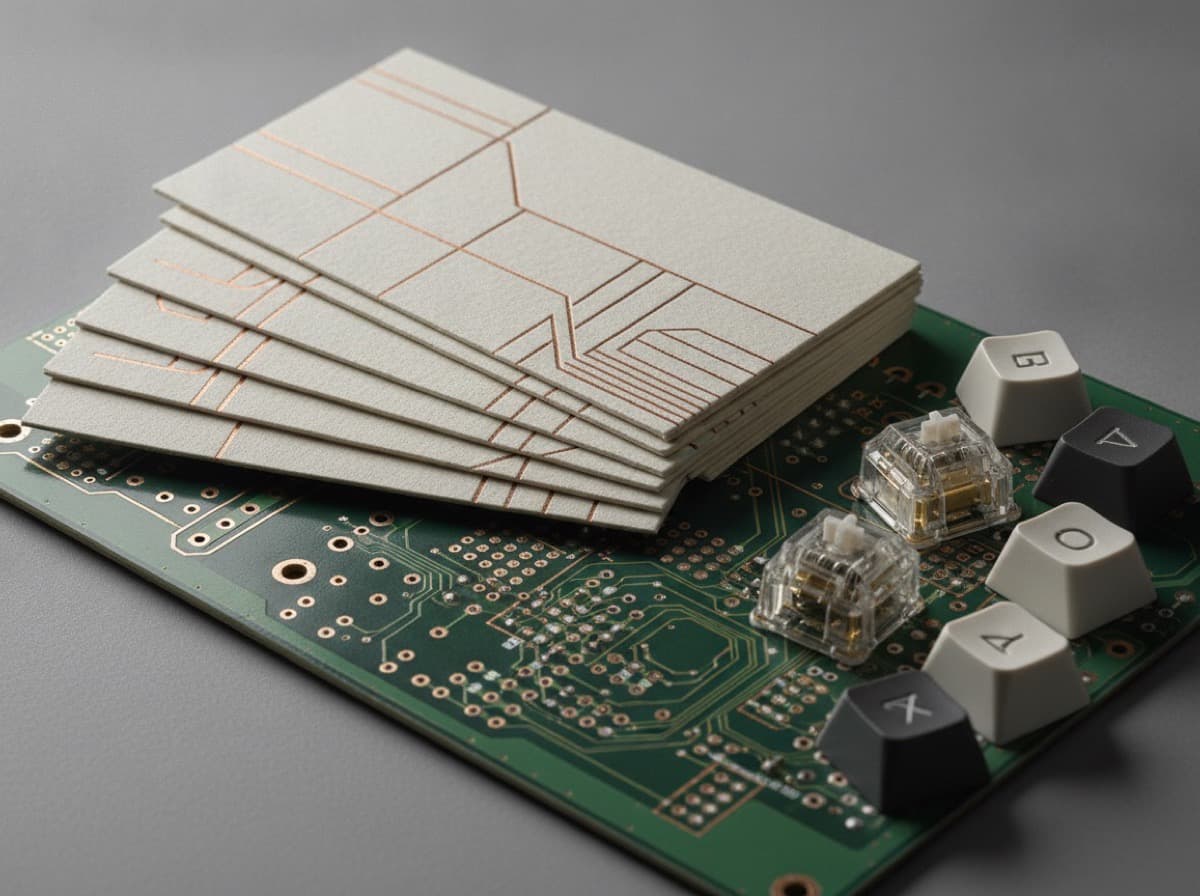
Software engineers, software developers, and technical professionals operate in a networking landscape that is simultaneously highly digital (GitHub profiles, LinkedIn, Stack Overflow, Discord communities) and periodically physical — at engineering conferences (AWS re:Invent, Google I/O, React Conf, PyCon, KubeCon, DockerCon), hackathons, college career fairs, meetups, and the occasional side project networking dinner where a card handed to the right engineer, founder, or recruiter opens a door.
What Software Engineer Cards Include
Your Technical Background
Education:
- B.S. in Computer Science (CS) — the standard software engineering degree; from a CS program at a recognized university
- B.S. in Computer Engineering — hardware + software combined; relevant for systems and embedded
- B.S. in Software Engineering — dedicated SWE degree; some universities
- B.S. in Electrical Engineering — strong signal for embedded, firmware, and hardware-adjacent engineering
- M.S. in Computer Science — graduate degree; "M.S., CS" after name on card (optional; adds weight for senior and research-adjacent roles)
- M.Eng. (Master of Engineering) — professional master's (Cornell, MIT); 1-year program
- Ph.D. in Computer Science — research scientist and applied research roles; "Ph.D." or "PhD Candidate" on card (important signal for research-adjacent positions)
- Bootcamp graduate — coding bootcamp (App Academy, Hack Reactor, General Assembly, Lambda School); not commonly on cards from mid-level+ engineers; more relevant at career-transition stage
Certifications:
- AWS Certified Solutions Architect (Associate or Professional) — Amazon Web Services; widely recognized
- AWS Certified Developer — Associate level
- Google Associate Cloud Engineer / Professional Cloud Architect — Google Cloud
- Azure Developer Associate (AZ-204) / Azure Solutions Architect Expert — Microsoft Azure
- CKA (Certified Kubernetes Administrator) — Linux Foundation
- CKAD (Certified Kubernetes Application Developer) — Linux Foundation
- Terraform Associate — HashiCorp
- Google Professional Data Engineer
- Databricks Certified Developer
- MongoDB Certified Developer
Community recognition:
- GitHub: [username or QR] — the primary technical portfolio for software engineers; more important than certifications for most roles
- Stack Overflow: top X% contributor — community recognition
- open source maintainer — important signal for systems/platform/DevOps engineers
- LeetCode: Not typically on a card; more for internal screening context
Your Engineering Specialty
Backend engineering:
- Server-side application development
- REST API design and development
- GraphQL API development
- Microservices architecture
- Database design (SQL, NoSQL)
- Event-driven architecture (Kafka, RabbitMQ)
- High-performance and scalable systems
Frontend engineering:
- React.js / Next.js
- Vue.js / Nuxt.js
- Angular
- TypeScript
- Web performance optimization
- Accessibility (WCAG, ARIA)
- CSS, Tailwind, CSS-in-JS
- Web animations
Full-stack engineering:
- End-to-end feature development
- Frontend + backend integration
- Full-stack frameworks (Next.js, Remix, SvelteKit)
Mobile engineering:
- iOS (Swift, SwiftUI, Objective-C, Xcode)
- Android (Kotlin, Jetpack Compose, Java, Android Studio)
- React Native (cross-platform)
- Flutter (Dart, cross-platform)
Platform / Infrastructure / DevOps / SRE:
- CI/CD pipeline design (GitHub Actions, Jenkins, CircleCI, GitLab CI)
- Infrastructure as Code (Terraform, Pulumi, AWS CDK)
- Container orchestration (Kubernetes, Docker, Helm)
- Cloud platforms (AWS, GCP, Azure)
- Site Reliability Engineering (SRE — error budgets, SLI/SLO/SLA, incident management)
- Observability (Prometheus, Grafana, Datadog, OpenTelemetry)
- Service mesh (Istio, Linkerd)
- GitOps (ArgoCD, Flux)
Security engineering:
- Application security (AppSec)
- Penetration testing and vulnerability research
- Security architecture
- Identity and access management (IAM)
- Cloud security (CSPM)
Embedded and systems:
- C / C++ systems programming
- Firmware development
- Real-time operating systems (RTOS)
- IoT and edge computing
- Hardware-software integration
- Linux kernel development
Data engineering:
- Data pipelines (Apache Kafka, Apache Spark, dbt, Airflow)
- Data warehouse (Snowflake, BigQuery, Redshift)
- ETL/ELT
QA and test automation:
- Test automation (Selenium, Playwright, Cypress)
- Performance testing (JMeter, k6, Gatling)
- Quality engineering
Technical Stack (Optional on Card)
Software engineers often wonder whether to list their stack. Short answer:
- Do list: 2–4 primary languages or technologies that define your specialty (e.g., "Python | FastAPI | PostgreSQL | AWS" or "TypeScript | React | Next.js | GraphQL")
- Don't list: Exhaustive tool lists (every language you've ever touched becomes noise)
- Context: At a job fair or conference with a technical audience, stack signals are efficient; at a general networking event, a specialty descriptor may be cleaner
Design for Software Engineers
Clean, Technical, Signal-Forward
Software engineer card design:
- Technical credibility over decorative design
- Clean and precise
- GitHub and tech platform integration
Design direction:
- Minimal and information-dense: clean typography, very little decoration, compact contact + credential information
- Dark mode: dark card with white or neon text (reflects terminal aesthetic; works well in tech contexts)
- Brand-matched: if the engineer has personal branding (a developer blog, GitHub profile with a visual identity), the card can match that identity
What to avoid:
- Overly decorative design (engineering culture values function over form for professional cards)
- Missing GitHub (the portfolio link is the most important element)
- Too much stack information (a comprehensive list of technologies becomes noise)
Back of Card
- "Software Engineer | [Level: Senior SWE / Staff | SWE II | Principal]"
- "[Specialty: Backend | Frontend | Full-stack | Mobile | Platform / DevOps | Security | ML]"
- "Python | FastAPI | PostgreSQL | AWS (or relevant stack) | TypeScript | React | Node.js"
- "[Company / Startup / Freelance] | [City or Remote]"
- "GitHub: [QR / @handle] | [email] | [LinkedIn] | [personal site]"
When to Use Business Cards as a Software Engineer
High-value contexts:
- Engineering conferences (AWS re:Invent, Google I/O, React Conf, Stripe Sessions, GitHub Universe) — card tables everywhere; business cards enable fast contact exchange without fumbling with phones
- Hackathons — meeting teammates, mentors, and recruiters in a fast-paced environment
- College career fairs — recruiters accumulate cards; your card stays in their stack while your digital application gets lost in the ATS
- Meetups and local tech community events — social, low-friction card exchange is natural
- Speaking at a conference — attendees approach speakers after talks; a card makes the contact exchange much faster
Lower-value contexts:
- Everyday office interactions (email is faster)
- Large enterprise environments where everyone is on the same platform
- Purely digital networking (LinkedIn request is usually more efficient)
Checklist
- [ ] Engineering title (Software Engineer / SWE / Backend / Frontend / Full-stack / Principal)
- [ ] Level signal (Senior, Staff, Principal — important in engineering hiring)
- [ ] Company or self-description (startup / consulting / freelance)
- [ ] Specialty (backend, frontend, mobile, platform/DevOps, security, ML/AI)
- [ ] Primary stack (2–4 technologies, not exhaustive)
- [ ] Relevant certification(s): AWS SAA, CKA, GCP — if signal-worthy
- [ ] GitHub profile QR or handle (the primary portfolio)
- [ ] Personal website (developer portfolio or blog)
- [ ] Email (professional email, not personal Gmail if at a company)
- [ ] Dark or minimal design (engineering aesthetic)
- [ ] No excessive decorative elements
Get 10% off your first order
Join our list for practical printing guides, new finish ideas, and a welcome coupon for your first order.
No spam. Unsubscribe anytime.
Ready to print your business cards?
Order Business CardsNot sure which option fits? Ask Pro Card Crafters