Speech-Language Pathologist Business Cards That Build Referrals From Medical Providers
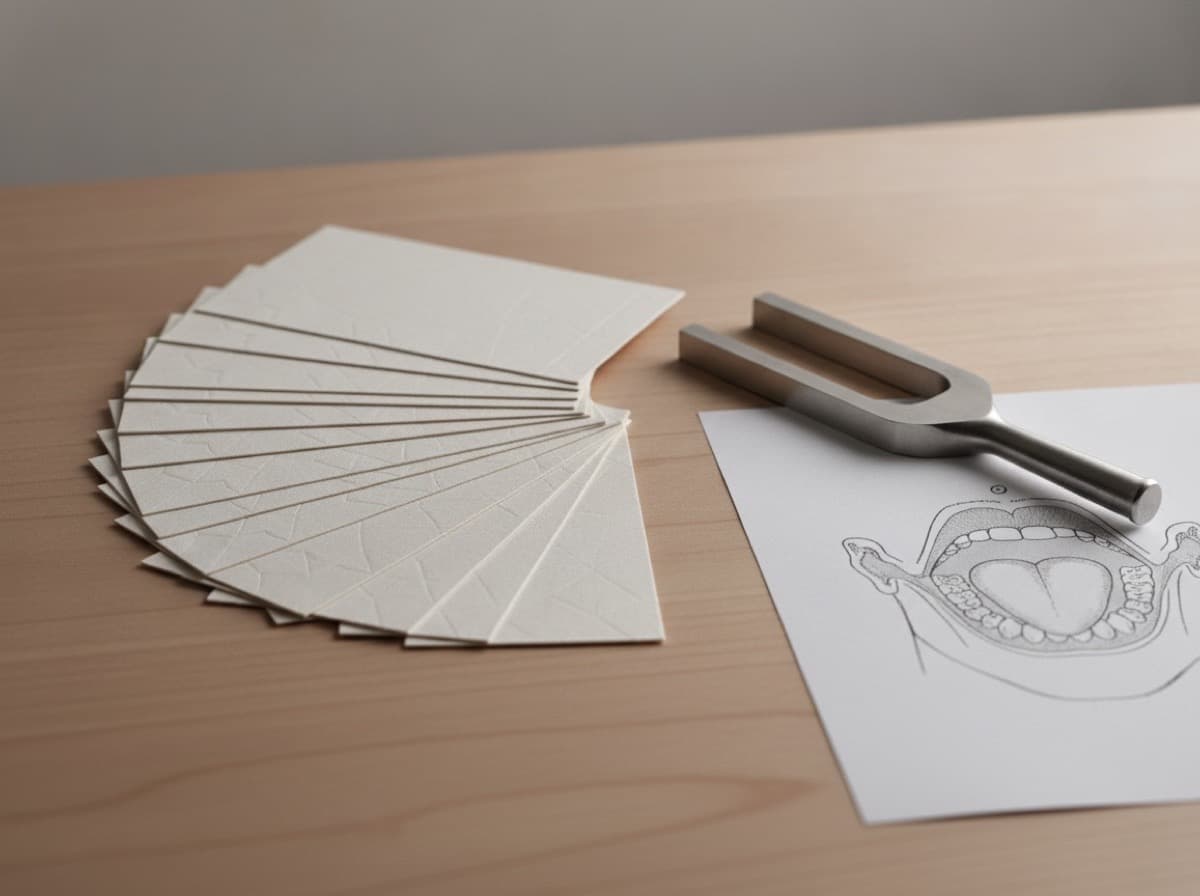
Speech-language pathologists (SLPs) provide assessment and treatment for communication and swallowing disorders across the lifespan — from infant feeding difficulties to aphasia in stroke survivors. As a private practice SLP, your business card circulates primarily through clinical referral networks and early intervention systems.
The SLP Referral Network
Speech therapy referrals come from:
- Pediatricians: One of the highest-volume SLP referral sources for children
- Neurologists: Stroke, TBI, neurodegenerative disease referrals
- Otolaryngologists (ENT physicians): Voice disorders, swallowing, resonance issues
- Schools: IEP-driven referrals to private SLPs for services beyond what schools provide
- Hospital discharge planners: Post-acute care referrals
- Early Intervention program coordinators: Birth-to-3 services (Part C of IDEA)
- Dentists and orthodontists: Myofunctional therapy, tongue thrust
- Audiologists: Hearing loss and language therapy
- Occupational therapists: Feeding therapy collaboration
Your card needs to work in physician offices, hospital waiting rooms, schools, and early intervention settings.
What SLP Cards Must Include
CCC-SLP Credential
The CCC-SLP (Certificate of Clinical Competence in Speech-Language Pathology from ASHA, the American Speech-Language-Hearing Association) is the national credential in the field. It indicates graduate-level training, supervised clinical fellowship, and continuing education.
Your card should show: "CCC-SLP" after your name and/or "ASHA Certified"
State licensure is also required and may be listed:
- "Licensed Speech-Language Pathologist — [State]"
Populations and Disorders You Treat
SLP scope of practice is broad. Referrers need to know you treat their patient population:
Pediatric:
- Late talkers and language delays
- Articulation and phonological disorders
- Fluency (stuttering)
- Autism spectrum disorder (AAC, social communication)
- Childhood apraxia of speech
- Feeding and swallowing (pediatric dysphagia)
- Literacy (reading and writing disorders)
- Hearing loss and cochlear implant therapy
Adult:
- Aphasia (stroke, brain injury)
- Dysarthria
- Cognitive-communication disorders (TBI, dementia)
- Dysphagia (adult swallowing disorders)
- Voice disorders (dysphonia)
- Stuttering and fluency disorders
- Accent modification / professional communication coaching
Service Settings
- In-clinic
- School-based outreach
- Teletherapy (telehealth)
- Home-based (particularly for early intervention)
- "Accepting evaluations and therapy for [age range]"
Insurance and Funding
- "Most major insurance plans accepted"
- "Early Intervention certified provider" (if applicable)
- "Medicaid accepted"
- "Superbills provided for out-of-network reimbursement"
Design for SLPs
Clinical, Warm, Professional
SLP cards serve two different referral contexts simultaneously:
- Physician offices (need to look credentialed and clinical)
- Early intervention and family settings (need to feel warm and child-appropriate)
If you specialize in one population, lean your design toward that context. If you see both children and adults, aim for professionally warm:
For pediatric SLPs:
- Friendly, approachable typography
- Soft colors (not babyish, but not cold)
- Avoid: cartoon-y imagery that undermines clinical credibility
For adult/medical SLPs:
- More clinical and professional
- Medical setting adjacent
Color palette:
- Warm teal + cream: clinical but warm, healing
- Sage + warm white: approachable professional
- Sky blue + white: clean, clinical, communication-adjacent
- Navy + warm white: professional healthcare provider
Design Elements
- Subtle communication or connection motifs: speech bubble (executed subtly, not clip-art), sound waves
- Speech-language pathology's visual language is minimal — focus on clean typography and credentials
By SLP Specialty
Pediatric Language and Articulation
- "Early language development and speech sound disorders — ages 18 months to adolescence"
- "Evaluations and therapy for late talkers, language delays, and articulation"
- "Early Intervention certified"
- Pediatrician-friendly card aesthetic
Autism Spectrum and AAC
- "Communication therapy for autism spectrum disorder"
- "AAC (augmentative and alternative communication) evaluation and training"
- "PECS | LAMP | Core vocabulary approach"
- "Accepting children ages 2-18 — telehealth available"
Stuttering Specialist
- "Fluency therapy — stuttering assessment and treatment"
- "All ages — children through adults"
- "Stuttering Specialist Certification (SSC)" if applicable
- "We treat the communication, not just the dysfluency"
Adult Aphasia / Post-Stroke
- "Aphasia therapy and brain injury communication rehabilitation"
- "Post-stroke, TBI, and neurodegenerative communication disorders"
- "Home visits and telehealth available for adults with mobility limitations"
- Neurologist referral language
Voice Disorders
- "Voice therapy for vocal nodules, polyps, dysphonia, and professional voice users"
- ENT physician collaboration
- "Singer and actor voice rehabilitation"
- "Resonance and vocal hygiene training"
Back of Card
- "Accepting new clients — most insurance plans accepted"
- "Referral intake within 2 business days" (for physician referrers)
- Populations: Pediatric Language | Articulation | Autism | Adult Aphasia | Dysphagia | Voice
- "Telehealth available — in-clinic and home visits also offered"
- ASHA CCC-SLP with brief context: "ASHA Certified Speech-Language Pathologist"
Checklist
- [ ] CCC-SLP credential prominently shown
- [ ] State licensure
- [ ] Age range and populations treated
- [ ] Specific disorders (language, articulation, fluency, voice, swallowing, etc.)
- [ ] Insurance accepted
- [ ] Early Intervention certification if applicable
- [ ] Teletherapy stated if offered
- [ ] Referral intake turnaround (for physician referrers)
- [ ] Clinical-warm design (not too cold, not too child-focused for adult contexts)
Get 10% off your first order
Join our list for practical printing guides, new finish ideas, and a welcome coupon for your first order.
No spam. Unsubscribe anytime.
Ready to print your business cards?
Order Business CardsNot sure which option fits? Ask Pro Card Crafters