Business Card Etiquette: Giving and Receiving
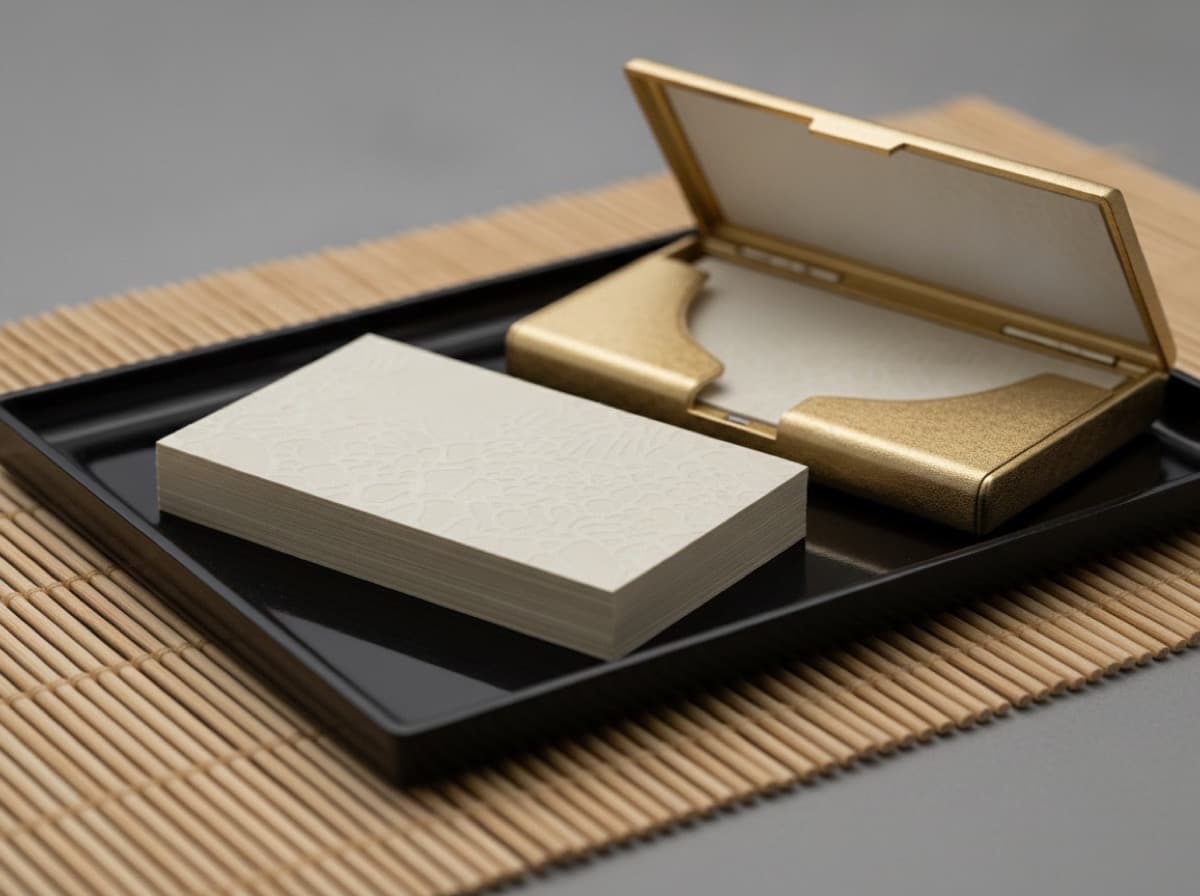
Business card etiquette is the set of understood social rules around how cards are presented, received, and handled — and getting it wrong in a professional context can undermine the networking moment you're trying to create. In most Western contexts, the rules are simple and informal; in East Asian business culture, particularly Japan and South Korea, they're precise and carry real professional weight. Understanding both sets of conventions lets you handle every introduction with confidence, whether you're at a domestic conference or a cross-cultural business meeting. This guide covers when to offer a card, how to receive one respectfully, and what mistakes signal inattention or disrespect in different contexts.
When to offer a business card
Timing matters more than most people think. Offering a card too early — within the first thirty seconds of meeting someone — signals that your goal is to put your name in a database, not to have a conversation. The exchange means more after a conversation worth having.
Appropriate moments to offer:
- At the natural close of a first meeting, when next-step plans have been discussed
- When the other person has expressed specific interest in following up
- At the start of a meeting where multiple people are meeting for the first time (an exception — it functions as an introduction)
- When the other person offers their card first
Moments to avoid:
- Before you know the other person's name or role
- In the middle of a conversation (it interrupts; hold until a natural pause or the end)
- In large group situations where you'd have to interrupt ongoing conversations to distribute cards
- Immediately after being introduced if the introduction is a quick social one with no business discussion
Quality of the exchange matters more than quantity. A card given at the right moment carries more value than ten cards handed out reflexively.
How to present a card
Face-up, facing the recipient. The card should be legible to the person receiving it, not to you. Handing it face-down or sideways requires the recipient to rotate it, which is a small but noticeable signal of inattention.
With a brief phrase. "Here's my card" or "Let me give you my card" with eye contact is enough. An elaborate introduction of the card isn't necessary.
With your right hand (in most Western contexts), or both hands (in East Asian contexts). The two-handed presentation is the baseline expectation in Japan, South Korea, and China, and is always appropriate; the single right-hand presentation is standard in North America and Europe.
From a cardholder, not loose in a pocket. Presenting a card from a dedicated cardholder signals professionalism. A card retrieved from a wrinkled stack in a pocket does not.
How to receive a card
How you receive someone's card tells them how you regard them.
- Take it with both hands (ideally) and look at it. Look at the card for a moment — read the name, note the title, absorb the design. This is not performative; it signals that you're registering the person's identity, not just acquiring contact data.
- Don't write on it immediately. In North American and European contexts, writing a note on a received card to help you remember context is acceptable (and actually useful). In Japanese and Korean contexts, writing on a received card is disrespectful.
- Don't stuff it in your back pocket. The card represents the person. Immediately pocketing it — especially in a back pocket — signals you won't look at it again.
- At a meeting table: place received cards on the table in front of you for the duration of the meeting, in order if you received multiple. This allows you to refer to names and titles correctly and signals respect.
East Asian business card etiquette
Card exchange protocols in Japan, South Korea, and China are formalized and carry professional meaning. The specific rules differ slightly by country, but the shared principles are:
Both hands for giving and receiving. This applies to all parties, always.
Bow slightly when giving and receiving. The depth of bow varies by relationship and context, but a small acknowledgment of respect is expected.
Read the card when you receive it. Take a moment to look at the card, acknowledge the person's name and role, and perhaps comment respectfully. "Murakami-san, I see you're head of sales for the Tokyo office — thank you for the time today."
Do not write on a received card. This is the rule most frequently violated by Western visitors who haven't been briefed. In Japanese business culture especially, writing on someone's card is akin to defacing something of theirs.
Treat the card with physical care. Don't bend it, slide it into a jacket pocket carelessly, or put it in a card pile without looking at it. Cards collected during a meeting should be kept organized and treated with care throughout.
Have your card translated on the reverse. When doing business in Japan, South Korea, or China, it's expected and respectful to have the back of your card printed in the local language and script.
Common Western mistakes
Handing out cards indiscriminately. Treating a card as a marketing flyer — pushing one at everyone in a room — reads as low investment in every individual relationship.
Running out of cards. Going to a networking event without cards, or exhausting your supply early, signals poor preparation.
Handing out a damaged card. A bent, coffee-stained, or handwritten-correction card signals that you didn't think the interaction was worth proper preparation.
Not having a card ready. Fumbling for a card while someone waits is an avoidable awkward moment. Keep a small stack accessible — front of a bag, dedicated outer pocket — so the handoff is smooth.
Not following up. The card exchange sets up a follow-up; not following up after a substantive exchange wastes the card's purpose.
Storing received cards
The goal of receiving a card is to make the connection actionable. Within 24 hours of an event:
- Scan or enter the contact information into your contacts app
- Add a note about where you met and any context from the conversation
- Decide on a follow-up action and set a reminder if appropriate
A card that sits in a pile unscanned eventually becomes useless because the context fades. The card exchange is the beginning, not the end.
Bottom line
Offer cards at the end of a substantive interaction, not at the beginning of a cold introduction. Present face-up, face the recipient. Receive cards with both hands and look at them. In East Asian business contexts, follow the two-handed protocol, never write on received cards, and prepare translated cards for international visits. The card exchange is a social ritual with professional weight — treat it as such.
Frequently Asked Questions
When should you give someone a business card?
At the natural close of a first meeting, when the conversation has established a reason to follow up — not in the opening moments. Offering a card too early suggests you're networking rather than connecting. The best moments are when next steps are being discussed, or when the other person offers their card first.
Is it rude to write on a received business card?
In Western contexts, writing a brief note to yourself on a received card (context about where you met, for example) is acceptable and even practical. In Japanese and Korean business culture, writing on someone's business card is considered disrespectful — treat the card as an extension of the person.
How should you receive a business card?
Take it with both hands (or at least with your right hand), look at it for a moment to register the name and title, and acknowledge it before putting it away. At a meeting, leave received cards on the table for the duration of the meeting and handle them with care. Don't immediately pocket a card without looking at it.
How should you present a business card?
Present it face-up and facing the recipient, from a cardholder rather than loose in a pocket. In North American and European contexts, presenting with your right hand is standard. In East Asian business contexts, use both hands and accompany the gesture with a slight bow.
What is the proper way to exchange business cards in Japan?
Present your card with both hands, facing the recipient, with a slight bow. Receive the other party's card with both hands, look at it respectfully, and acknowledge the person's name and title. During a meeting, place received cards on the table in an organized manner. Never write on a received card.
Is it necessary to have business cards translated into another language for international business?
For Japan, South Korea, and China, printing the reverse side of your card in the local language and script is expected and a signal of respect. In most other international contexts, an English card is acceptable, but a translated card is always appreciated and remembered.
Get 10% off your first order
Join our list for practical printing guides, new finish ideas, and a welcome coupon for your first order.
No spam. Unsubscribe anytime.
Ready to print what your business needs?
Browse Printing ProductsNot sure which option fits? Ask Pro Card Crafters