Mini Business Cards Guide: Small Format Card Design, Uses, and Printing Options
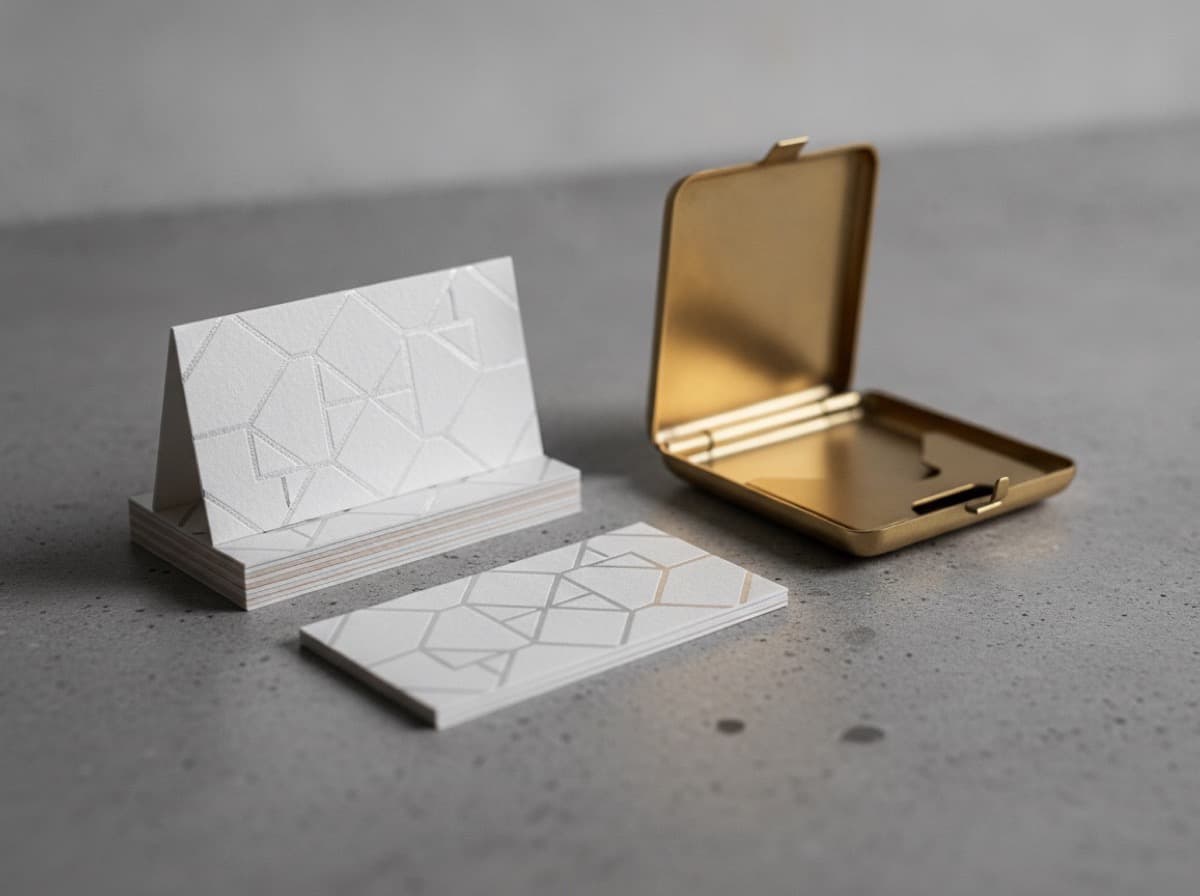
Mini business cards are professional cards produced in a format smaller than the standard 3.5" × 2" business card size — most commonly 3.5" × 1.75" (half-height), 2.5" × 2.5" (mini square), or 2" × 2" — that offer several distinct advantages: they fit in minimalist card holders and wallets with less bulk, they create an immediate impression of novelty and intentionality, and they can serve specific functional purposes beyond standard contact information exchange.
Common Mini Business Card Sizes
3.5" × 1.75" (Half-Height) — Most Popular Mini Size
- Dimensions: 3.5 inches wide × 1.75 inches tall (standard width, half the standard height)
- Also known as: half card, slim card, landscape mini card
- Why it's popular: The standard width means it slots into standard business card holders alongside normal cards; only the reduced height distinguishes it from a standard card
- Best for: Contact-forward minimalist cards where you want a distinctive format without losing compatibility with standard card holders; photography pricing or info cards; loyalty card series
- Design approach: The reduced height requires tighter information hierarchy; typically used for essential information only (name, title, phone, email, website + QR) without supporting detail
- Bleed: Document size 3.75" × 2" (0.125" bleed on all four sides); trim at 3.5" × 1.75"
2.5" × 2.5" (Mini Square)
- Dimensions: 2.5 inches × 2.5 inches
- Also known as: square mini card, cocktail napkin card
- Why it's distinctive: The square format creates equal weight on both dimensions; stands out visually from rectangular cards; memorable and somewhat playful
- Best for: Creative professionals (designers, photographers, illustrators, stylists), hospitality (bar, restaurant, boutique hotel), wellness and lifestyle brands, food producers
- Design approach: Symmetrical format favors centered compositions or strong geometric design; allows for a clean product/portfolio image on the back; the square format feels more social and less formal than rectangle
- Bleed: Document size 2.75" × 2.75" (0.125" bleed on all four sides)
2" × 2" (Small Square)
- Dimensions: 2 inches × 2 inches
- Why it's distinctive: Very small, very minimal; almost postage-stamp scale; striking in its smallness
- Best for: Luxury goods, artisanal brands, photographer tags, product labels, high-concept designers; contexts where the extreme minimalism of the format is itself a brand statement
- Design approach: Only the most essential information fits — typically name + one contact method + QR; the card design must be clean and must work at very small scale
- Challenge: Text must be readable at 2" width — minimum approximately 7pt type for body text; logos and fine detail must be simplified
2" × 3.5" (Tall/Portrait Card)
- Dimensions: 2 inches wide × 3.5 inches tall (narrow portrait orientation)
- Standard height, reduced width
- Best for: Bookmark cards (tall format works as a bookmark while fitting in pockets), fashion and apparel professionals, event programs, product hangtags
- Design approach: Tall portrait layout; content stacks vertically; the reduced width requires tight layout discipline
3.5" × 1.5" and Other Custom Sizes
- Custom widths and heights are possible through die-cutting
- Slim cards can be as narrow as 1.5" tall
- These are typically custom die-cut orders rather than standard pre-cut sizes; add die setup cost and production time
Creative Uses for Mini Business Cards
Photographer Print Tags and Product Cards
- Small square (2" × 2") or slim rectangle (3.5" × 1.75") cards affixed to photographic prints
- Include: photographer name, website, and optional edition/print info
- Printed on the back of prints or tucked in print envelopes; a professional finishing touch
- Design: clean, minimal, typographic; let the photograph be the focus
Loyalty and Punch Cards
- Loyalty punch cards: 3.5" × 1.75" or 2.5" × 2.5" with a grid of punch circles or stamps; "After 10 visits, your next is free"
- Use cases: coffee shops, yoga studios, beauty services, pet groomers, spas, restaurants
- Mini size fits in wallets naturally alongside credit cards and standard cards
- Design: clear brand identity on front; punch/stamp grid on back; make the punch boxes clearly sized for a standard hole punch or rubber stamp
Product Insert Cards
- Small cards tucked inside packaging (unboxing experience)
- Include: brand identity, product care instructions, warranty information, website, and "Thank you" message
- Mini size (2" × 2" or 2.5" × 2.5") fits inside product boxes without folding
- The card elevates the unboxing experience; signals premium brand attention
"Leave Behind" Sales Support Cards
- Smaller than standard cards; can be left with promotional materials or product samples
- Include: product category, key selling points or USPs (3–5 bullet points), website/ordering info
- Useful for sales reps leaving a card with a sample; the mini card reinforces the product sample
Event or Conference Cards
- When attending multiple-session conferences, some professionals use mini cards for speed: stripped to name + contact only + QR
- The tiny card is memorable precisely because it's different from every other card in the recipient's collection
"Thank You" Cards
- Very small (2" × 2" or smaller) cards with a simple "Thank you" message
- Included with packages, gift orders, or service deliverables
- Personalized with a handwritten note space on the back
Design Considerations for Mini Cards
Typography Scale
The most critical challenge in mini card design: text must remain readable at small scale.
Minimum type sizes:
- Name: 10–12pt minimum (should be the most prominent element)
- Title and company: 8–10pt
- Contact information: 7–8pt
- Fine print / secondary info: 7pt minimum (test readability before printing)
Font choice for small formats:
- Avoid highly condensed typefaces (harder to read at small scale)
- Avoid delicate/thin serif fonts (thin strokes disappear at small print size)
- Prefer: open, legible typefaces with moderate stroke weight (clean sans-serifs like Helvetica, Inter, Futura, Source Sans; or readable serifs like Garamond at higher weight settings)
Logo and Brand Mark Simplification
- Logos that work at standard business card size may not work at mini card size
- Simplify: avoid fine detail in logos for mini cards; use a simplified version, monogram, or icon mark
- Test at actual print size before finalizing
Information Hierarchy: Prioritize Ruthlessly
Mini cards require aggressive information editing:
- Include: name, single title, primary phone or email, website, QR code
- Exclude: physical address, multiple phone numbers, social handles (link via QR instead), certifications (unless primary identifier)
- The goal is legibility and function, not comprehensive disclosure
Back of Mini Card
- Despite the small size, the back is still valuable real estate
- Options: full-bleed image, bold brand color, QR code, loyalty punch grid, product information
- Don't leave it blank — that's wasted space, and the print cost is the same
Printing Options for Mini Cards
Online card printers with mini card options:
- Most major business card printing services offer standard mini sizes (3.5" × 1.75" and 2.5" × 2.5") as catalog items
- Custom sizes outside these standards typically require custom die-cut orders
- Prices are generally comparable to or slightly less than standard card pricing per unit
- Same finishing options apply: matte laminate, gloss, soft-touch, spot UV, foil
File setup for mini cards:
- Same technical requirements as standard cards: CMYK, 300 DPI, bleed (0.125" per side), safe zone (0.125" inside trim)
- Document dimensions: add 0.25" to both width and height for bleed zone
- Example: 3.5" × 1.75" card → document size: 3.75" × 2.00"
- Example: 2.5" × 2.5" card → document size: 2.75" × 2.75"
When to Use Mini Cards
Mini cards are the right choice when:
- You want a memorable format that stands out in a stack of standard cards
- Your contact information is minimal and the card needs only essential fields
- The card serves a secondary function (loyalty, tag, insert, thank-you)
- Your brand identity is design-forward and the format itself is a brand statement
- You're a photographer creating print tags or portfolio identification
- You're a creative professional and the card is itself an aesthetic object
Standard cards are the better choice when:
- You have substantial professional information to communicate (credentials, multiple contacts, services list)
- Your audience is traditional or conservative (corporate, financial, legal, medical)
- Card holder compatibility matters (mini cards may not fit standard horizontal card holders)
- Volume is high and standard production pricing is preferable
Checklist for Mini Business Card Design
- [ ] Size selected: 3.5"×1.75" / 2.5"×2.5" / 2"×2" / custom
- [ ] Document size includes 0.125" bleed on all sides
- [ ] Safe zone margin maintained (0.125" inside trim)
- [ ] All text 7pt minimum (preferably 8pt+)
- [ ] Logo simplified for small-format legibility
- [ ] Information edited to essential only: name, contact, QR
- [ ] Back designed (loyalty grid / image / color block / QR)
- [ ] Both sides proofed at actual print size
- [ ] Paper and finish specified (same options as standard cards)
- [ ] Test proof ordered before full quantity
Get 10% off your first order
Join our list for practical printing guides, new finish ideas, and a welcome coupon for your first order.
No spam. Unsubscribe anytime.
Ready to start your print order?
Browse Printing ProductsNot sure which option fits? Ask Pro Card Crafters