Brochure Folding Guide: Half Fold, Tri-Fold, Accordion, and Gate Fold
When planning a brochure, the first decision to nail down is the folding style. Even with the same sheet of paper, the fold you choose determines the number of panels, how information flows, and how the print file must be set up.

The Four Most Common Fold Types
Half Fold
The sheet is folded once down the center, creating four panels (front cover, back cover, and two interior faces). It's the simplest configuration — great for menus and basic informational inserts.
Tri-Fold (Letter Fold)
The sheet is divided into thirds and folded so one panel wraps inside the other. This is the most common format for company brochures and product literature, yielding six panels total.
Accordion Fold (Z-Fold)
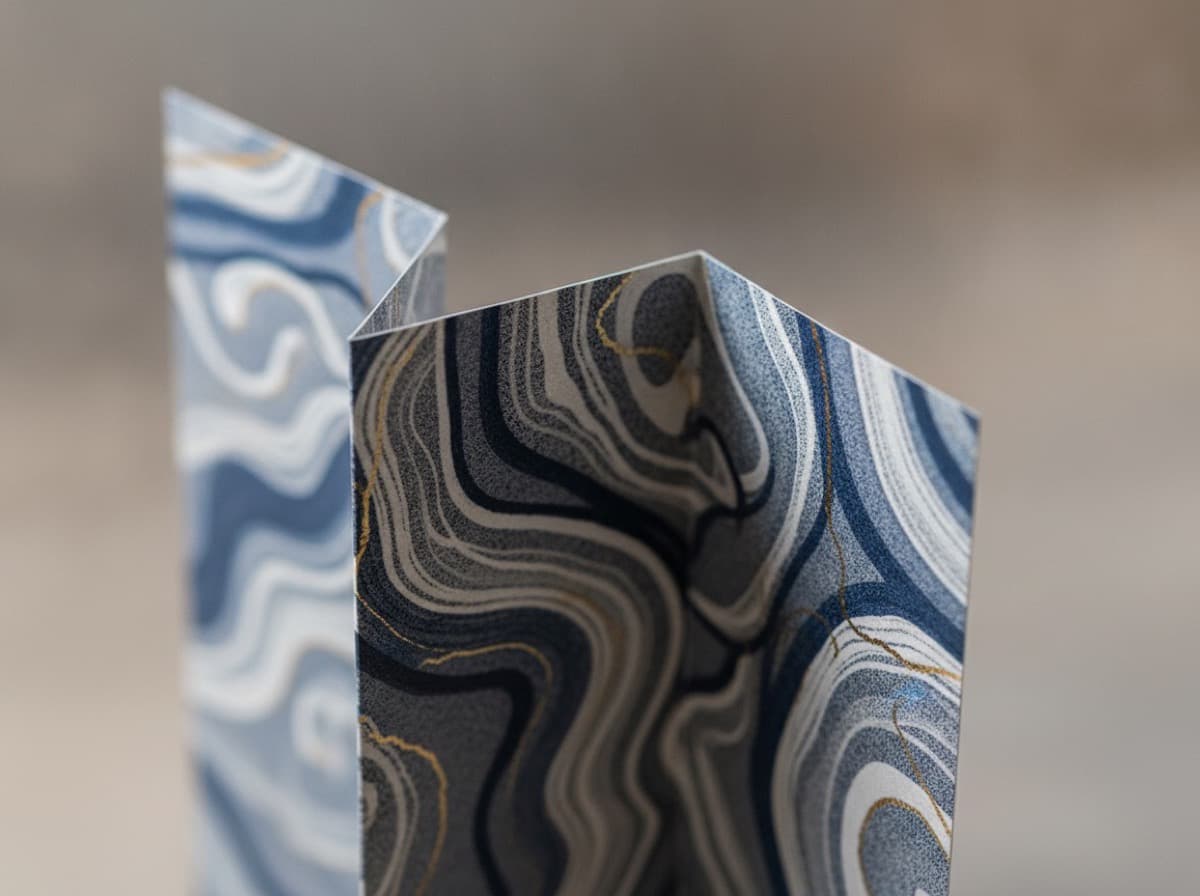
Panels fold in alternating directions like a zigzag, so the entire piece opens out at once. This layout works especially well for step-by-step processes, timelines, and maps.
Gate Fold
Two outer panels open from the center like a pair of doors to reveal a large interior spread. The dramatic reveal makes gate folds popular for premium product launches, real estate presentations, and luxury brochures.
Panel Width Calculation Is Critical
One of the most common brochure production mistakes is setting all panels to equal widths. The panel that folds inward must be 2–3 mm narrower than the outer panels to account for paper thickness — otherwise the piece won't close cleanly.
| Fold Type | Panels | Inner Panel Width Adjustment | |-----------|--------|------------------------------| | Half Fold | 4 | No adjustment needed | | Tri-Fold | 6 | Innermost panel: reduce by 2–3 mm | | Accordion Fold | 6+ | Minimal adjustment needed | | Gate Fold | 6 | Each wing: reduce by 2–3 mm |
Production Checklist by Fold Type
- Paper heavier than roughly 80 lb cover stock requires scoring before folding — without it, the fold will crack
- Design for the open spread, but always check legibility of the cover in its folded state
- Never place critical text or logos on or near panel fold lines
- Submit artwork as a single flat spread (unfolded layout), not as separate pages
Frequently Asked Questions
Why do tri-fold panel widths need to differ?
The innermost panel wraps inside the other two, so it must travel slightly farther around the paper thickness to sit flush. Reducing it by 2–3 mm ensures the brochure closes without buckling.
Can I fold heavy paper without scoring?
For paper heavier than roughly 80 lb cover stock, scoring is strongly recommended. Folding unscored heavy stock will cause the coating and ink to crack along the fold line.
Get 10% off your first order
Join our list for practical printing guides, new finish ideas, and a welcome coupon for your first order.
No spam. Unsubscribe anytime.