Business Card Paper and Coating Comparison: Weight, Finish & Stock Guide
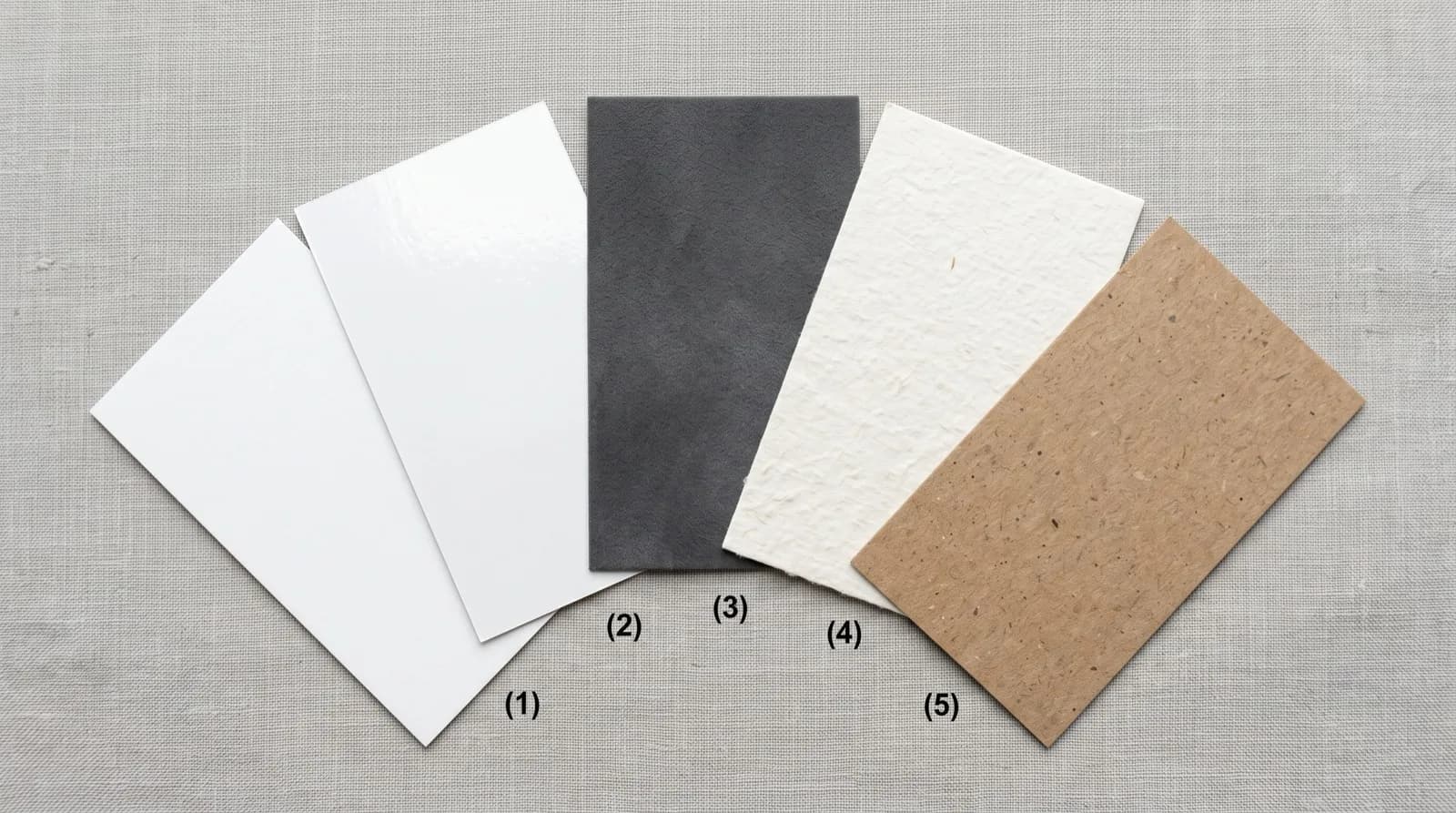
If you only remember one thing: paper choice is decided by two numbers and one texture — weight (how thick and substantial the card feels), finish (how the surface behaves), and fiber (what the paper is made of). Get those three right and the card feels considered before anyone reads a word. This guide compares every common business-card stock and coating so you can match the material to the impression you want.
Why the stock decision comes first
People judge a card with their hands before their eyes finish reading it. Weight and texture are processed as "quality" signals almost instantly, and they're the one thing a competitor can't screenshot. That's why the paper decision should come before color, layout, or finish — the stock sets the ceiling for how premium the whole card can feel, and some finishes are only possible on certain stocks.
There are three variables to lock down, in order:
- Weight — measured in gsm (grams per square meter) or pt (points, in the US). Higher = thicker and more substantial.
- Finish/coating — matte, gloss, soft-touch, uncoated, or specialty. Governs sheen, writability, and hand-feel.
- Fiber/base — standard cardstock, cotton, recycled, kraft, or synthetic. Governs texture and character.
Understanding weight: gsm and points
Weight is the single biggest driver of perceived quality. A standard flyer is around 150gsm; a card that feels flimsy sits near 250gsm; a solid business card starts around 350gsm; premium cards run 400–600gsm, and luxury duplexed cards can exceed 600gsm.
| Weight (gsm) | Feel | Typical use | |---|---|---| | 250–300 | Light, bends easily | Budget cards, loyalty cards | | 350–400 | Standard, sturdy | Most professional cards | | 450–500 | Noticeably substantial | Premium cards | | 600+ (often duplexed) | Rigid, "credit-card plus" | Luxury, letterpress, edge-painted |
The jump from 300 to 400gsm is the one most people can feel blind, and it's usually the highest-return upgrade you can make. Beyond about 500gsm you're paying for a specific effect — rigidity, an edge to paint, or a surface deep enough for letterpress — rather than a general quality bump.
Coatings and finishes compared
Coating is applied over the printed stock and changes three things: sheen, durability, and whether you can write on it.
Matte coating
A low-sheen, smooth surface. Matte reduces glare, makes colors look refined rather than punchy, and is generally writable with the right pen. It's the safe premium default: it photographs well, hides fingerprints better than gloss, and pairs with almost any finish on top.
Gloss coating
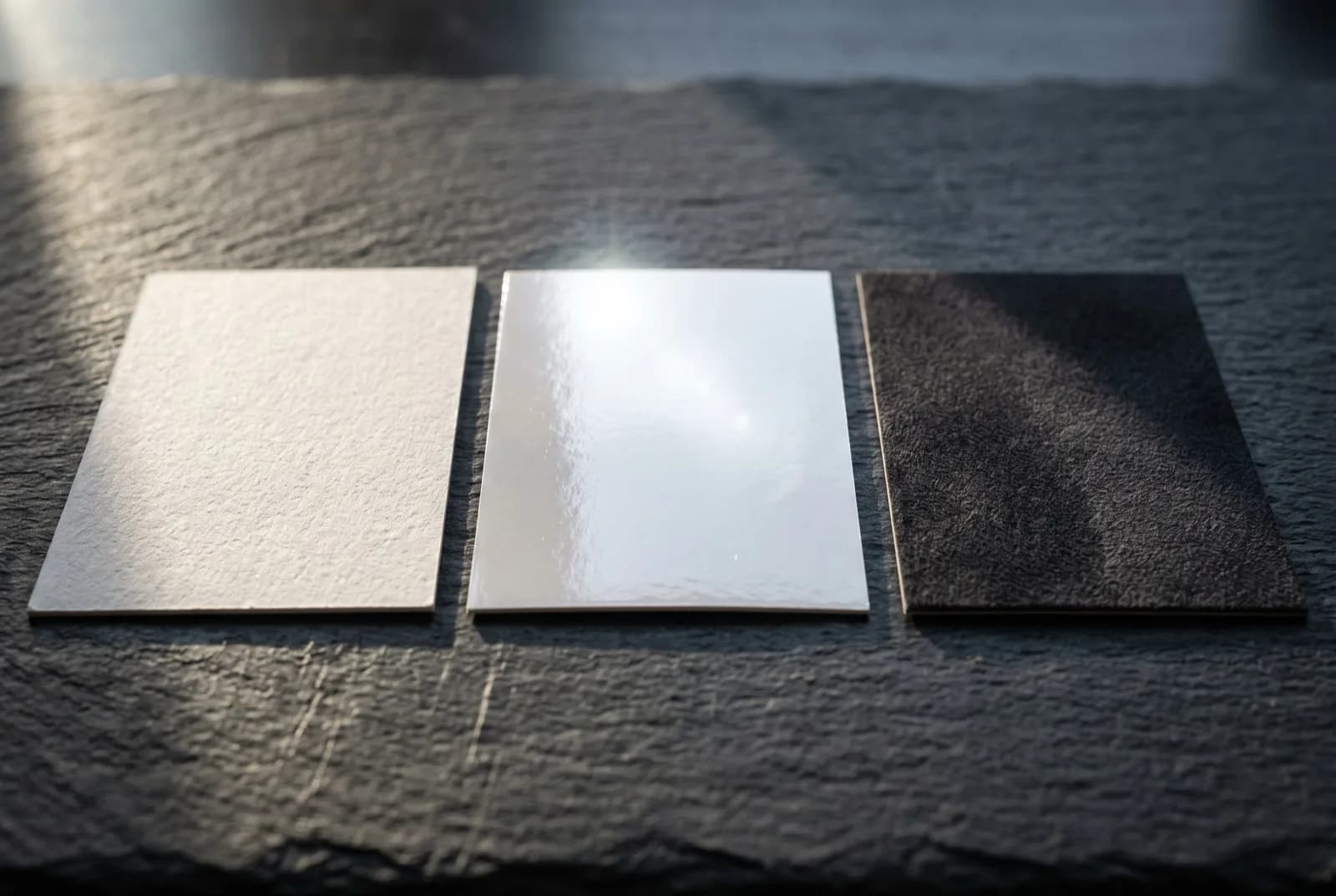
High shine, vivid color, and strong durability against moisture and scuffs. Gloss makes photographs and saturated brand colors pop, which is why it's common for visual businesses. The trade-offs: it shows fingerprints, creates glare under harsh light, and you generally can't write on it.
Soft-touch (suede) lamination
A matte film with a velvety, almost rubberized feel. Soft-touch is the most "expensive-feeling" coating per dollar because the hand notices it immediately. It resists fingerprints, provides a superb base for foil or raised UV contrast, and reads as understated luxury. It is not writable and adds a lamination step.
Uncoated
No coating at all — the natural paper surface. Uncoated stock feels honest and tactile, takes pen and stamp beautifully, and suits letterpress and craft aesthetics. Colors print slightly softer and less saturated because ink soaks in, so don't expect gloss-level vibrancy. Ideal when "authentic" or "handmade" is the message.
Specialty and alternative stocks
Cotton stock
Made from cotton fibers rather than wood pulp, cotton stock is soft, thick, and luxuriously tactile. It's the traditional home of letterpress because it takes a deep impression, and it feels distinctly different from standard cardstock. Expect a premium price and a soft, matte color rendering.
Recycled and kraft
Recycled stock carries an environmental signal and a subtly textured surface; kraft is the warm brown, natural-fiber look associated with craft and sustainability brands. Both render color softer than coated stock — dark inks and white overprint tend to look best. Choose these when your brand story is part of the pitch.
Synthetic and plastic
Waterproof, tear-resistant, and durable, synthetic stocks (including translucent and frosted plastics) make a striking, modern statement and survive wallets and weather. They're more expensive, can't be written on with most pens, and require a printer equipped for the material.
The comparison at a glance
| Stock / coating | Hand-feel | Color pop | Writable | Fingerprints | Best for | |---|---|---|---|---|---| | Matte coated | Smooth, refined | Medium-high | Usually | Low | Safe premium default | | Gloss coated | Slick, shiny | High | No | High | Photos, vivid brand color | | Soft-touch | Velvety | Medium | No | Very low | Understated luxury, foil base | | Uncoated | Natural, tactile | Medium (soft) | Yes | Low | Craft, letterpress, stamps | | Cotton | Soft, thick | Soft | Yes | Low | Luxury, deep letterpress | | Recycled / kraft | Textured, warm | Soft | Yes | Low | Sustainability story | | Synthetic | Slick, rigid | High | No | Medium | Durability, modern statement |
How to choose your stock in four steps
- Set the weight floor first. For a professional card, don't go below 350gsm; 400gsm is the sweet spot for feel-versus-cost. Only go to 600gsm+ if you need letterpress, edge painting, or maximum rigidity.
- Pick the coating by behavior, not looks. Need to hand-write notes on it? Uncoated or matte. Showcasing photography? Gloss. Chasing quiet luxury? Soft-touch. Telling a sustainability story? Recycled or kraft.
- Confirm your finish is compatible. Foil and raised UV love soft-touch and dark matte; letterpress and embossing need cotton or heavy uncoated; gloss fights most tactile finishes. Our premium finishes guide maps each finish to its stock.
- Order swatches or a proof. Weight and texture cannot be judged on a screen. A swatch pack or printed proof settles the decision in seconds and prevents an expensive reprint.
File-prep notes that depend on your stock
Your stock choice changes how you should build the file:
- Uncoated and cotton absorb ink, so colors print softer and darker — bump saturation slightly and avoid relying on delicate pale tints.
- Gloss and synthetic hold ink on the surface, so fine detail and small text stay crisp; you can trust tighter typography.
- Heavier stocks need generous bleed and safe margins because thicker cards are cut with slightly more variance.
- If you plan to write on the card, choose uncoated or matte and test a pen on the actual stock — many gel and marker inks smear on coated surfaces.
For layout and content decisions once your material is set, see our companion guide on networking card design that converts.
Frequently Asked Questions
What is the best paper weight for a business card?
For a professional card, start at 350gsm and treat 400gsm as the value-for-feel sweet spot — it's the weight most people can identify as "substantial" without seeing it. Go to 600gsm or duplexed stock only when you need a specific effect like letterpress, edge painting, or maximum rigidity, since beyond about 500gsm you're paying for that effect rather than a general quality increase.
What's the difference between matte and gloss business cards?
Gloss is shiny and durable, makes colors and photographs pop, but shows fingerprints, creates glare, and can't be written on. Matte has a low-sheen, refined surface that reduces glare, hides fingerprints, is usually writable, and pairs well with additional finishes. Matte is the safer premium default; gloss suits vivid, photo-heavy designs.
Should I choose coated or uncoated stock?
Choose uncoated if you value a natural, tactile feel, want to write or stamp on the card, or are printing letterpress — just expect slightly softer colors because ink soaks in. Choose coated (matte, gloss, or soft-touch) for stronger color, more durability, and a smoother surface. If you're unsure, matte coated is the versatile middle ground.
What makes soft-touch business cards feel so premium?
Soft-touch is a matte lamination with a velvety, almost rubberized surface that the hand registers immediately, which is why it reads as understated luxury. It also resists fingerprints and provides a high-contrast base that makes foil or raised UV accents feel more deliberate. The trade-off is that it isn't writable and adds a lamination step.
Are recycled or kraft business cards worse quality?
No — they're a different aesthetic, not lower quality. Recycled and kraft stocks feel textured and warm and support a sustainability story, but because the fibers absorb ink, colors render softer and dark inks or white overprint look best. They're an excellent choice when your environmental values are part of the message; they're a poor choice when you need vivid, saturated color.
Do I need to order a sample before printing?
Yes, whenever possible. Weight and texture are physical qualities you can't judge on a monitor, and they're the exact attributes that make a card feel premium or cheap. A swatch pack or a single printed proof lets you confirm the stock feels right and prevents the costliest mistake — reprinting a full run because the paper wasn't what you imagined.
Lock the weight first, pick the coating by how you'll actually use the card, confirm your finishes are compatible, and always feel a sample before committing. The right stock makes everything printed on it look better.
Ready to send your file to print?
Order Business CardsNot sure which option fits? Ask Pro Card Crafters