Business Card Sizes: Standard US, International, and Custom Dimensions
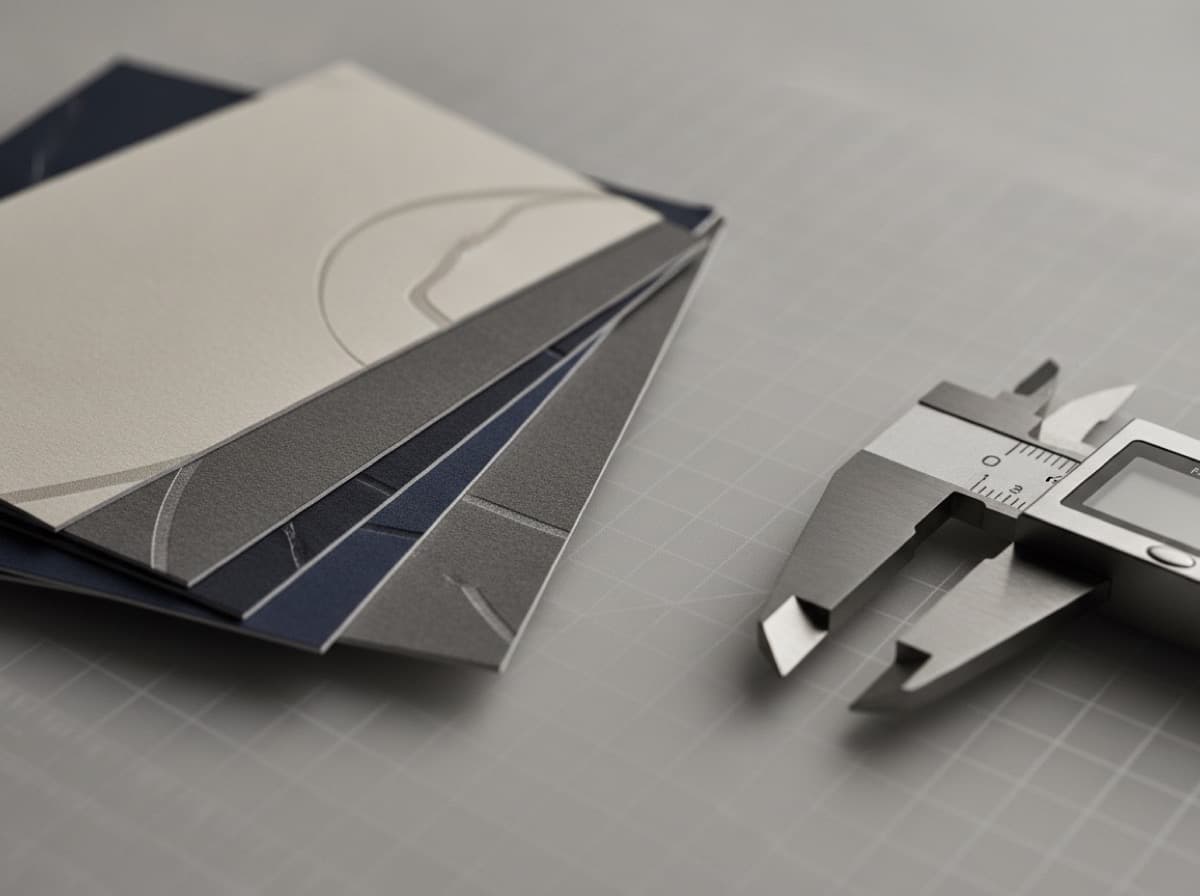
Business card dimensions are more standardized than you might expect — but the "standard" varies by country, and several alternative sizes have specific use cases. Choosing the right size ensures your card fits wallets, cardholders, and industry norms in your market.
Standard Business Card Sizes by Country
United States and Canada: 3.5 × 2 inches (88.9 × 50.8mm)
The North American standard — fits most card holders, wallets, and business card organizers. The format that most professional printers default to.
Europe: 85 × 55mm (3.35 × 2.17 inches)
Slightly smaller than the US standard. The ISO 7810 ID-1 standard (credit card size) is 85.6 × 53.98mm — European business cards are often close to this but not identical.
UK: 85 × 55mm
Same as European standard. Some UK professionals use US-size cards, particularly in internationally-oriented fields.
Japan: 91 × 55mm (3.58 × 2.17 inches)
Slightly wider than European. Japanese business card culture (meishi) places great importance on the card exchange ritual, and business card holders are designed for this size.
China: 90 × 54mm (3.54 × 2.13 inches)
Near the Japanese size. Major Chinese business card printers default to this.
Australia and New Zealand: 90 × 55mm (3.54 × 2.17 inches)
Similar to European, slightly wider than EU standard.
Brazil: 88 × 48mm (3.46 × 1.89 inches)
Slightly smaller height than US/European standard.
India: Variable, often 89 × 51mm or 90 × 54mm
No rigid national standard; international and local standards coexist.
Alternative and Custom Sizes
Mini Card: 3.5 × 1.75 inches (88.9 × 44.5mm)
Half the height of a standard card. Distinctive, minimal, modern. Common for graphic designers and creatives. Doesn't fit standard cardholders — intentional choice.
Square Card: 2.5 × 2.5 inches (63.5 × 63.5mm)
Distinctive and memorable. Doesn't fit most cardholders — stands out exactly because of this. Premium print cost (non-standard die cut). Popular with photographers, designers, creative brands.
Credit Card Size: 3.375 × 2.125 inches (85.6 × 53.98mm)
Same as a standard credit card — fits exactly in any wallet or cardholder. Common for appointment reminder cards, loyalty cards, and cards that need to live in a wallet.
Folded Cards: Various
A business card that unfolds to reveal more content. Common uses:
- More information than standard space allows
- Mini portfolio on the inside
- Loyalty punch card
- Specialty medical or legal services
Standard folded size when closed: 3.5 × 2 inches (folds to 3.5 × 4 inches or 3.5 × 1 inch depending on fold type)
Key Size Decisions
Cardholder Compatibility
Standard US (3.5 × 2") and European (85 × 55mm) sizes fit most commercially available cardholders, rolodexes, and wallets. Non-standard sizes (square, mini) do not.
If your clients file or organize cards systematically (realtors, attorneys, corporate clients), standard dimensions are recommended. If you want a card that stands out and isn't filed, non-standard is a differentiator.
Print Cost
Non-standard sizes typically cost more:
- Standard cuts: printers run efficiently, minimal setup
- Custom die cuts: additional setup, often higher per-unit cost
- Square and circle: specialty cuts, premium cost
Market Context
If you operate internationally or distribute cards to international clients:
- In Japan, the 91 × 55mm meishi format is expected — use a Japanese-sized card for Japanese business contacts
- Some European professionals keep two card supplies: European and US sizes
International Business Card Etiquette
Card exchange norms vary significantly by country:
- Japan: Cards are exchanged with both hands, read carefully, and placed respectfully on the table. Do not write on a Japanese contact's card or put it in your back pocket. The Japanese side of a bilingual card faces up.
- China: Similar respect to Japan. Cards are presented and received with both hands.
- Korea: Present and receive with both hands or with the right hand supported by the left.
- Middle East: Avoid presenting cards with the left hand — right hand or both hands.
- United States: Much more casual — single-hand exchange, cards are often filed or pocketed immediately.
For international business travel, consider bilingual cards with the local language on one side.
Choosing Your Card Size
| Situation | Recommended Size | |-----------|-----------------| | US professional services | 3.5 × 2 inches | | European market | 85 × 55mm | | Japan business contacts | 91 × 55mm | | Creative differentiator | Square or mini | | Wallet-friendly loyalty card | Credit card size (3.375 × 2.125") | | International travel kit | US + local size | | Minimal, modern aesthetic | Mini (3.5 × 1.75") |
Standard Business Card Size at Print Setup
For US cards: set up your document at 3.75 × 2.25 inches (the 3.5 × 2 card plus 0.125" bleed on all sides). Your printer will cut to 3.5 × 2 final size.
For European: set up at 89 × 59mm (85 × 55 plus 2mm bleed on all sides).
Get 10% off your first order
Join our list for practical printing guides, new finish ideas, and a welcome coupon for your first order.
No spam. Unsubscribe anytime.
Ready to start your print order?
Browse Printing ProductsNot sure which option fits? Ask Pro Card Crafters