Real Estate Agent Business Cards: Complete Design Guide for Realtors and Brokers
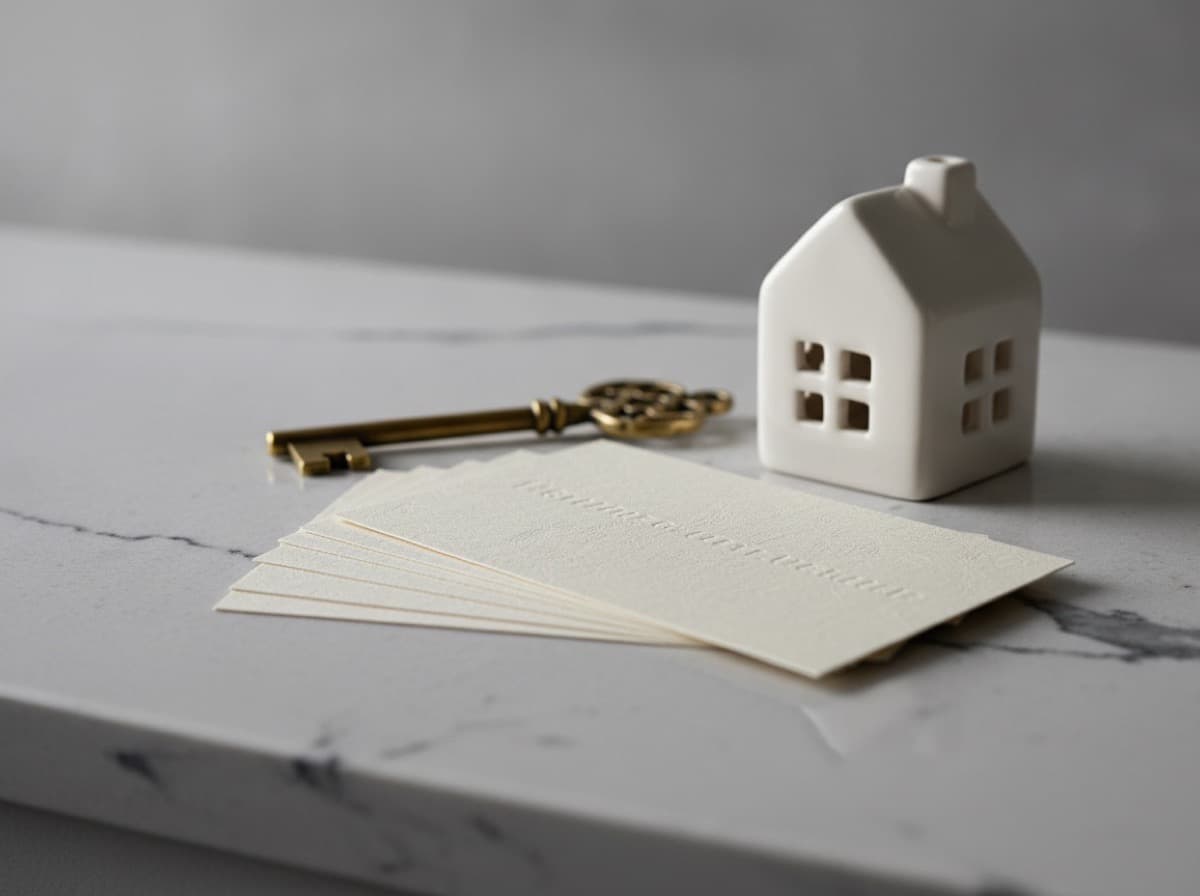
Real estate professionals hand out more business cards than almost any other professional group — at open houses, neighborhood events, client closings, investor meetups, and dozens of other touchpoints where a card is the first and sometimes only way a potential client holds onto your contact information. A well-designed real estate card can turn a casual open house visitor into a listing client months later. This guide covers everything you need to design a real estate card that works as hard as you do.
What Every Real Estate Card Must Include
Essential Elements (No Exceptions)
Your photo: Real estate is a relationship business, and a photo card dramatically increases the recall of who you are when a client is sorting through a stack of cards weeks after meeting you. Professional headshot — current, well-lit, professionally photographed or at minimum professionally retouched. Not a selfie, not a vacation photo, not a photo more than 5 years old.
Your full name: First and last name, exactly as you want to be referred to and recognized.
"Realtor®" (if NAR member): The Realtor® designation signals NAR membership and the Realtor Code of Ethics. If you're a licensed agent but not an NAR member, use "Real Estate Agent" or "Licensed Real Estate Agent." Never use Realtor® if you are not a member.
State license number: Required by law in many states; professional standard in all states. Many states require agents to display their license number on all marketing materials including business cards.
Brokerage name and branding: Required by state law in most jurisdictions (real estate agents must disclose their brokerage affiliation on all marketing materials). Check your state's real estate marketing disclosure requirements. The brokerage logo/name is typically required on the card.
Primary phone number: One number only. If you have a cell and a desk line, use your cell — that's where clients will reach you.
Email address: Professional email (yourname@brokerage.com or yourname@domain.com, NOT @yahoo.com or @hotmail.com for a professional impression).
Website URL: Your personal agent website or the brokerage site with your agent profile page.
Important Elements (Include if Applicable)
Your specialty or market position:
- "Luxury Homes" / "Luxury Properties"
- "First-Time Buyers" / "First-Time Homebuyer Specialist"
- "Investment Properties" / "Real Estate Investor Services"
- "Military/VA Buyers" (VREB, MRP designation)
- "Senior Real Estate Specialist" (SRES)
- Specific geographic farm: "The [Neighborhood] Specialist" / "Central Austin Neighborhoods"
Professional designations:
- CRS (Certified Residential Specialist) — RRC; the highest residential sales credential
- ABR (Accredited Buyer's Representative) — NAR; buyer representation specialty
- SRES (Senior Real Estate Specialist) — NAR; 55+ and senior housing
- GRI (Graduate, Realtor Institute) — NAR; general professional development
- MRP (Military Relocation Professional) — NAR; military and VA buyer specialty
- CPRES (Certified Probate Real Estate Specialist) — probate and estate sales
- SRS (Seller Representative Specialist) — REBAC; seller's agent specialty
- CIPS (Certified International Property Specialist) — NAR; international buyers/sellers
- e-PRO — NAR technology designation
- CDPE (Certified Distressed Property Expert) — short sales and distressed property
Production stats (powerful on the back):
- "[X] Homes Sold in [Year]"
- "Top [X]% of [Area/Brokerage] Agents"
- "[$ X Million in Sales Volume]"
- "5-Star Rating on [Zillow/Google/Realtor.com]"
What NOT to Include on a Real Estate Card
DRE number (California) without context: In California, the DRE license number is legally required. In other states, check requirements. But just a random number without labeling it ("DRE #XXXXXX" or "License #") looks like a typo.
A QR code that goes nowhere: If you include a QR code, it must link to something useful — your website, a property search, your Zillow or Realtor.com profile, a buyer/seller guide. A dead QR or one that just goes to the brokerage homepage is worse than no QR.
Your personal address: Agents should not put their home address on marketing materials. Your brokerage address is appropriate if required by state disclosure rules.
Excessive designations: If you have more than 3–4 designations, pick the most recognizable ones. A full alphabet of credentials after your name looks cluttered and the weight of meaning is lost.
Too many phone numbers: One phone number only. Giving clients a choice of which number to call creates friction and uncertainty.
The Photo Card Question
Should you use a photo on your real estate card?
Research consistently shows that photo cards are more effective in real estate than non-photo cards for one simple reason: people do business with people they know and like, and a photo dramatically increases how quickly trust and familiarity develop. After meeting you at an open house, a client who sees your photo card is far more likely to remember who you are than one who sees only your name.
Photo card best practices:
- Professional headshot (collar or professional attire, clean background)
- Current photo — within 2–3 years, matches your current appearance
- Photo location: front of card, typically upper-left or upper-right
- Photo size: 1.0" × 1.25" minimum to be recognizable
- Expression: approachable smile — this is a relationship business
When NOT to use a photo:
- Team cards where multiple agents share one card
- Corporate-brand-first cards where the brokerage brand dominates
- Luxury agents who prefer a minimal, brand-forward aesthetic
The Back of a Real Estate Card
The back of your card is prime real estate (appropriate metaphor). Common back strategies:
Strategy 1: Your production stats "[X] Homes Sold | $[X]M Volume | [X] 5-Star Reviews"
Strategy 2: Buyer/seller value proposition "Thinking of buying? I'll find you the perfect home. Thinking of selling? I'll get you top dollar."
Strategy 3: QR code to property search or your website "Search Homes: [QR]" or "View My Listings: [QR]"
Strategy 4: Your photo (if front is text-only) Full-bleed professional photo with name and contact QR
Strategy 5: Neighborhood specialization A visual representation of your geographic farm — a neighborhood map, landmark photo, or neighborhood name in large display type
Design Specifics for Real Estate Cards
Standard size only (3.5" × 2"): Real estate cards are handed out at such high volume and often filed that non-standard sizes (mini, square) create unnecessary friction. Stick to standard.
Thickness: 16pt minimum — real estate is a premium service transaction; your card should feel substantial.
Color: Match your personal brand or the brokerage brand (if applicable). If your brokerage has strong brand colors (Keller Williams red, RE/MAX red/white/blue, Coldwell Banker blue), your card likely incorporates those.
Typography: Clean, readable at a glance. Your name should be the most prominent text element. Title and contact info clearly secondary.
The Home Address QR Code
Consider adding a QR code that links to an active listing, your property search page, or a buyer/seller landing page. This turns a passive business card into an interactive marketing piece. The QR destination should:
- Load quickly on mobile
- Be directly relevant to the real estate context
- Capture the visitor's contact information (a search portal that requires sign-up, for example)
Card Design Checklist
- [ ] Professional headshot (current, well-lit, professional)
- [ ] Full name (exactly as you go by professionally)
- [ ] "Realtor®" (if NAR member) or "Real Estate Agent / Broker"
- [ ] State license number (required in most states)
- [ ] Brokerage name and logo (required in most states)
- [ ] One primary phone number
- [ ] Professional email address
- [ ] Website URL (personal agent site)
- [ ] Specialty (luxury, first-time buyers, investors, military)
- [ ] Up to 3 key designations (CRS, ABR, SRES, GRI, etc.)
- [ ] Back of card: production stats, value proposition, or QR
- [ ] Standard 3.5" × 2" size
- [ ] 16pt minimum paper stock
- [ ] Compliant with state real estate marketing disclosure rules
Get 10% off your first order
Join our list for practical printing guides, new finish ideas, and a welcome coupon for your first order.
No spam. Unsubscribe anytime.
Ready to start your print order?
Browse Printing ProductsNot sure which option fits? Ask Pro Card Crafters