When and How to Give Out Business Cards: A Networking Etiquette Guide
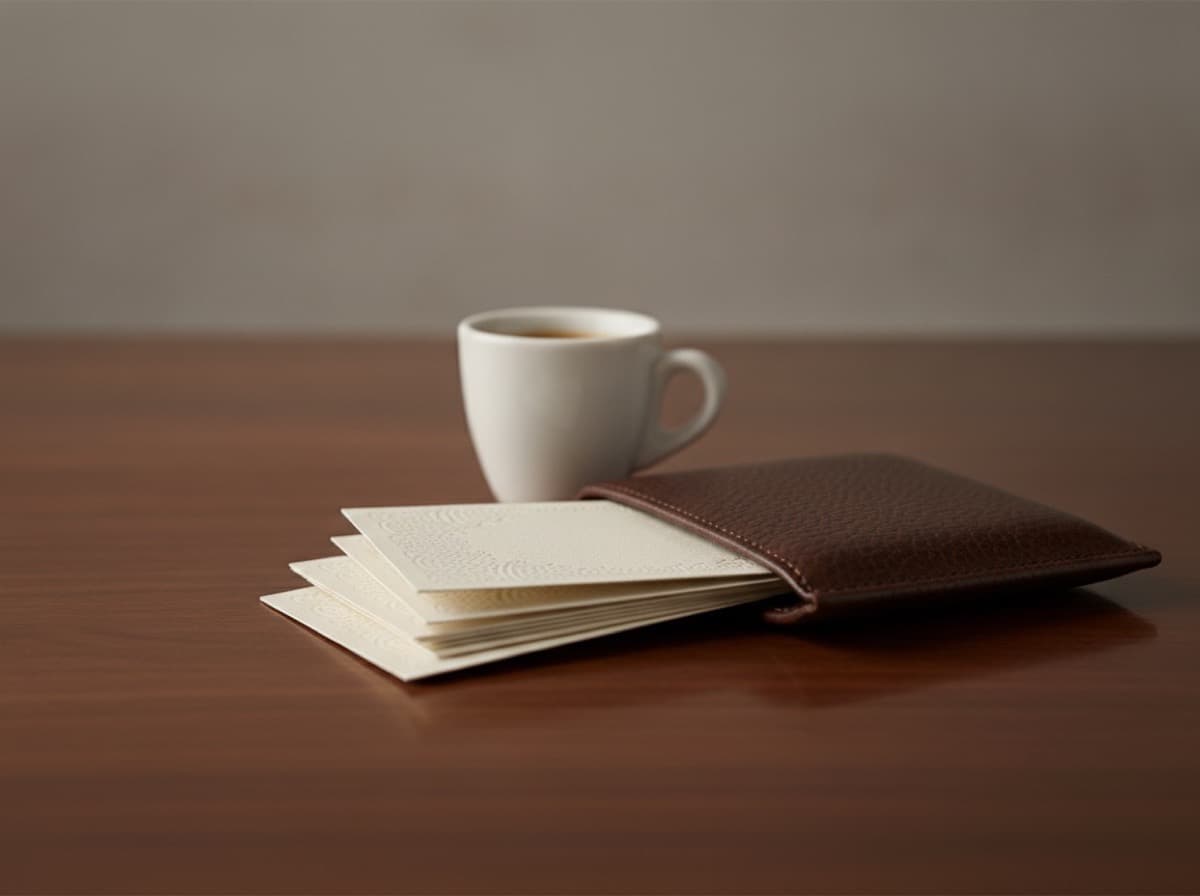
A business card is a social object — and like all social objects, how you present it matters as much as what's on it. Handing out a card at the wrong moment feels like selling; offering it at the right moment feels like a gift. This guide covers the social mechanics of card exchange: when to offer, how to present, how to receive, and how to make the exchange meaningful.
When to Give a Business Card
The Right Moment
The right moment to offer a card is after you've had a real conversation — not at the start. Cards given too early (within the first minute of meeting someone) feel like a sales move rather than a connection. The card should come at the point where the person you've been talking with has a reason to want to continue the conversation later.
Appropriate moments to offer:
- After a natural conversation when someone asks what you do and expresses genuine interest
- When someone asks for your contact information directly
- At the end of a meeting, conference session, or event as a "how we can stay in touch"
- When you've identified a potential referral, collaboration, or shared interest
- At events specifically designed for card exchange (industry mixers, trade shows, networking events)
Moments to hold back:
- In the first minute of meeting someone — let the connection happen first
- In the middle of someone else's presentation or a focused group discussion
- During meals (at a dinner event, exchange cards before or after, not during)
- When you haven't had a substantive conversation — spraying cards at everyone in a room rarely works
At Conferences and Trade Shows
Conferences and trade shows are the most card-intensive networking environments. General principles:
- At speaker-focused sessions, connect after the session, not during
- At exhibitor booths, business card exchange is expected and appropriate
- At hosted dinners and social events, gauge the room — some events are for relationship-building, not card-trading
- At evening events and parties, wait until the end of a genuine conversation
One-on-One Professional Meetings
In scheduled meetings (client consultations, job interviews, collaborative discussions):
- Offer your card at the start of a first meeting — it provides context and identifies you professionally
- Or offer at the end with a "here's my direct contact information"
- In a formal job interview, wait for the interviewer to offer first, then reciprocate
How to Give a Card
Present It Well
The physical act of presenting a card sends signals:
- Hand with both hands and a slight bow: In Japanese and Korean business culture, this is the respectful standard — it signals that you're treating the card as a meaningful gesture, not a disposable flyer. Even in Western contexts, presenting with both hands (or right hand supported by left) signals respect.
- Orient it toward the recipient: The card should be readable by the person receiving it — they shouldn't have to rotate it to read your name.
- Clean hands and a well-kept card: Don't hand someone a card you've been squeezing in your pocket for an hour, or one with coffee stains. Keep cards in a card case.
- Offer, don't push: Present the card with intent and let the recipient take it. Don't force a card into someone's hand.
The Card Case
A quality card case (metal, leather, or lacquered) immediately signals professionalism and protects your cards from wear. Nothing undermines a beautiful card faster than presenting it bent and frayed from a pants pocket. A card case takes five seconds to retrieve and signals that you take your professional image seriously.
How to Receive a Business Card
Receiving a card graciously is as important as giving one. The Japanese business card ceremony (meishi koukan) provides the ideal model, even if you're not in Japan:
- Accept with both hands
- Look at the card — actually look at it, read the name, note the title
- Make a comment or ask a question based on what you see: "I see you're in [specialty] — how long have you been focused on that?"
- Don't immediately pocket it — hold it during the conversation, then place it face-up on the table in front of you, or store it carefully in a card case
Never:
- Put it directly in your back pocket
- Write on it in front of the person (unless they invite you to — in Japan, this is offensive)
- Toss it into a bag without looking at it
- Hand it back
The person gave you their card because they want to continue a relationship. Treating the card carelessly signals that you don't value the connection.
Following Up After a Card Exchange
The card exchange is only valuable if followed by action. The most effective follow-up system:
- Within 24 hours: Send a brief personalized email or LinkedIn connection request referencing how you met: "Great meeting you at [event] yesterday — loved your thoughts on [topic]"
- Note on the back of the card: If appropriate, write a reminder note on the back of their card (not your own) about what you discussed or a next step: "Intro to [Name] | met at ABA conference | wants referral for estate cases"
- Organize your cards: A simple system — a card file, a tray, or a scanning app (CamCard, Microsoft Lens, HiHello) — keeps you from losing the connection
If you're at a large event and collect 20+ cards, sort them the same evening while the conversations are still fresh. Cards you don't follow up on within 48-72 hours typically result in no connection at all.
Cultural Context
Japan and Korea: The business card exchange (meishi koukan in Japan) is a formal ritual — cards are presented and received with both hands, bowed slightly, read carefully, and treated with respect throughout the meeting. Cards are never written on, folded, or casually pocketed. Arriving at a Japanese business meeting without cards is a significant professional misstep.
China: Similar formality to Japan; present and receive with both hands; face it toward the recipient.
Western / US context: Much less formal, but the habits of attentive receiving and genuine follow-up still differentiate professionals who build lasting networks from those who collect and forget cards.
Digital alternatives: QR codes and NFC-tapping have replaced physical card exchange for many younger professionals, particularly in tech. In many contexts, "here's my LinkedIn" or pulling out a phone to exchange contacts is entirely appropriate. Physical cards still carry advantages in premium professional contexts where the tangible quality of the card communicates something a phone tap cannot.
Get 10% off your first order
Join our list for practical printing guides, new finish ideas, and a welcome coupon for your first order.
No spam. Unsubscribe anytime.
Ready to start your print order?
Browse Printing ProductsNot sure which option fits? Ask Pro Card Crafters