Matte Laminate vs Soft-Touch Laminate: Is the Upgrade Worth It?
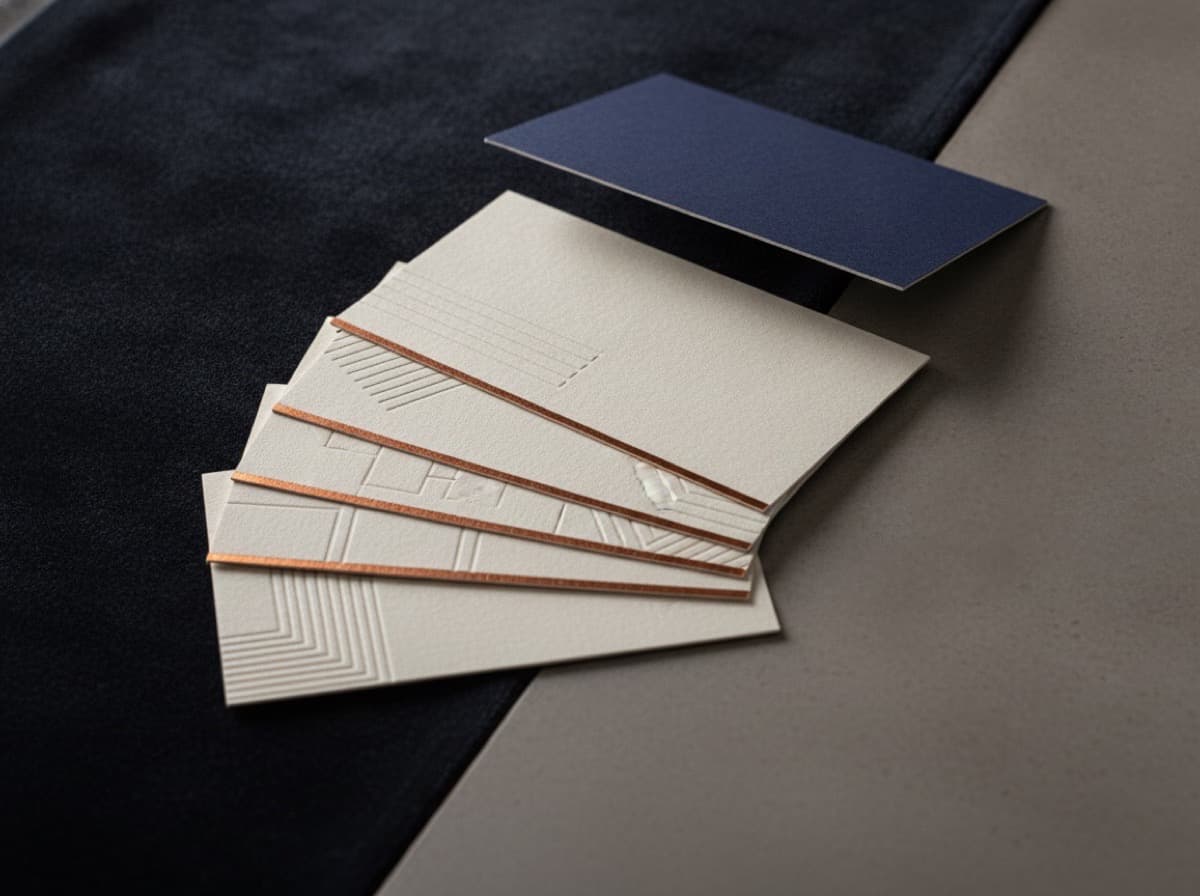
Both matte laminate and soft-touch matte laminate produce a non-reflective surface on a business card. From across a table they can look almost identical. In your hand, they feel completely different.
What's the actual difference?
Matte laminate is a flat, smooth plastic film applied over the print. It eliminates shine, makes text highly readable, and feels professional.
Soft-touch matte laminate uses the same process but with a coating that creates a micro-texture — giving the surface a velvety, rubberized feel. It's the same non-reflective quality as matte, but with an additional tactile dimension.
Does the difference matter?
It depends entirely on the context in which the card is handed over.
High-contact networking: Soft-touch wins. When you hand a card to someone who's meeting you for the first time — at a networking event, a consultation, an open house — the tactile quality of the card is part of the impression. People comment on soft-touch cards. They remember them.
Mailed or packaged cards: Matte is likely sufficient. If the card is tucked into packaging, mailed in a letter, or left in a takeout bag, the tactile experience is secondary.
High-volume, frequently replenished supply: Matte is more cost-effective. If you go through 500 cards per quarter and cost per card matters, the matte upgrade over gloss is probably the right call, and the soft-touch premium is better invested elsewhere.
Price difference
Soft-touch laminate typically adds 15–30% to the cost of a standard matte card, depending on quantity and printer. For a run of 250 cards, the difference might be $15–$30. For most professionals, this is not a meaningful cost difference compared to the impression it creates.
When to choose matte
- High-volume orders where per-card cost matters
- Cards that will be stored or mailed rather than hand-delivered
- Professions where understated formality is the expectation (some legal and accounting contexts)
When to choose soft-touch
- Personal hand-to-hand networking
- Service businesses where the card represents the quality of the experience (salons, premium contractors, financial advisors)
- Premium personal brand contexts
- Any situation where you want to be remembered
Order a sample of both if you're uncertain. The decision is obvious after you hold them.
Get 10% off your first order
Join our list for practical printing guides, new finish ideas, and a welcome coupon for your first order.
No spam. Unsubscribe anytime.