Cotton vs Standard Cardstock for Business Cards
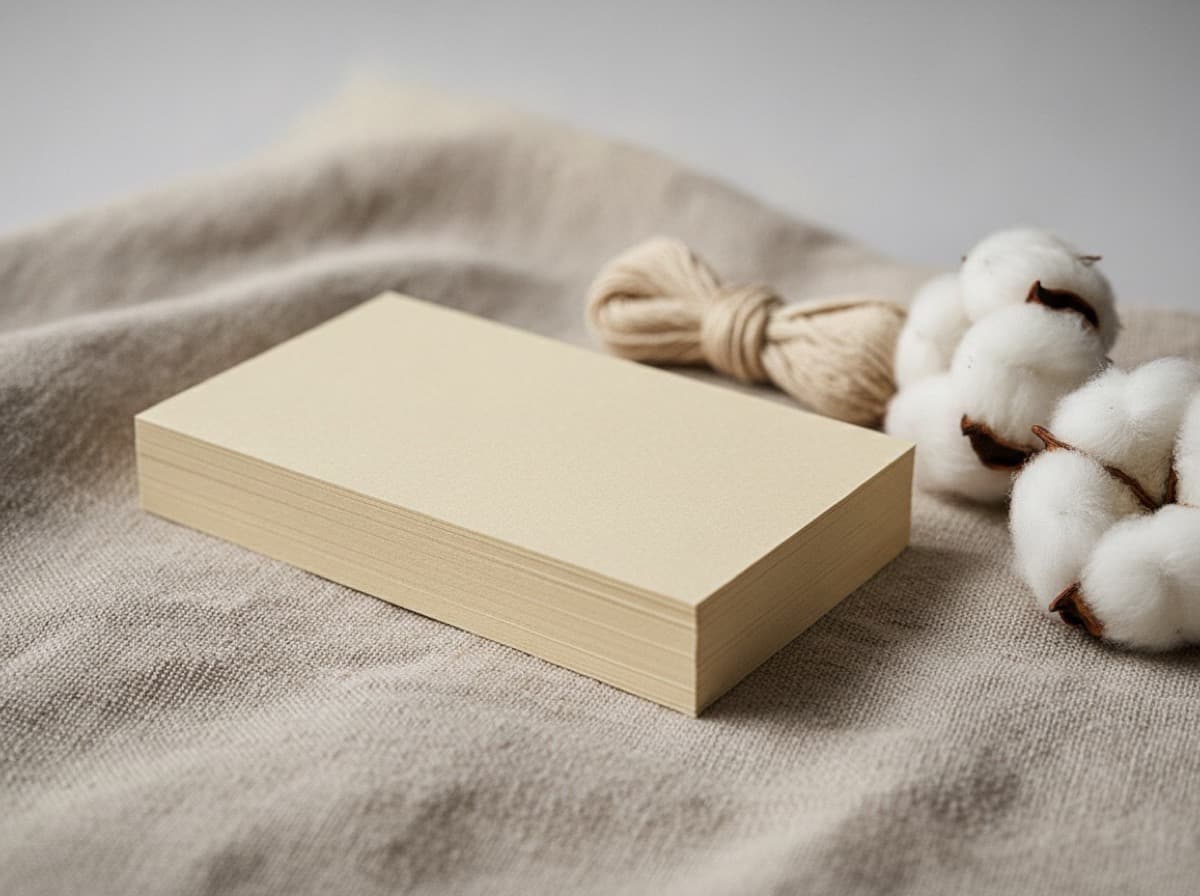
Cotton business cards and standard coated cardstock cards are the two poles of the premium card spectrum — and the choice between them shapes everything from the feel of the handoff to how the card wears over time. Cotton paper is made from textile fiber rather than wood pulp; it's naturally thick, soft, and uncoated, and it takes an impression beautifully. Standard coated card stock is wood-pulp paper with a clay coating that makes colors bright and surfaces smooth. Neither is universally better — they suit different designs, different finishes, and different brand intentions. This guide explains what each delivers and which one deserves to be in your next print run.
What is cotton cardstock?
Cotton paper is made from cotton linter (the short fibers left on cotton seeds after the longer fibers go to textiles) or, historically, from rag content. Unlike wood pulp, cotton fiber is naturally acid-free and very strong — cotton paper can last centuries without yellowing, which is why currency and legal documents are printed on it.
For business cards, cotton stock delivers three things that wood-pulp paper cannot easily match:
- Exceptional feel — the fibers are longer and softer than wood pulp, producing a paper that feels substantial, slightly warm, and almost textile-like. You notice it the instant the card changes hands.
- Holds an impression — cotton's soft, compressible fiber is why it's the stock of choice for letterpress printing. The fibers compress under the die and hold the debossed shape rather than springing back.
- Natural, uncoated look — cotton cards typically have a subtle surface texture and an off-white or natural white tone. They don't accept high-gloss lamination easily (or naturally), so the aesthetic is inherently matte and tactile.
What is standard coated card stock?
Standard coated card stock is wood-pulp paper treated with a clay or kaolin coating that fills the fiber gaps and produces a smooth, consistent surface. The coating is what allows photo-quality, full-color printing: ink sits on top of the surface rather than absorbing into the fiber, resulting in saturated, crisp output.
Business cards are most commonly printed on 14pt, 16pt, or 18pt coated stock. The "pt" refers to the thickness in thousandths of an inch. A 16pt card feels solid and business-appropriate; a 32pt card is notably heavy. Coated stock is available in gloss, matte, and soft-touch lamination — the laminate adds protection and changes the feel significantly.
Our paper and coating comparison and thickness guide go deeper on weight and surface options.
Print quality: where each excels
| | Cotton | Standard coated | |---|---|---| | Full-color photography | Poor (ink absorbs, colors muted) | Excellent | | Spot-color typography | Excellent | Good | | Letterpress | Ideal | Not suitable | | Foil stamping | Works well on thick stock | Works well | | Spot UV | Limited (surface texture) | Excellent on matte base | | Inkjet/digital presses | Possible, less saturated | Excellent |
Cotton's limitation is that uncoated fiber absorbs ink differently than coated paper, making colors less vivid and slightly less precise at very fine detail. For a card that's primarily strong typography, a monogram, or a one- or two-color brand mark, this rarely matters — the stock elevates the design. For a card with full-bleed photographic imagery and complex gradients, coated stock produces a sharper, more predictable result.
Feel and first impressions
This is the dimension where cotton wins decisively. Standard coated card stock — even heavy 18pt with soft-touch lamination — feels manufactured. Cotton stock feels handmade, even when it isn't. That difference registers in the few seconds after someone receives the card and feels its weight and surface.
For consultants, attorneys, architects, and other professionals where the card is a proxy for the quality of their work, that first tactile impression is a brand signal that no coating on coated stock can fully replicate. A premium finishes guide can help you layer additional effects onto cotton stock without losing that essential feel.
Durability
Standard coated and laminated cards are generally more durable for wallet and cardholder use. The coating and laminate protect against moisture, edge wear, and scuffing in a way that uncoated cotton doesn't. A cotton card left in a damp environment will soften and curl; a laminated coated card will resist that.
Cotton is still remarkably tough for paper — the same properties that make it archival-quality keep it from falling apart in normal use. But it's the wrong choice for someone who hands out many cards and expects them to take abuse in pockets and bags.
Cost
Cotton stock is more expensive than standard coated stock. The fiber itself costs more, cotton cards are typically printed in shorter runs on slower equipment, and the thick weight (often duplexed to 32pt or more) uses more material. For a professional who hands out a card rarely and deliberately — where each exchange is intentional — the higher cost per card is easily justified. For bulk distribution, coated stock is more economical.
How to choose
Answer three questions:
- What does your design require? Bold type and a brand mark → cotton is ideal. Full-color photo or complex gradient → coated stock wins.
- What is the card's job? Rare, deliberate exchange at premium engagements → cotton. High-volume distribution at trade shows → coated.
- Will you add a tactile finish? Cotton is the natural base for letterpress and pairs well with foil. Spot UV and high-gloss lamination work better on coated stock.
If you're still unsure, order a sample of both before committing to a run — the difference is felt, not just described.
Bottom line
Cotton card stock delivers feel and craft that standard coated paper can't match, at a higher cost and with a tradeoff in color saturation. It's the right choice for a premium, deliberately placed card with strong typography or letterpress treatment. Standard coated stock is the right choice for full-color designs, high-volume runs, and cards that need to survive wallet wear. Match the stock to the design and the occasion, and both can produce a card worth keeping.
Frequently Asked Questions
What is cotton business card stock made from?
Cotton business card stock is made from cotton linter — the short fibers remaining on the cotton seed after longer textile fibers are removed — rather than wood pulp. It is naturally acid-free, very strong, and produces a distinctively soft, thick feel.
Why do cotton business cards feel different?
Cotton fiber is longer, softer, and more compressible than wood pulp fiber. The result is a surface that feels slightly warm and textile-like rather than smooth and manufactured. The absence of clay coating also means the surface has a subtle natural texture.
Are cotton business cards better than regular cards?
For premium, deliberately exchanged cards with minimal or typographic design, yes — the feel is unmatched. For full-color photographic designs or high-volume distribution, standard coated stock produces better color saturation and more durability at lower cost per card.
Can cotton cards be laminated?
Cotton stock can accept foil stamping well, and some laminations are possible, but standard gloss and matte film lamination tends to be aesthetically incompatible — the laminated surface removes the natural feel that makes cotton valuable. The cotton aesthetic is essentially an uncoated, tactile one.
How thick are cotton business cards?
Cotton business cards are typically duplexed — two sheets bonded together — to reach 32pt or more. This exceptional thickness is part of their appeal: the card feels almost like a small slab rather than a sheet of paper.
Is cotton more expensive than standard card stock?
Yes, cotton stock is considerably more expensive per card than standard coated stock, due to higher raw material cost, shorter press runs, and thicker material use. The investment makes sense for premium cards handed out selectively; for bulk distribution, coated stock is more economical.
Get 10% off your first order
Join our list for practical printing guides, new finish ideas, and a welcome coupon for your first order.
No spam. Unsubscribe anytime.