Eco-Friendly and Recycled Business Card Stocks
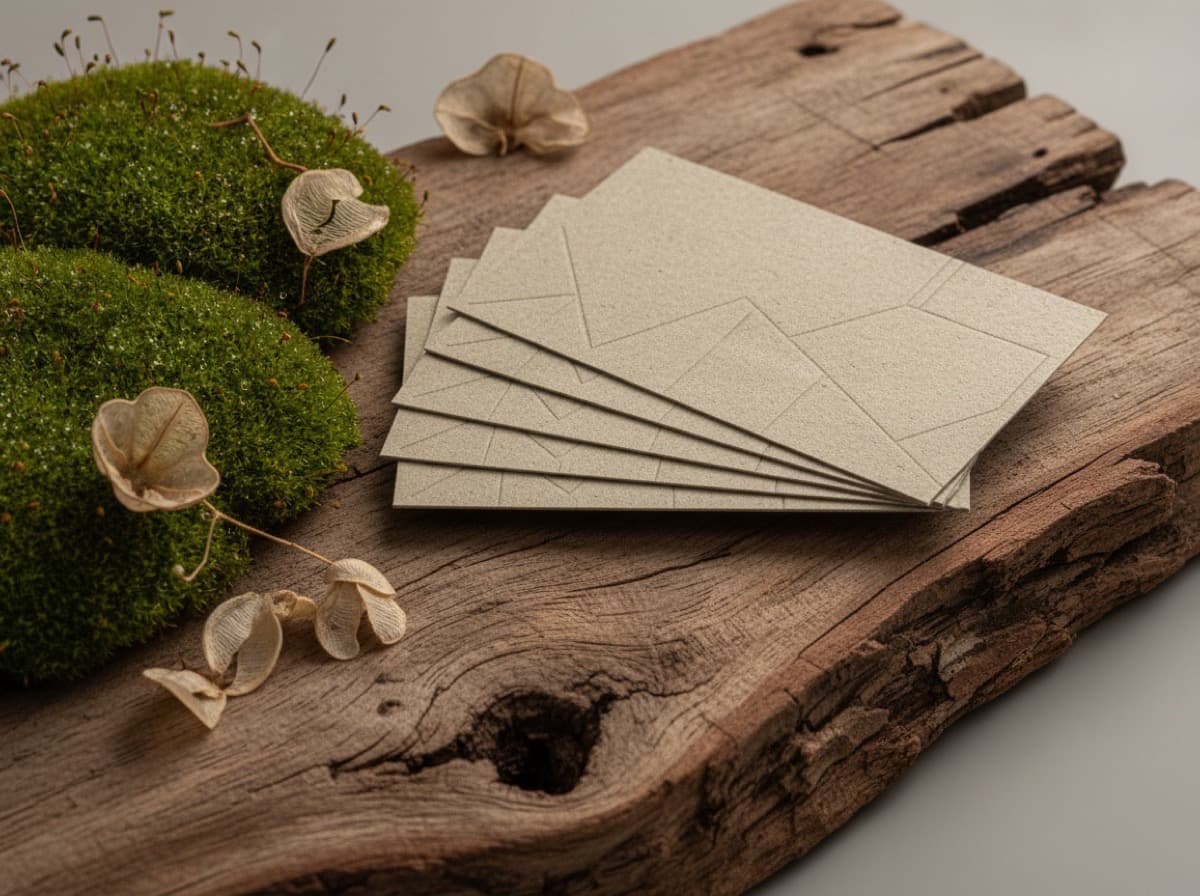
Eco-friendly business cards are made from recycled paper, sustainably certified fibers, or alternative materials like seed paper and stone paper — and they no longer look like a compromise. The quality gap between sustainable and conventional card stock has narrowed significantly, and for many professionals the environmental alignment is a brand signal as much as a practical choice. This guide covers the main sustainable options, what tradeoffs each carries in print quality and durability, and how to communicate your choice authentically without greenwashing.
What makes a business card "eco-friendly"?
The term covers a range of things, and not every claim is equal:
- Post-consumer recycled (PCR) content — paper made from recovered consumer waste (office paper, cardboard, newspapers). Look for the percentage: 30% PCR is table stakes; 100% PCR is genuinely committed.
- FSC- or PEFC-certified paper — certification that the virgin fiber comes from sustainably managed forests. This isn't recycled, but it addresses responsible sourcing of new fiber.
- Tree-free alternatives — cotton rag, stone paper (calcium carbonate + HDPE), seed paper (embedded with wildflower or herb seeds). Each has its own strength and weakness profile.
- Soy or vegetable-based inks — lower-VOC alternatives to petroleum inks, often used alongside recycled stocks.
- Lamination-free design — standard glossy and matte lamination adds a plastic layer that complicates recycling at end of life. Uncoated or water-based coating keeps the card recyclable.
Our paper and coating comparison covers standard stocks alongside these sustainable options so you can compare across the full range.
Recycled cardstock
Recycled card stock — typically available in 80–100% PCR content — is the most accessible sustainable choice. It runs on conventional digital and offset presses and costs only slightly more than virgin stock. The tradeoffs:
Look and feel: Recycled stocks often have a natural, slightly textured surface and a warm off-white or cream tone rather than a stark white. For brands that want that handcrafted, honest quality, this is an asset. For brands that need a bright white base for vivid color, it can be a challenge.
Print quality: Ink sits slightly differently on uncoated recycled stock than on coated virgin stock. Colors can appear less saturated and slightly muted — a matte, natural look that suits earth-tone palettes and minimal designs well, and suits high-saturation photographic designs less well.
Durability: Without lamination, recycled cards are more vulnerable to moisture and edge wear than laminated conventional cards. They're not fragile, but they won't survive a week loose in a damp jacket pocket the way a gloss-laminated card might.
Kraft and uncoated natural stocks
Kraft paper (the brown stock you recognize from grocery bags) is made from unbleached wood pulp and is often available with significant recycled content. On a business card it produces a warm, artisan, tactile result. Printing on kraft requires inks and artwork chosen for the stock: dark inks look excellent; light pastels and white ink need a white base layer or opaque ink formulation to show at all.
Uncoated natural white stocks fall between kraft and coated recycled — they're often FSC-certified, accept print well, and remain recyclable without a plastic lamination layer.
Cotton and tree-free options
Cotton rag stock (often 100% cotton fiber, sometimes from textile waste) is naturally tree-free and extremely durable. It's the stock of choice for letterpress, as described in our letterpress guide, and it has a distinctive feel that reads as premium rather than "eco" — the environmental benefit is a bonus rather than the defining aesthetic.
Stone paper (calcium carbonate bound with a small amount of HDPE resin) is waterproof, tear-resistant, and smooth. It cannot be recycled with paper, though it is technically recyclable in certain plastic streams. Its recyclability claim is contested — worth verifying with the supplier before using it as an environmental selling point.
Seed paper is embedded with plant seeds and meant to be planted after use. It's a conversation piece and a genuine expression of commitment, but it's not a conventional business card: it's thick, textured, and doesn't survive in a cardholder for long.
Finish options that stay sustainable
Lamination adds a plastic film that typically prevents paper recycling. If environmental end-of-life matters, avoid glossy and matte lamination and use instead:
- Water-based coatings — a thin, varnish-like coating that adds modest protection without plastic.
- Uncoated — accepts pen marks (a practical plus), feels tactile, and stays recyclable.
- Aqueous soft-touch — a newer alternative to film lamination that provides a similar matte feel with better recyclability credentials.
Foil stamping and spot UV are generally incompatible with paper recycling even on recycled stock, because the metallic or UV-cured material cannot be separated from the fiber. If environmental end-of-life is a firm requirement, skip metallic finishes.
Communicating sustainability authentically
A few rules prevent eco claims from backfiring:
- Be specific. "100% post-consumer recycled" is a verifiable claim. "Eco-friendly" or "sustainable" alone is marketing language that invites skepticism.
- Carry the certification. If the stock is FSC-certified, print the FSC logo (with license number). The certification process exists to make the claim credible.
- Don't greenwash finish choices. Recycled stock with plastic lamination and foil is still predominantly recyclable-unfriendly at disposal. Match the claim to the actual product.
- Design for the stock. A sustainable card that looks cheap undermines both the brand and the environmental message. Let the natural texture be part of the design rather than fighting it.
Bottom line
Eco-friendly business cards are a genuine option, not a compromise, if you match stock and finish to your design and communicate the choice accurately. Recycled cardstock and uncoated FSC-certified stocks are the most practical starting points — widely available, cost-competitive, and printable on standard equipment. Cotton is the premium tree-free option; seed paper is a statement piece. Whichever you choose, keep certifications specific and avoid lamination if end-of-life recyclability matters.
Frequently Asked Questions
What is the most eco-friendly business card stock?
100% post-consumer recycled (PCR) uncoated stock is the most accessible option. Cotton rag is a strong tree-free alternative. Seed paper is the most dramatic statement, though it doesn't function as a long-term networking card. All three avoid the virgin-pulp demand of standard coated stock.
Are recycled business cards lower quality?
Not necessarily. Modern recycled stocks print well for most designs and have a distinctive natural look that suits many brands. The tradeoff is a slightly muted color palette compared to coated white stock — photographic, high-saturation designs fare better on conventional coated paper.
Can you add foil or lamination to eco-friendly cards?
Technically yes, but lamination adds a plastic film that typically prevents paper recycling, undermining the environmental claim. Foil stamping similarly complicates end-of-life. If recyclability at disposal is important, stick to water-based coatings or leave the stock uncoated.
What does FSC-certified mean for business cards?
FSC (Forest Stewardship Council) certification means the paper fiber was sourced from forests managed according to environmental and social standards. It certifies responsible sourcing of new fiber, not recycled content — the two are separate claims and can be combined (FSC-certified recycled paper exists).
Is stone paper actually eco-friendly?
Stone paper is waterproof and tree-free, but it contains HDPE plastic binder and cannot be recycled in standard paper streams. It must go into certain plastic recycling programs. Its environmental profile is contested, so verify claims carefully before using stone paper as an eco credential.
How do I keep an eco card looking professional?
Choose a design that works with the natural tone and texture of the stock rather than fighting it. Earth tones, minimal palettes, and bold typography work beautifully on recycled and kraft stocks. Have a designer see a paper sample before finalizing colors, and use an aqueous or water-based coating if you need surface protection without plastic lamination.
Get 10% off your first order
Join our list for practical printing guides, new finish ideas, and a welcome coupon for your first order.
No spam. Unsubscribe anytime.
Ready to send your file to print?
Order Business CardsNot sure which option fits? Ask Pro Card Crafters