Business Card Coatings and Finishes: Gloss vs Matte vs Soft-Touch vs Spot UV
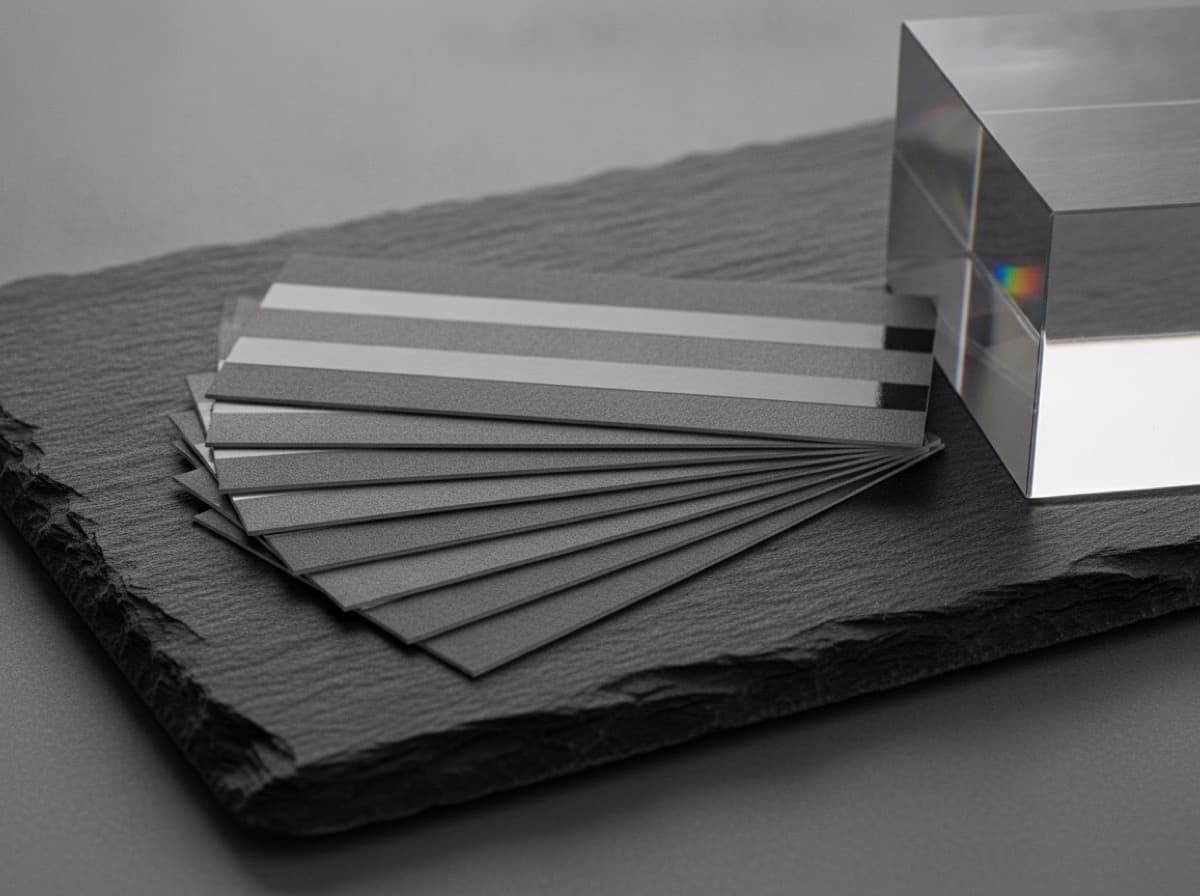
The coating on your business card is the first thing clients feel. Before they read your name, before they see your logo, they feel your card. That tactile first impression shapes everything that follows.
This guide breaks down every major coating and finish so you can choose the one that's right for your brand.
Aqueous Coating (AQ)
What it is: A water-based coating applied in-line during printing. Very thin layer.
Feel: Slightly smoother than uncoated paper. Not dramatically different.
Pros: Inexpensive, adds minor protection against moisture and smudging.
Cons: Doesn't significantly elevate the card's feel. Often confused with "no coating" by clients.
Best for: Budget-conscious orders where some protection is needed but premium feel isn't required.
Gloss Laminate
What it is: A thin plastic film heat-bonded to the card surface. Creates a shiny, reflective finish.
Feel: Smooth, slightly slick. Colors appear vibrant and saturated.
Pros:
- Makes colors pop dramatically
- Very durable and resistant to moisture
- Affordable upgrade from aqueous coating
- Cards slide easily against each other (useful for stacks)
Cons:
- Can look "cheap" if overused or combined with the wrong design
- Shows fingerprints easily
- Can appear overly commercial in certain professional contexts (law, luxury)
Best for: Cards with bold colors and photography. Trades, food, fitness, and casual service businesses.
Matte Laminate
What it is: Plastic film with a non-reflective finish applied to the card surface.
Feel: Smooth, sophisticated, non-glossy. Colors appear slightly more muted than gloss — which often reads as more elegant.
Pros:
- Modern, professional appearance
- Doesn't show fingerprints
- Pairs well with virtually any design
- More upscale look than gloss
Cons:
- Less vibrant color rendering than gloss
- Slightly harder to write on (for appointment cards where clients write info)
Best for: Most professional cards. The default choice for premium positioning across all industries.
Soft-Touch (Velvet) Laminate
What it is: Specialized matte laminate with a micro-texture coating that feels soft and velvety.
Feel: Silky. Tactilely distinctive. Clients hold it longer and comment on it unprompted.
Pros:
- Most memorable tactile experience of any standard coating
- Smudge-resistant
- Looks as premium as it feels
- Photographs beautifully (flat, no glare)
Cons:
- More expensive than standard matte laminate
- Slightly susceptible to scuffs from sharp objects
- Can't combine with foil stamping in some production setups (check with printer)
Best for: High-end professional services, luxury market, creative professionals who want their card to be a physical statement.
Spot UV Coating
What it is: A selective application of glossy UV-cured coating to specific areas of a matte card. The contrast between the matte background and the glossy accented elements creates a visual and tactile effect.
Feel: Dual-texture — you can feel the raised glossy areas against the flat matte background.
Appearance: The glossy accented areas catch light differently than the matte, creating depth and visibility of design elements.
Common applications: Name, logo, a design element, geometric pattern
Pros:
- Visually striking even in poor lighting
- Tactilely distinctive (people touch it repeatedly)
- Premium appearance at a moderate price premium
- Works on both front and back
Cons:
- Requires matte base coat (additional cost)
- Not all design elements benefit from spot UV — needs intentional placement
- Slight alignment tolerance (spot UV is applied separately from printing)
Best for: Any professional who wants maximum card impact. Works across almost all industries.
Foil Stamping
What it is: Metallic or colored foil pressed onto the card using heat and pressure. The foil permanently adheres to the designated area.
Available foils: Gold, silver, copper, rose gold, holographic, colored foils
Feel: Smooth metallic surface within the stamped areas. Visible and tactile elevation.
Appearance: Catches and reflects light dramatically. Metallic foil is unmistakable.
Pros:
- Luxury positioning signal
- Extremely durable — doesn't scratch or peel like metallic ink
- Dramatically eye-catching
- Works on both matte and textured papers
Cons:
- Most expensive standard finishing option
- Minimum order quantities may apply at some printers
- Design must be appropriate — not everything benefits from foil
Best for: Luxury market professionals, attorneys, financial advisors, high-end wedding vendors. Any context where "premium" is a deliberate positioning choice.
Embossing and Debossing
Embossing: Pressing a die into paper to raise a design element above the surface. Debossing: Pressing a die to push a design element below the surface.
Feel: Tactile dimension — you can feel the raised or recessed area.
Appearance: Creates shadow play under light. Elegant and distinctive.
Best for: Premium specialty cards. Often combined with foil. Most expensive common finishing option.
Comparison at a Glance
| Finish | Feel | Cost | Best For | |---|---|---|---| | Aqueous | Smooth, basic | $ | Budget orders | | Gloss Lam | Shiny, slick | $$ | Bold color cards, trades | | Matte Lam | Smooth, refined | $$ | Most professional cards | | Soft-Touch | Velvety, silky | $$$ | Premium professionals | | Spot UV | Dual-texture, striking | $$$ | Anyone wanting standout cards | | Foil Stamp | Metallic, luxury | $$$$ | Luxury market | | Emboss/Deboss | Dimensional, tactile | $$$$ | Specialty premium |
My Recommendation for Most Professionals
If you don't know where to start: 16pt card with matte laminate.
If you want to stand out in your industry: 16pt with soft-touch laminate + spot UV on your name or logo.
If you're in a luxury market: 18pt or 32pt with foil stamping on your name.
The fastest way to choose is to order a finish sample pack. Holding the options in your hand takes 10 seconds to decide. No guide replaces that tactile experience.
Get 10% off your first order
Join our list for practical printing guides, new finish ideas, and a welcome coupon for your first order.
No spam. Unsubscribe anytime.
Ready to put these tips into print?
Order Business CardsNot sure which option fits? Ask Pro Card Crafters