Linen Texture Business Cards Paper Finish Guide to Textured and Specialty Stock Card Printing
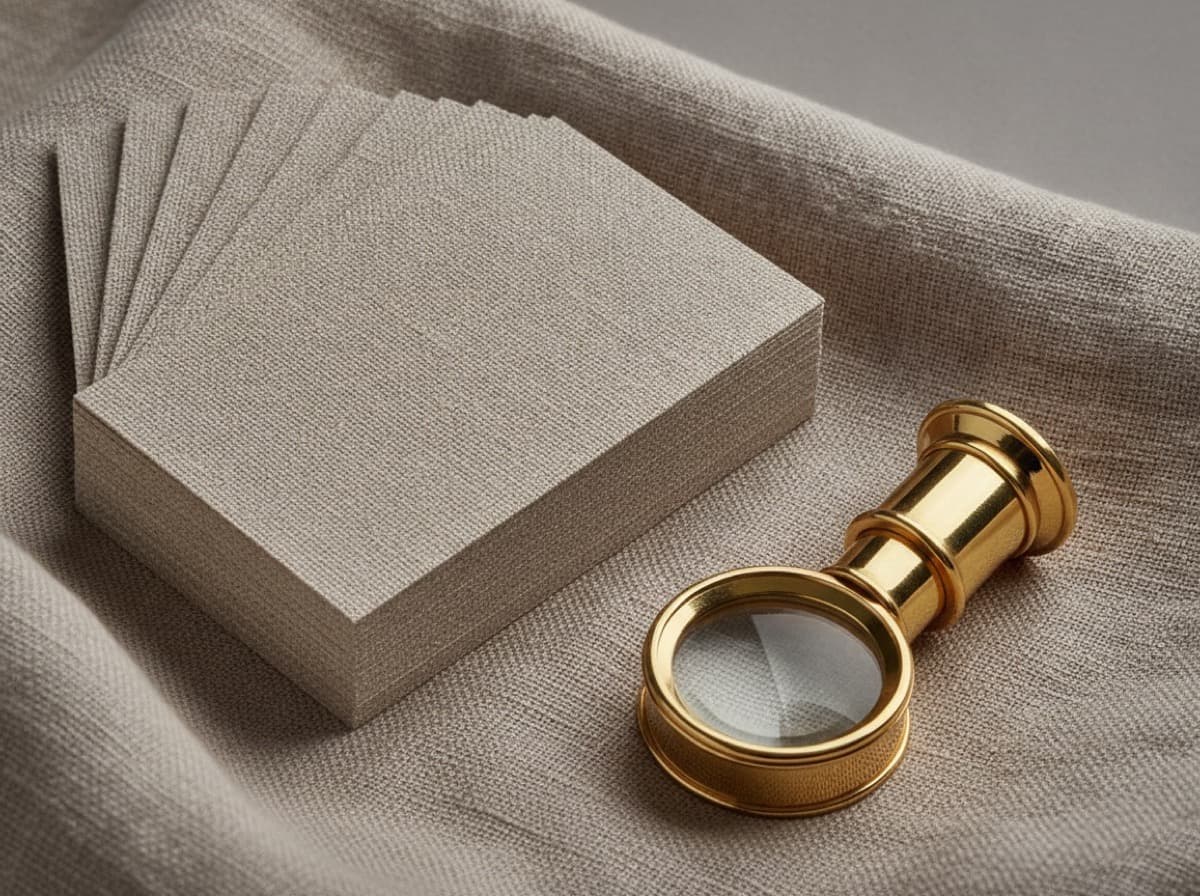
The physical texture of a business card communicates before the recipient reads a word. A smooth, flat card feels standard. A heavy linen-textured card feels handcrafted. A cotton-paper card feels like a premium keepsake. Textured business card stocks add a sensory dimension that digital design cannot replicate — and in networking contexts where cards change hands quickly, the tactile quality of a card often determines whether it's placed in the "keep" pile or discarded.
Understanding Paper Texture in Business Card Printing
What Creates Paper Texture
Paper texture in business card stocks comes from the paper manufacturing process:
Mechanical texture (embossing/calendering): Smooth paper is pressed between textured rollers during manufacturing to imprint a pattern into the paper surface. Linen, felt, and laid textures are created this way — the texture is pressed into the paper structure.
Natural fiber texture: Papers made from cotton or other natural fibers have inherent textural variation from the fiber structure itself. Cotton rag paper has a distinctly different feel from wood-pulp paper regardless of any mechanical treatment.
Coating and surface texture: The absence of clay coating on uncoated papers leaves the paper's natural surface texture visible; heavily coated (C2S) papers have smooth, uniform surfaces that suppress paper texture.
How Texture Affects Print Quality
This is the most important practical consideration when choosing textured stocks:
Uncoated textured papers:
- Ink absorbs INTO the paper fibers rather than sitting on top of a coating
- Results in slightly softer, more muted color compared to coated stocks
- Fine detail in small text and thin lines can feather (spread slightly) into the paper fibers
- NOT suitable for photographic images or highly detailed artwork
- Perfectly suitable for clean typography, simple logos, and designs with limited fine detail
The practical implication: If your business card design relies on photographic imagery, intricate fine-line illustration, or very small-point text, a smooth coated stock will print more crisply. If your design is typography-focused with clean, bold elements, textured stocks print beautifully.
Linen Texture
What It Is
Linen-textured paper has a crosshatch pattern pressed into the surface that replicates the look and feel of linen fabric weave. The texture is subtle but unmistakable — small, regular intersecting lines create a grid pattern in the paper surface.
How It Feels and Looks
- Fine, regular crosshatch pattern visible and tactile
- Slightly rough under a fingertip; not as smooth as coated card stock
- More formal and traditional than modern smooth finishes
- The texture catches light at different angles, giving the card a subtly dynamic appearance
Best Uses
Ideal professions and contexts:
- Law firms and attorneys (traditional, authoritative)
- Financial advisory and wealth management (established, conservative)
- Architecture and interior design (craftsmanship aesthetic)
- Wedding and event professionals (elegant, classic)
- Luxury real estate
- Executive and C-suite professionals
- Family-owned businesses and heritage brands
Design approach for linen:
- Simple, typographically strong designs work best
- Bold logos print well; avoid fine hairline details
- Dark or muted color backgrounds with reversed-out text are very elegant on linen
- Embossing (a separate finishing process) pairs beautifully with linen texture — the texture enhances the debossed or embossed impression
Common Paper Weights for Linen
- 14 pt linen: Standard weight; firm but not thick
- 16 pt linen: Slightly more substantial
- 100 lb linen cover: Lighter weight; suitable for cards that don't need premium weight
Felt Texture
What It Is
Felt-textured paper is mechanically pressed with a pattern that replicates the look of soft felt fabric — slightly different from linen, with a warmer, more organic irregularity rather than a structured grid.
How It Feels and Looks
- Softer, less regular texture than linen
- Warmer and more organic feel
- Particularly tactile — people who pick up a felt-textured card often notice the texture immediately
- High-end stationery aesthetic
Best Uses
- Luxury retail and fashion
- Interior design and home goods
- Fine art and gallery professionals
- Premium wellness and spa services
- Boutique hotels and hospitality
- High-end gift and specialty retail
Cotton Paper and Cotton Rag Stock
What It Is
Cotton paper (also called rag paper) is made from cotton fibers rather than wood pulp. Before wood-pulp paper became dominant in the 19th century, all paper was cotton-based. Cotton paper has a distinctly different feel from wood-pulp paper.
How It Feels and Looks
- Extremely tactile; warm, organic, slightly textured surface
- More durable than wood-pulp paper under moisture exposure
- Premium feel that many people associate with fine stationery, currency, and archival documents
- Slightly cream or warm white color (rarely perfectly white)
- May have additional texture (laid lines, chain lines) from the papermaking process
Best Uses
- Architects and designers (handcrafted aesthetic)
- Fine art and gallery professionals
- Wedding planners and invitation designers
- Boutique and artisan brands
- Academics and researchers (archival quality aesthetic)
- Environmental and sustainability-focused brands
Environmental note: Cotton paper can be made from post-industrial cotton waste (cotton trimmings from clothing manufacturing) which is a genuine sustainability story. However, not all cotton paper is sustainably sourced — verify sustainability claims with your printer.
Laid Paper
What It Is
Laid paper has parallel lines running across the surface, created by the wire mesh of the paper mold during manufacturing (traditional) or pressed in during calendering (modern). The result is a series of fine parallel lines (chain lines and laid lines) visible when held to light.
How It Feels and Looks
- Distinct directionality — you can see and feel the laid lines when you look closely
- Traditional, sophisticated aesthetic
- Associated with premium correspondence stationery and letterhead
- Available in cream, white, and various colors
Best Uses
- Legal professionals
- Academics and consultants
- Traditional professional services (accounting, financial advisory)
- Heritage brands and family-owned businesses
Seed Paper and Eco Cards
What It Is
Specialty paper embedded with wildflower, herb, or vegetable seeds. After use, the recipient plants the card in soil and it grows.
How It Feels and Looks
- Visibly textured from embedded seeds; rough texture
- Typically speckled with seed particles
- Usually cream, green, or natural-toned rather than brilliant white
- Limited printing area due to embedded seeds
Best Uses
- Environmental organizations and sustainability brands
- Gardening and landscape businesses
- Organic and natural food brands
- Wedding and event professionals with sustainability values
- Any brand for whom the card's afterlife story is a meaningful brand statement
Practical considerations: Seed paper is genuinely memorable and has an inherent sustainability story. However, printing quality is limited (seeds prevent fine detail); the cards are typically thicker than standard stocks; and they're more expensive than standard card stocks.
Specialty Texture Options
Soft Touch (Soft Touch Laminate)
Not a paper texture but a laminate finish applied over a printed card:
- Rubberized, velvety coating applied to the card surface
- Extremely tactile — people consistently notice and comment on soft touch cards
- No grain or direction; uniform velvet smoothness
- Fingerprint-resistant surface
- Available on standard card stock (not paper-textured stock)
This is the most popular premium tactile finish because it can be applied to standard card stock while dramatically improving the tactile experience; unlike textured paper stocks, soft touch laminate doesn't compromise print quality.
Triplex / Colorcore Cards
Two sheets of printed card stock laminated around a colored core:
- The core color shows at the card edge, creating a colored edge stripe
- Popular in thick (24 pt+) card constructions
- Adds a distinctive visual detail visible only when you look at the card edge-on
Choosing Your Texture Strategy
| Goal | Recommended Stock | |------|------------------| | Traditional professional authority | Linen or felt textured card | | Maximum tactile impact + print quality | Smooth stock + soft touch laminate | | Heritage and artisan brand identity | Cotton rag or laid paper | | Environmental brand story | Seed paper or recycled content stock | | Photography or detailed imagery | Coated smooth stock (avoid textured) | | Luxury finishes with metallic | Smooth coated + hot foil stamping | | Bold color without texture | Smooth uncoated + full bleed color |
Working with Textured Stocks
Design tips specific to textured stocks:
- Use bold, simple typography rather than very thin fonts (the texture can fill in hairlines)
- Avoid very small text (below 6 pt) — texture can affect readability
- Logos with thin lines should be simplified for textured printing
- Photographic backgrounds are not recommended on uncoated textured stocks
- Bold, graphic designs with high contrast look striking on textured stocks
- Black or dark backgrounds on linen cards are particularly elegant
Working with your printer:
- Always request a paper sample before ordering (texture needs to be felt, not just seen in a preview)
- Ask for a printed proof on the actual textured stock before your final run
- Confirm the weight and texture specification matches what you want
Get 10% off your first order
Join our list for practical printing guides, new finish ideas, and a welcome coupon for your first order.
No spam. Unsubscribe anytime.
Ready to put these tips into print?
Order Business CardsNot sure which option fits? Ask Pro Card Crafters