The Complete Guide to Business Card Paper Stock: Thickness, Finish, and Feel
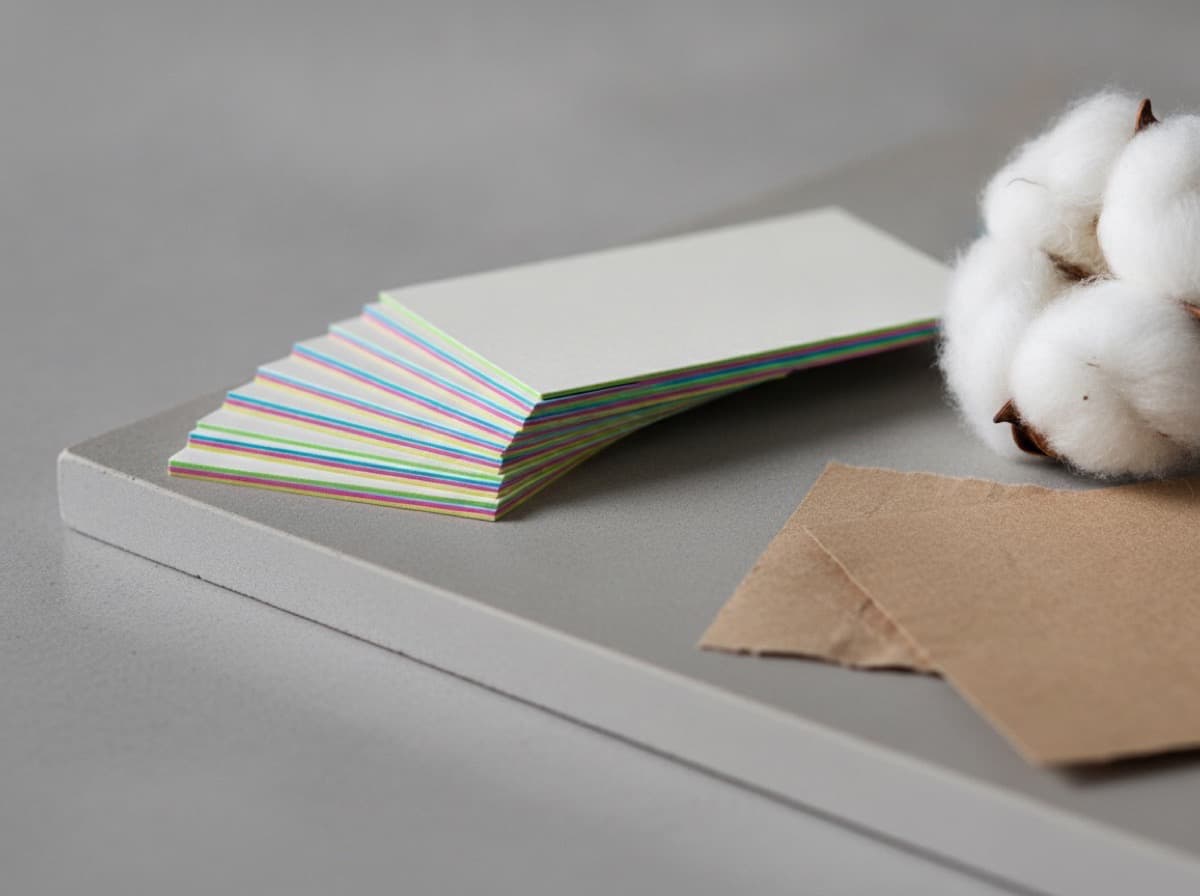
The moment someone picks up your business card, they feel it before they read it. The weight of the card, the texture of the surface, the flexibility (or rigidity) — all of these communicate something about your brand before a single word is processed. Paper stock selection is one of the highest-return design decisions you can make.
Understanding Business Card Weight
Business card weight is measured in points (pt) in the US, indicating thickness.
Common Weights
12pt (0.012 inches)
- Lightweight, flexible
- Economical printing option
- Feels thin when held
- Appropriate for: very large print runs where cost per unit is the priority
14pt (0.014 inches)
- The baseline for most quality business cards
- Standard weight that feels professional
- Balanced between cost and quality
- Appropriate for: general professional use, business cards on a reasonable budget
16pt (0.016 inches)
- The sweet spot for most professional cards
- Substantial feel without being heavy
- Widely available at most print vendors
- Appropriate for: most business card printing, professional services, retail
18pt (0.018 inches)
- Noticeably substantial
- Excellent for premium professional cards
- Great with soft-touch lamination
- Appropriate for: professional services, creative professionals, anyone who hands out cards at in-person events
32pt (0.032 inches)
- Extremely thick — noticeably luxurious
- "Raise your eyebrows" thickness
- Must be duplex (two layers laminated) to achieve
- Appropriate for: luxury positioning, executive cards, anyone for whom the card is a statement piece
The "Duplex" Construction
Cards thicker than ~18pt are typically constructed by laminating two sheets together. Duplex cards:
- Can feature different colors on each layer (visible at the edges)
- Edge treatment is possible: painted edges, raw kraft core, colored core
- Create a distinctive edge-on view that single-ply cards cannot achieve
Surface Coatings and Finishes
Glossy (Gloss Coating)
- Shiny, light-reflective surface
- Colors appear more vibrant and saturated
- Photographs and images look excellent
- Cannot write on glossy surfaces (pen doesn't adhere)
- Most common coating
- Best for: photograph-heavy cards, retail, anyone who wants vivid colors
Matte (Matte Coating)
- Non-reflective, flat surface
- Colors appear slightly muted compared to gloss
- Sophisticated, restrained feel
- Can write on matte surfaces (useful if you write notes on cards)
- Best for: professional services, legal, financial, creative professionals who want restraint
Soft-Touch (Soft-Touch Lamination)
- Velvety, silky texture under the fingers
- Creates a premium tactile experience
- Colors appear flat like matte but with added depth
- Extremely durable once laminated
- Costs more than gloss or matte coating
- Best for: luxury positioning, any professional who wants a memorable card feel, cosmetics, beauty, creative, tech companies
- Note: Can cause "stickiness" in certain conditions (high humidity, in pocket with other soft-touch cards)
Uncoated
- No coating applied — raw paper texture
- Excellent writability
- Warm, tactile, "natural" feel
- Colors appear slightly muted
- Paper grain is perceptible
- Best for: architects, designers, artists, anyone who wants an organic or craft feel
UV Coating
- A glossy clear coat applied by UV light
- Can be applied spot (spot UV) or full surface
- Spot UV is a design technique: selective gloss on a matte surface creates dramatic contrast
- Logo, name, or design elements appear to "glow" when held in light
- Best for: anyone who wants a subtle but stunning luxury effect
Aqueous Coating
- Water-based protective coating
- More environmental than UV
- Similar to gloss but slightly less shiny
- Adds durability
Specialty Stocks and Materials
Kraft / Recycled
- Brown paper tone from recycled content
- Environmental brand positioning
- Warm, organic aesthetic
- Best for: eco-positioned brands, food/beverage, organic/natural products, sustainability-focused companies
Cotton Stock
- Made from cotton fiber (like currency)
- Extremely durable
- Distinctive texture
- Flex without creasing
- Letterpress printing particularly beautiful on cotton
- Best for: attorneys, financial professionals, anyone letterpress printing
Clear / Transparent Plastic (PVC)
- Completely clear or frosted plastic card
- Modern, unusual, memorable
- Waterproof
- Limited writability
- Best for: tech companies, nightclubs, modern professional services
- Note: Some people find clear cards gimmicky; depends on brand positioning
Metal Cards (Stainless Steel, Brass, Aluminum)
- Metal sheet business card
- Extremely memorable and unique
- Significant weight and rigidity
- Laser engraved or chemically etched
- Cannot go through most paper shredders
- Best for: luxury brands, executives, anyone for whom the card should be a statement
- Expensive: typically $5-15+ per card
Letterpress on Cotton or Uncoated
- Impression created by pressing type into the paper
- Tactile depth impression on the surface
- Best viewed and felt at an angle
- Traditional, craft, prestigious feel
- Best for: law firms, financial advisors, architects, any brand with heritage positioning
Choosing the Right Stock
By Industry / Positioning
| Industry | Recommended Stock | |----------|------------------| | Law / Finance / Medical | 16pt uncoated, matte, or cotton letterpress | | Creative / Design | 16-18pt soft-touch, specialty stock, or duplex | | Luxury / Fashion | 18-32pt soft-touch or cotton, foil | | Hospitality | 16pt matte or gloss with strong photography | | Construction / Trades | 16pt glossy (durable, vivid) | | Tech companies | Clear PVC, 16pt soft-touch, or 32pt duplex | | Healthcare | 16pt matte or soft-touch | | Real estate | 16pt glossy with property photography |
Budget vs. Premium Decision
Budget approach: 14-16pt glossy — maximum color impact at standard cost.
Premium approach: 18-32pt soft-touch or duplex with spot UV — memorable, tactile, distinguishing.
Ultra-premium: Cotton letterpress, metal, or 32pt duplex with painted edges — conversation-starting statement piece.
Tips for Paper Selection
- Order samples before committing — most quality printers offer sample packets showing actual paper stocks
- Consider the feel in context — a velvety soft-touch card feels very different in a suit pocket vs. a trade show bag
- Match paper to content — uncoated paper shows ink slightly differently; CMYK colors on uncoated tend toward slightly muted and warm
- Durability matters — cards that get handled a lot (handed to many people) benefit from laminated stocks
- Writability matters — if you write notes on cards, skip gloss coating
- Edges matter — duplex construction creates an edge-on view; colored cores create striking edge effects
Get 10% off your first order
Join our list for practical printing guides, new finish ideas, and a welcome coupon for your first order.
No spam. Unsubscribe anytime.
Ready to put these tips into print?
Order Business CardsNot sure which option fits? Ask Pro Card Crafters