Business Card Paper Stock Guide: Coated, Uncoated, Silk, and Specialty Stocks
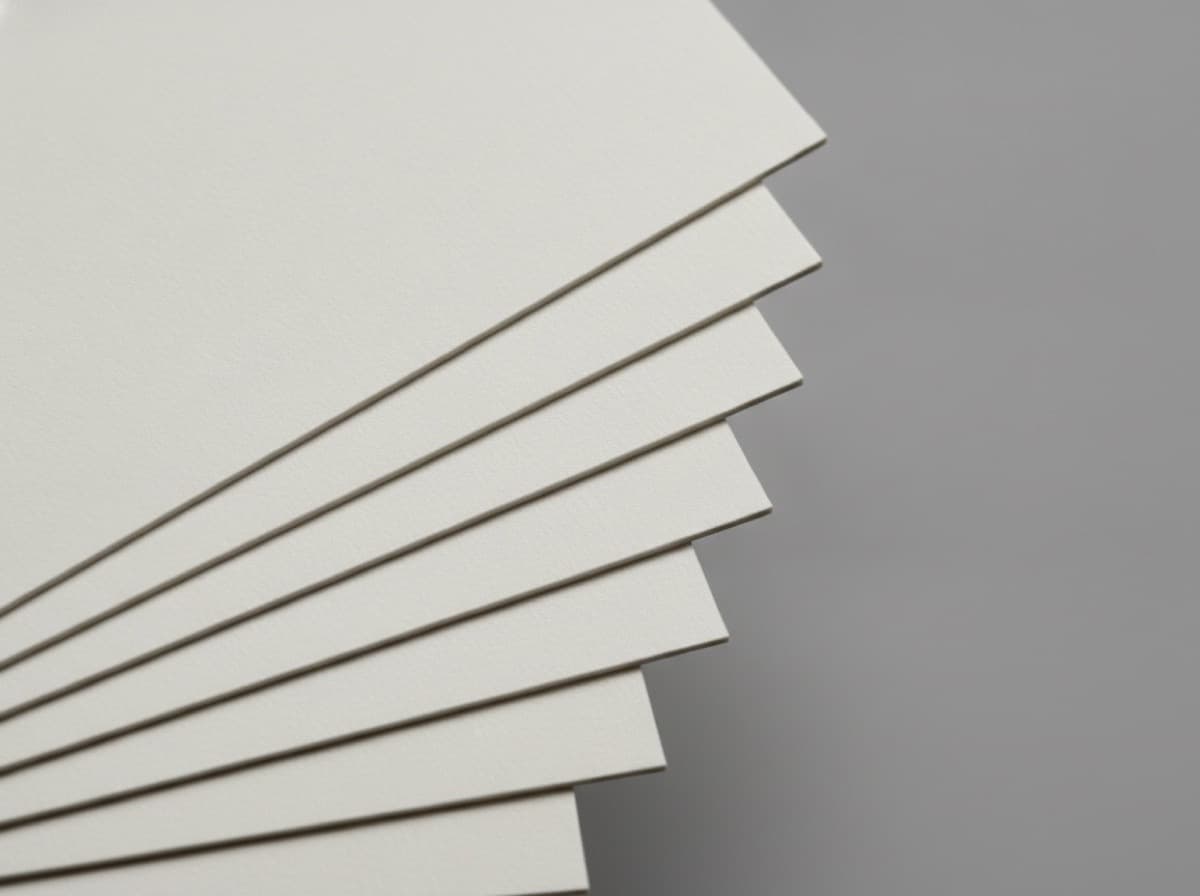
The paper stock you choose for your business cards is as important as your design — it determines how your cards feel in hand, how colors appear when printed, whether you can write on them, and the brand impression they leave with everyone who receives one. Paper selection is where print design meets materials science, and understanding the key categories helps you choose the right stock for your brand and use case.
The Two Base Categories: Coated vs. Uncoated
All business card stocks fall into two fundamental categories: coated and uncoated. Everything else (gloss, matte, silk, soft-touch) describes how the coating is treated or finished.
Coated Paper
What it is: Coated paper has a clay-based coating applied to the surface that fills in the tiny gaps between paper fibers, creating a smooth, less-porous surface. Ink sits on top of this coating rather than absorbing into the fibers.
Effect on printing: Colors reproduce more vividly and sharply on coated paper. Fine detail, photo imagery, and gradients reproduce with more precision. The coating reflects light, which makes colors appear brighter.
Types of coated stock:
- Gloss coated — High-reflective sheen finish. Colors are vivid, photos are sharp and luminous, images have depth. The surface is smooth and somewhat slick to the touch. Cons: fingerprints show easily, can feel impersonal in high-touch contexts, difficult or impossible to write on.
- Matte coated — Coated paper with a non-reflective finish. Colors are rich and deep (often described as "punchy" without the shine). The surface is smooth but doesn't reflect light. Easier to write on than gloss (though still some resistance). Feels more sophisticated than gloss in many contexts. Excellent for text-heavy designs. One of the most popular business card finishes.
- Silk/Satin coated — A finish that sits between gloss and matte. Also called "silk" or "satin," it has a subtle sheen that is less reflective than gloss but more luminous than matte. Colors reproduce well. The surface feels smooth and slightly velvety. Widely considered to offer the best balance of color reproduction and tactile appeal for professional business cards.
Who uses coated stock: Photography, design, marketing, fashion, hospitality, technology companies, most B2C consumer businesses — any brand where color accuracy and visual impact matter.
Uncoated Paper
What it is: Uncoated paper has no clay coating — it's "naked" paper, similar to the paper used in copy machines and high-quality writing paper. Ink absorbs into the paper fibers.
Effect on printing: Colors appear softer and less saturated than on coated stock. Fine photographic details may appear slightly less sharp. Text-based designs with flat colors reproduce well. The surface accepts writing with any pen.
Why choose uncoated:
- Writing on the card (back of card contact collection)
- Organic, natural, craft aesthetic
- Premium writing paper feel (think Crane & Co. stationery quality)
- Law firms, consultants, and other professionals who want a "serious document" feel
- Brands that emphasize sustainability (uncoated can be easier to recycle)
Common uncoated paper options:
- Standard white uncoated — clean, versatile
- Off-white / cream — warm, traditional
- Laid or linen texture — embossed texture pattern that catches light (classic for law firms, accountants)
- Felt-marked texture — pressed fabric-like pattern
Who uses uncoated: Law firms, financial advisors, consultants, professors, therapists, authors, organizations where handwriting on the card is expected, brands with a natural/sustainable aesthetic.
Specialty Finishes and Treatments
Soft-Touch Laminate (Velvet Laminate)
What it is: A matte laminate film applied to a coated stock that creates a velvety, almost rubber-like texture that is extremely satisfying to touch. Sometimes called "suede" or "velvet" laminate.
Effect: The cards feel luxurious and premium — the soft-touch coating triggers the same sensory response as high-quality soft goods. Colors appear deep and rich under the matte laminate. The surface is very difficult to write on.
Best for: Luxury brands, high-end service professionals (wealth management, luxury real estate, luxury hospitality), creative professionals who want an impressive tactile statement. Soft-touch laminate cards are memorable specifically because of how they feel.
Caution: The laminate can scratch and show marks if cards rub against each other in a wallet or cardholder. Some printers offer a spot coating (UV spot or gloss spot on top of soft-touch) to protect high-traffic areas while preserving the texture elsewhere.
UV Spot Coating
What it is: A high-gloss varnish applied to specific areas of a matte or soft-touch card — typically over logos, images, or text elements — creating a contrast between shiny and matte areas.
Effect: Selective shine draws the eye to the UV-coated elements while the surrounding area stays matte. Creates visual hierarchy and a premium impression.
Best for: Brands with a strong logo or graphic element that benefits from visual emphasis. Lawyers, consultants, and creative professionals who want a subtle premium touch without full gloss.
Cotton Stock (Cotton Rag Paper)
What it is: Business card stock made from cotton fibers rather than wood pulp. The most famous example is Crane's cotton stationery (the same cotton paper used to print US currency). Uncoated.
Effect: Exceptionally luxurious feel — cotton paper has a substantial, slightly textured hand that communicates quality and permanence. The fibers hold ink in an organic way. Letterpress printing on cotton stock is one of the finest business card experiences available.
Best for: Attorneys, bankers, executives, consultants — anyone for whom the handshake and the card exchange are signature moments and budget is not the primary concern. Often combined with letterpress or foil stamping.
Weight: Often 130–180 lb. stock or heavier; heavy enough that the card has a satisfying weight.
Kraft Paper
What it is: Brown, natural, recycled-looking paper stock that carries organic, craft-brewery, sustainable, or artisan connotations.
Effect: Natural, earthy, authentic. Colors print differently — because the stock is brown, white ink is often required for light elements; CMYK colors shift warmer on kraft.
Best for: Organic food brands, breweries, coffee roasters, herbalists, farmers market vendors, handmade goods businesses, sustainability-focused brands. Not appropriate for most corporate or professional contexts.
Paper Weight: Thickness and Feel
Paper weight (in lbs or gsm) affects how the card feels in hand:
Standard weights:
- 14 pt (350 gsm): Industry-standard business card thickness. Most cards you receive are 14 pt.
- 16 pt (400 gsm): Noticeably thicker and more substantial. Premium standard.
- 18–20 pt (450–500 gsm): Extra-thick cards that feel very weighty. Statement-level.
- 32 pt: Ultra-thick "super thick" or "duplex" cards (two 16 pt sheets bonded together). Double the normal weight; extremely impressive.
Tip: Going up in paper weight is one of the highest-return investments in card quality. The difference between 14 pt and 16 pt is immediately noticeable. The difference between 14 pt and 32 pt is dramatic.
Choosing the Right Stock
| Need | Best Stock | |------|-----------| | Photos / gradients / vivid color | Gloss coated or silk | | Premium without shine | Matte coated | | Maximum luxury tactile feel | Soft-touch laminate | | Writing on card (back) | Uncoated | | Law firm / banking / authority | Cotton rag or premium uncoated | | Creative / design professional | Soft-touch + UV spot, or silk | | Organic / craft brand | Kraft | | Budget-conscious professional | 14 pt matte coated | | Maximum impression / memorable | 32 pt duplex, soft-touch, or cotton |
Checklist
- [ ] Determine if photos/gradients are in your design → coated required
- [ ] Decide if writing on card is important → uncoated or matte
- [ ] Match stock to brand aesthetic (luxury vs. approachable vs. organic)
- [ ] Consider weight (14 pt vs. 16 pt vs. 32 pt duplex)
- [ ] Request samples from your printer before ordering the full run
- [ ] Check if specialty stock (cotton, kraft, soft-touch) is available in your quantity
- [ ] Account for laminate compatibility if combining UV spot with soft-touch
Get 10% off your first order
Join our list for practical printing guides, new finish ideas, and a welcome coupon for your first order.
No spam. Unsubscribe anytime.
Ready to put these tips into print?
Order Business CardsNot sure which option fits? Ask Pro Card Crafters