Business Card Sizes and Shapes: Standard, Square, Mini, and More
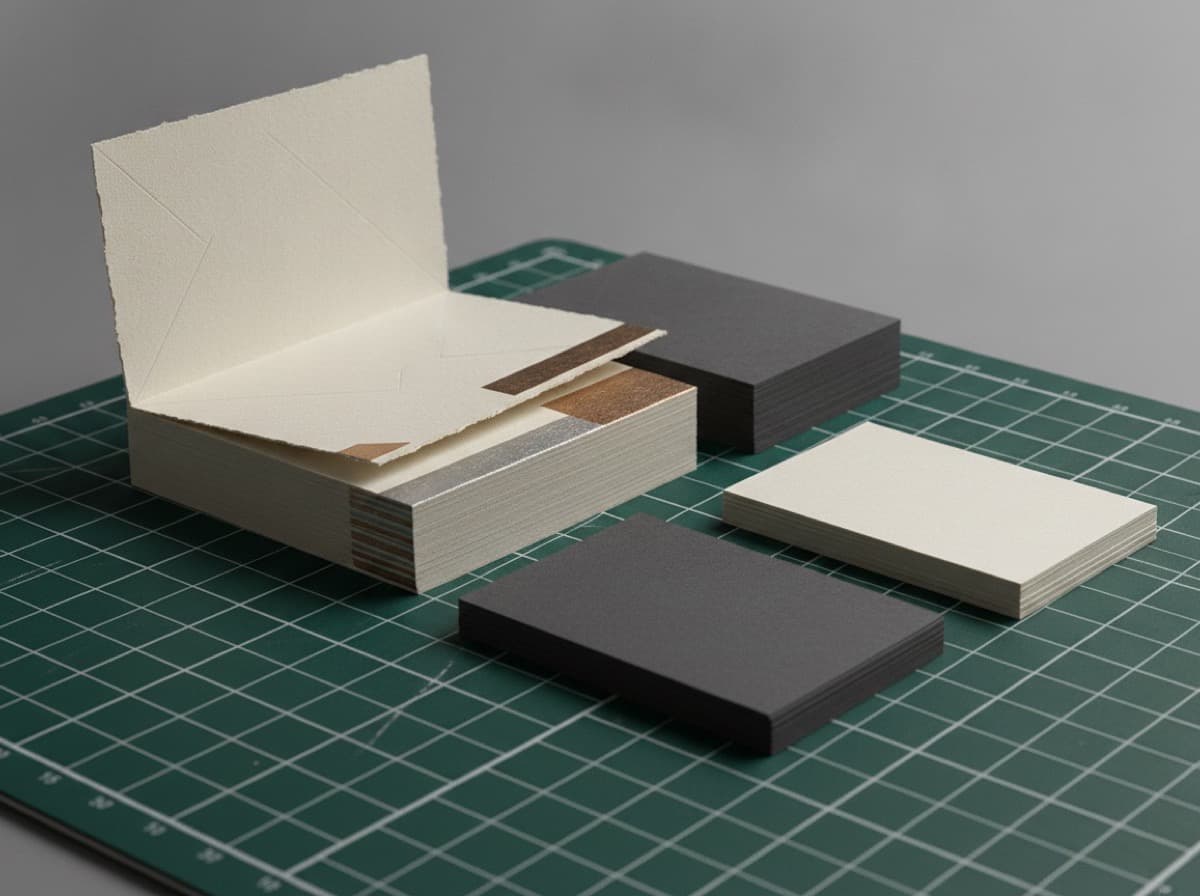
The standard US business card is 3.5 × 2 inches — but that's the default, not a rule. An increasing number of professionals use alternative sizes and shapes strategically, either to stand out or to match a specific function.
Here's a complete guide to every card format you're likely to encounter.
Standard Business Card Sizes by Country
Business card sizes are not universal. If you conduct business internationally, it's worth knowing the standard in each market:
| Country | Standard Size | Notes | |---|---|---| | United States | 3.5 × 2 inches (88.9 × 50.8mm) | Most widely used format in North America | | Canada | 3.5 × 2 inches | Same as US | | Europe | 85 × 55mm (3.35 × 2.17 inches) | Slightly smaller and rounder-cornered | | UK | 85 × 55mm | Follows European standard | | Japan | 91 × 55mm (3.58 × 2.17 inches) | Slightly wider than European | | Australia | 90 × 55mm | Close to European | | China | 90 × 54mm | Similar to Japanese |
Practical implication: If you're having cards printed in the US for use in Europe, the 3.5 × 2 inch card is 2mm taller than European standard — it won't fit in European business card holders perfectly. For heavy international use in European markets, consider printing at 85 × 55mm instead.
US Format Options in Detail
Standard US: 3.5 × 2 inches
Best for: Universal, default, fits all wallets and card holders
Pros:
- Fits in every wallet card sleeve, business card holder, and Rolodex
- Universally recognized — recipients know exactly what to do with it
- Maximum design real estate among standard options
- Most printing options and pricing available
Cons:
- Not distinctive — the same size as everyone else's card
- Can get lost in a stack
Best for: Most professionals. When in doubt, choose standard.
Square: 2.5 × 2.5 inches (or 2 × 2 inches)
Dimensions: Most common square size is 2.5 × 2.5 inches
Best for: Creative professionals, photographers, food businesses, Instagram-native brands
Pros:
- Immediately distinctive — stands out in any card holder
- Instagram-native format (feels familiar to digital-native clients)
- Smaller surface encourages minimal, focused design
- Modern and forward-looking aesthetic
Cons:
- Slightly less design space than standard
- Does NOT fit standard card holders (will need to stand alone)
- Higher per-unit cost than standard
- Can feel precious or design-focused (which may be a pro for creatives)
Best for: Photographers, designers, food entrepreneurs, creative services, brand-conscious professionals
Mini: 3.5 × 1.75 inches (or 2.5 × 1.25 inches)
What it is: Half the height of a standard card
Best for: Simple, information-light cards; appointment reminder format
Pros:
- Inexpensive
- Takes less wallet space
- Feels different enough to be noticed
Cons:
- Very limited design space
- Can look incomplete or bargain-basement without careful design
- Not widely offered at all printers
Best for: Appointment reminder cards, simple contact-only cards, brands where minimalism is a deliberate statement
Slim / Skinny: 3.5 × 1 inch (or 3.5 × 1.5 inches)
What it is: Very thin horizontal card, like a bookmark
Best for: Bookmarks for authors, slim specialty branding, ticket-style cards
Pros:
- Extremely distinctive
- Works beautifully as a bookmark for authors or bookshops
Cons:
- Very limited text space
- Challenging to fit standard information without 6pt font
Best for: Authors, publishers, specialty businesses with very simple contact needs
Rounded Corners
What it is: Standard 3.5 × 2 card with corners cut at a radius (typically 1/8" or 1/4" radius)
Effect: Softer, more modern, approachable aesthetic
Cost: Minor upcharge (corner die-cutting)
Best for: Consumer-facing businesses, wellness, children's services, food, any brand that benefits from "approachable" signaling
Not recommended: Very corporate or formal B2B contexts where sharp corners signal precision
Die-Cut Custom Shapes
What it is: Cards cut into non-rectangular custom shapes — house shape for real estate, guitar pick for musicians, etc.
Pros: Extraordinarily memorable if done well
Cons:
- Very expensive (custom die per shape)
- Hard to store and carry
- Often looks gimmicky rather than impressive
- Specific shapes lose meaning quickly ("Oh, they cut it into a house, I get it")
Best for: Situations where the card IS the marketing event (trade shows, pop-ups) and not your ongoing business card
European: 85 × 55mm
What it is: Standard size in European markets
How it differs from US: Slightly smaller (2mm less height, 4mm less width)
Best for: Companies with significant European business travel
Rounded Corners vs. Square Corners: The Detail That Matters
Within the standard 3.5 × 2 format, the single most impactful finishing decision after lamination is the corner treatment:
Square corners: Precise, traditional, corporate, formal. Better for law firms, financial services, medical professionals.
Rounded corners (1/8" radius): Modern, approachable, friendly, consumer-facing. Better for restaurants, wellness, retail, creative services.
Rounded corners (1/4" radius): More casual, friendly, rounded. Pet businesses, children's services, hospitality.
How to Choose Your Format
Choose standard 3.5 × 2 if:
- You hand your card to clients in traditional business contexts (B2B meetings, conferences)
- Your clients carry standard card holders or wallets with card slots
- You want the widest printing option availability and lowest cost
Choose square if:
- You are in a creative, visual, or lifestyle industry
- Your clients are Instagram-native and the format feels familiar
- You can afford the slight premium and can handle the "won't fit card holders" limitation
Choose mini/slim if:
- Your card serves a specific function (appointment reminder, bookmark)
- Minimalism is a core brand value
- You're distributing in contexts where small size is advantageous
Choose custom die-cut if:
- You have a specific event or campaign where the shape IS the message
- Budget is not a constraint
- You accept that most recipients won't carry it in a standard card holder
For most professionals: standard 3.5 × 2 with either square or rounded corners is the right choice. The energy better spent on paper quality, finish, and design quality within the standard format than on an unusual size.
Get 10% off your first order
Join our list for practical printing guides, new finish ideas, and a welcome coupon for your first order.
No spam. Unsubscribe anytime.
Ready to put these tips into print?
Order Business CardsNot sure which option fits? Ask Pro Card Crafters