Cotton Paper vs. Synthetic Paper vs. Standard Stock: Business Card Material Guide
When someone takes your business card, the first signal your brand sends is tactile — before they read your name, before they see your logo, their fingers have already formed an impression based on the weight, texture, and feel of the card. The right paper stock reinforces your brand; the wrong one undermines everything the design worked to create.
This guide compares the major business card materials available for ProCardCrafters custom orders: standard cardstock, silk laminate, cotton paper, and synthetic stock.
Standard Cardstock (14pt and 16pt Gloss or Matte)
What it is: Standard cardstock is the most common business card material — a wood-pulp paper with either gloss coating (bright, slightly plastic) or matte coating (flat, no sheen) applied to one or both sides.
Weight: 14pt (thin-to-standard) and 16pt (standard-to-thick).
Finish options:
- Gloss — bright, colors pop, photos look vibrant; fingerprints visible
- Matte — flat, sophisticated, less saturated; writeable
- Silk — between matte and gloss; semi-soft feel
Best for:
- General professional use where premium feel isn't a defining brand attribute
- High-volume handout contexts (trade shows, event giveaways)
- Budget-conscious orders
- Cards with full-color photography (gloss shows photos best)
Limitations:
- 14pt can feel thin and lightweight compared to premium alternatives
- Gloss coating is not writable with most pens
- Less differentiated in a stack of cards
Price: Lowest of all stock options; most economical for large quantities.
32pt Silk Laminate Thick Cardstock
What it is: A thick (32pt = twice as thick as standard) cardstock with a thin laminate film — either matte/silk (smooth, semi-soft), gloss, or soft-touch (velvet). The laminate protects the printed surface and adds tactile texture.
Weight: 32pt is noticeably premium — it has the weight of a credit card without the rigidity.
Feel: Silk laminates: smooth, cool, confident. Soft-touch (velvet) laminate: velvety, warm, memorable.
Best for:
- High-end professional cards (real estate, finance, C-suite, creative)
- Professionals who want premium feel without maximum cost
- Combining with UV spot coating (the contrast effect is most dramatic on soft-touch laminate)
Ideal combinations:
- 32pt soft-touch matte + UV spot coating on logo
- 32pt silk laminate + foil stamping
Price: Moderate; significantly more than standard stock but below cotton or synthetic.
Cotton Paper Business Cards
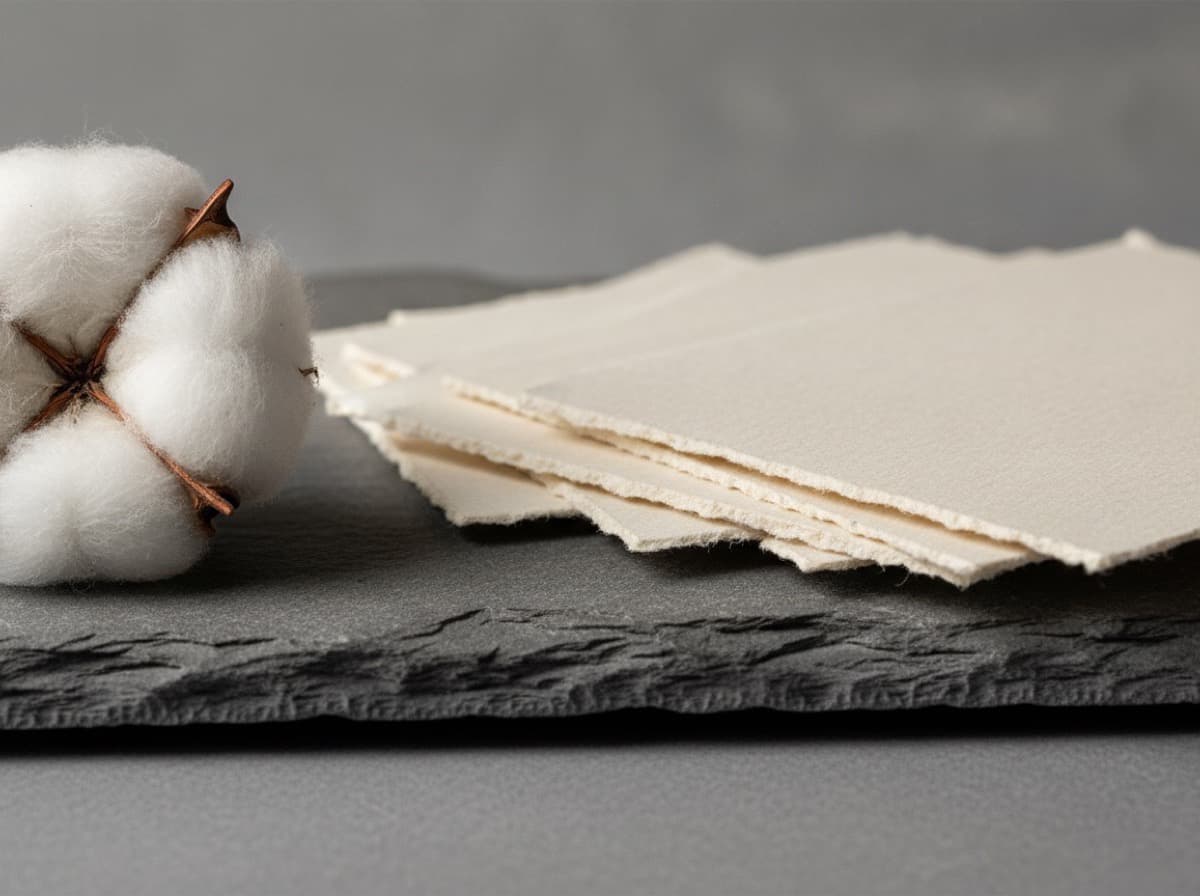
What it is: Cotton paper is made from cotton fiber (typically cotton rag or cotton linter, a textile manufacturing byproduct) rather than wood pulp. The most well-known brand is Crane & Co.; Mohawk and various letterpress printers use cotton stock.
Weight: Available in a range of weights; 600gsm cotton stock is the pinnacle.
Feel: Cotton paper has a distinctly organic texture — slightly rough, warm, with a natural fiber texture visible under light. It's the feel of a premium invitation or official document.
Visual character: Colors print slightly muted compared to coated stocks — the cotton fibers absorb ink differently. Typography looks extraordinary on cotton; photos are less vibrant than on gloss.
Best for:
- Letterpress printing — the cotton fibers absorb the impression beautifully
- Attorneys, consultants, designers, architects, and other high-end service professionals
- Cards that should feel like they belong in a leather portfolio
- "The last card they'll ever throw away"
Ideal uses:
- Blind emboss or deboss on cotton stock — pure texture, no color
- Letterpress text and monogram on thick cotton stock
- Minimalist cards where the material IS the message
Limitations:
- Not suitable for UV spot coating (adhesion issues)
- Colors less vibrant than coated stocks
- Premium price point
Price: Premium; often 3–5x standard stock per card.
Synthetic / Plastic Business Cards
What it is: Business cards made from PVC (same material as credit cards) or PETG synthetic film. Essentially waterproof, flexible, and highly durable.
Varieties:
- Opaque white PVC — looks like a credit card
- Translucent / frosted PVC — semi-transparent; unique visual effect
- Clear / transparent PVC — fully see-through; dramatic
Feel: Exactly like a credit card — smooth, slightly flexible, never wrinkles or bends at corners.
Durability: Essentially waterproof and tear-proof. A PVC card survives a washing machine cycle. Standard paper cards do not.
Best for:
- Outdoor professionals (landscapers, contractors, pool service — a waterproof card survives job sites)
- Alcohol and food service (survives drink rings and grease splashes)
- Health and fitness professionals (gyms, pools, wet environments)
- Any client who wants a card that still looks perfect after a year in a wallet
- Clear/transparent cards as a dramatic visual statement
Limitations:
- Cannot write on PVC with most pens
- Less traditional feel; some formal professional contexts (attorneys, bankers) may feel it's too casual
- Less eco-friendly than cotton or FSC-certified paper
Price: Mid-to-premium; typically between silk laminate and cotton in cost.
At-a-Glance Comparison
| Material | Feel | Durability | Color Vibrancy | Writeable | Best For | |----------|------|------------|----------------|-----------|----------| | 16pt Matte | Standard | Average | Good | Yes | General use | | 16pt Gloss | Smooth, bright | Average | Excellent | No | Photo-heavy cards | | 32pt Silk Laminate | Premium smooth | Good | Very good | No | Most professional use | | 32pt Soft-Touch | Velvety, warm | Good | Good | Limited | Luxury professional | | Cotton Paper | Organic, textured | Average | Moderate | Yes | Letterpress, formal | | Synthetic / PVC | Credit-card feel | Excellent | Very good | No | Outdoor, wet, durability |
How to Choose
If you want premium feel at the best value: 32pt soft-touch laminate + UV spot coating. If you want the most memorable tactile impact: Cotton paper with letterpress and blind emboss. If you need the most durable card possible: Clear or frosted PVC. If you need to write on your cards: Matte uncoated or cotton (soft-touch and gloss are not pen-friendly). If you're a photographer / visual artist / food professional: 16pt or 32pt gloss for maximum photo vibrancy.
The best card stock for your brand is the one that aligns with how you want clients to feel the moment they pick up your card. Choose the material that tells that story.
Get 10% off your first order
Join our list for practical printing guides, new finish ideas, and a welcome coupon for your first order.
No spam. Unsubscribe anytime.
Ready to put these tips into print?
Order Business CardsNot sure which option fits? Ask Pro Card Crafters