Eco-Friendly Business Cards: Recycled Paper, Soy Ink, and Sustainable Options
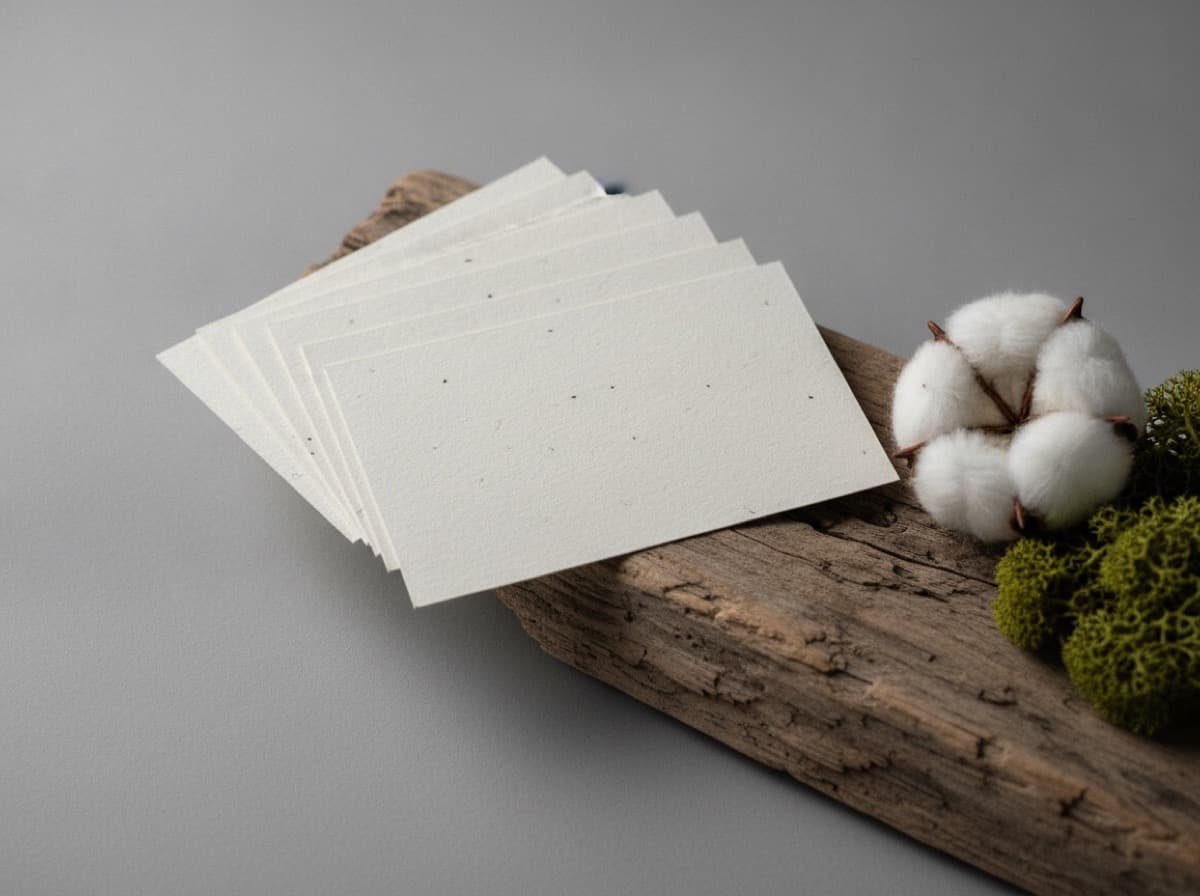
For some businesses, printing on recycled or sustainably sourced materials is a core brand value. For others, it's an ethical preference. For all, it's worth knowing what the options actually mean — because "eco-friendly" in print covers a wide range of practices, some more meaningful than others.
Paper: Where the Biggest Environmental Impact Is
Paper production has a significant environmental footprint through deforestation, water usage, bleaching, and energy consumption. Choosing responsibly sourced paper is the highest-impact sustainable decision you can make in print.
FSC Certified Paper
The Forest Stewardship Council (FSC) certifies forests and paper supply chains for responsible forest management. FSC-certified papers come from forests managed for sustainability, biodiversity, and community benefit.
What to look for: FSC Mix (from a mix of FSC-certified, recycled, and controlled sources) or FSC Recycled (from 100% recycled sources).
Significance: More meaningful than "eco-friendly" marketing language without certification.
Post-Consumer Recycled (PCR) Content
PCR paper is made from paper that has already been used and collected for recycling — newspapers, office paper, cardboard — rather than virgin tree fiber.
Percentages matter:
- 10-30% PCR: Minor environmental improvement
- 50% PCR: Moderate improvement
- 100% PCR: Maximum recycled content
Some premium 100% recycled papers are also high-quality uncoated stocks that print beautifully and have an organic, tactile feel.
Bamboo and Alternative Fibers
Bamboo grows faster than trees (some species 3-4 feet per day) and sequesters more carbon per acre than most forest species. Bamboo paper is now available in commercial print-grade quality.
Other alternative fibers: sugarcane (bagasse), agricultural straw, hemp. Less common in commercial printing but available from specialty printers.
Chlorine-Free Processing
Traditional paper bleaching uses chlorine-based chemicals that create dioxins as byproducts. Look for:
- ECF (Elemental Chlorine Free): Uses chlorine compounds but not chlorine gas
- TCF (Totally Chlorine Free): No chlorine compounds at all
TCF is the most environmentally preferable.
Ink: What "Soy Ink" Actually Means
Conventional printing inks use petroleum-based solvents and pigments. Soy-based (vegetable oil-based) inks replace those petroleum components with soy or other plant-derived oils.
Benefits of soy ink:
- Renewable feedstock vs. petroleum
- Lower VOC (volatile organic compound) emissions during printing
- Easier paper recycling (vegetable oils are easier to remove during de-inking)
- Similar or better print quality vs. conventional inks
The limitation: Soy ink is now standard at most offset printers. If you're seeing "soy ink" as a marketing differentiator, it's worth knowing it's fairly common — not as exceptional as some marketing implies.
More meaningful: UV-curable inks (zero VOC, no solvent evaporation) used on many digital presses are also low-emission, but this is rarely marketed separately.
Special Eco-Friendly Card Options
Seed Paper Cards
Seed paper is embedded with wildflower, herb, or vegetable seeds. After use, the recipient can plant the card in soil, water it, and grow plants.
Appeal: Extremely memorable, zero waste (the card becomes flowers), on-brand for garden centers, farms, eco-businesses, wellness brands, florists.
Limitation: Printing on seed paper is limited to simple designs (the rough texture limits fine detail). Also available only from specialty printers at higher per-unit costs.
Best for: Businesses where the gimmick IS the point and the client keeps the card specifically to plant it.
Cork Cards
Made from cork bark shavings pressed into sheets. The cork texture is distinctive, the material is 100% natural, and cork harvest doesn't harm the tree (bark regrows).
Best for: Wine businesses, eco-brands, wellness, natural products.
Stone Paper
Made from calcium carbonate (limestone) and a small percentage of plastic resin. Uses no trees, no water, and no bleaching in production.
Printing quality: Excellent. Incredibly smooth surface takes printing beautifully. Durability: Completely waterproof — won't tear when wet. Biodegradability: Breaks down under UV exposure (sunlight) in 6-18 months when exposed.
Best for: Any business that wants waterproof cards with an eco story.
Cotton/Rag Paper
100% cotton fiber (no wood pulp). Cotton is a byproduct of the textile industry — the fiber used is cotton linter (too short for clothing).
Quality: Extremely high-quality printing substrate. Used for premium letterpress and fine art printing. Currency paper is cotton-based.
Eco story: Made from textile industry byproduct. Lower impact than virgin wood pulp.
What "Carbon Neutral" or "Carbon Offset" Claims Mean
Some printers claim "carbon neutral printing" through purchased carbon offsets — paying for carbon capture projects (forest preservation, methane capture) to offset printing emissions.
How meaningful is this? Carbon offsets are controversial. The quality of offset projects varies enormously. Verified offset standards (Gold Standard, Verra VCS) are more credible than self-reported offsets. If eco credentials are important to your brand, look for verified third-party certified offset claims.
Sustainable Design Choices That Reduce Impact
Beyond materials, card design affects environmental footprint:
One-sided printing: Uses less ink. Half the print coverage = roughly half the ink.
Spot color vs. full color: 1-2 Pantone colors vs. full CMYK uses significantly less ink.
Appropriate quantity: Don't over-order. 250 cards you use is better than 1,000 cards you discard half of.
Lighter coverage: A white card with minimal black ink has a lighter environmental footprint than a dark, heavily inked card.
Checklist for Eco-Friendly Card Ordering
- [ ] FSC-certified or 30%+ PCR recycled paper
- [ ] Soy or vegetable oil-based inks specified
- [ ] Chlorine-free (ECF or TCF) paper if possible
- [ ] Sustainable finishing: water-based laminates instead of plastic film when available
- [ ] Print quantity matched to actual distribution need
- [ ] Printer has verifiable environmental certifications, not just marketing language
Get 10% off your first order
Join our list for practical printing guides, new finish ideas, and a welcome coupon for your first order.
No spam. Unsubscribe anytime.
Ready to put these tips into print?
Order Business CardsNot sure which option fits? Ask Pro Card Crafters