Embossed and Letterpress Business Cards: Techniques, Paper, and Design Guide
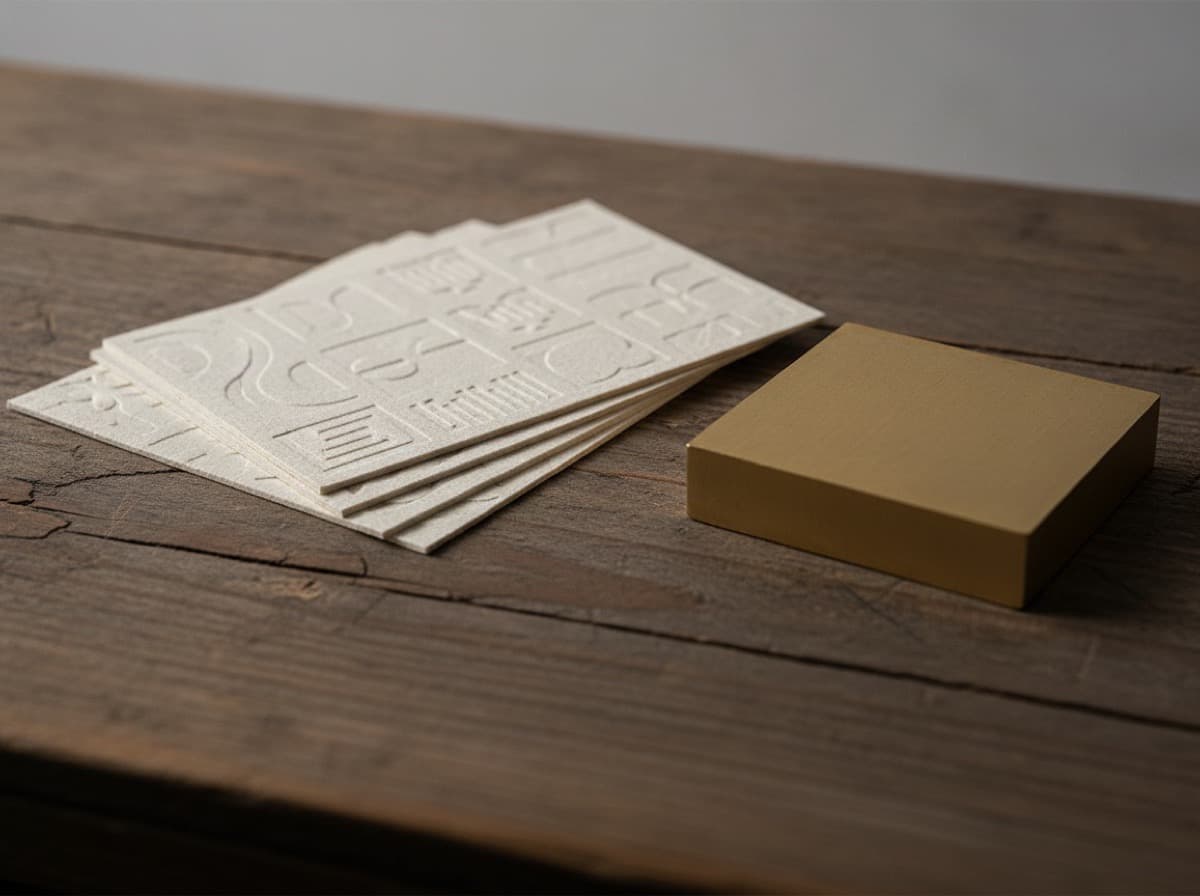
Embossed and letterpress business cards appeal to a physical sense that photography can't replicate — the tactile depth of a raised impression or the inked groove of letterpress type that you feel with your fingertip. These traditional techniques create cards that are held, examined, and kept rather than filed and forgotten.
What Is Embossing?
Embossing is a pressure-based process that creates a raised (emboss) or recessed (deboss) impression in paper without ink:
- Blind emboss: Raises an element above the card surface with no ink or foil — the impression is visible but colorless, catching light on the raised edges
- Deboss: Presses an element below the card surface — the impression is recessed
- Color emboss: Embossing combined with foil or ink coloring the raised area
- Foil emboss: Foil stamping + embossing in a single die pass — metallic and raised
The Die
Embossing requires a custom metal die — a male die (raises) and female die (receives) working together under pressure. The die is:
- Etched or machined to your exact design
- One-time setup cost ($50-150 for standard etched dies, $150-400 for sculpted/3D)
- Reused for subsequent orders (stored by your printer or shipped to you)
What Is Letterpress?
Letterpress is a relief printing process where type or images are inked and pressed into paper:
- Ink sits on raised metal type or photopolymer plates
- Pressed with significant pressure into thick paper
- Creates a visible and tactile "deboss" impression from the ink
- The ink impression (often called the "bite") is characteristic
Letterpress is the oldest commercial printing technique — refined over 500+ years — and is experiencing a contemporary revival for premium stationery and business cards.
The Letterpress Aesthetic
- Ink color appears rich and dense against uncoated cotton paper
- The "bite" (impression into paper) is the defining tactile quality
- Slightly uneven ink coverage (intentional character, not a flaw)
- Works best with simple, clean designs — detailed halftones are not letterpress-appropriate
Paper: The Foundation of Both Techniques
Why Paper Matters for Tactile Printing
Both embossing and letterpress require substantial paper:
- Thin stock doesn't hold the impression well
- The paper's fiber content affects how the impression sets and holds over time
- Cotton rag paper is the traditional letterpress substrate — archival, holds impression beautifully, luxurious feel
Recommended stocks:
- 100% cotton rag paper: Crane's Lettra, Arturo, Savoy — the classic letterpress choice. 220gsm or 320gsm.
- Heavy uncoated paper: 100lb+, uncoated text or cover stock
- Soft cotton blend: Softer than cotton rag, good for embossing
Avoid for letterpress:
- Coated paper (ink sits on top rather than pressing in — no bite)
- Photo paper or glossy stock
Avoid for embossing:
- Very thin stock (tears or creases instead of holding shape)
- Heavily coated (resists impression)
Design for Embossed and Letterpress Cards
Rule 1: Simple, Bold, Substantial
Both techniques work best with design elements that have:
- Solid areas (not gradients or screens)
- Bold letterforms — letterpress is not for 6pt body text
- Clear, open shapes with defined edges
For letterpress: minimum 8pt font size, and bold or semi-bold weight. Light weights at small size disappear in letterpress.
Rule 2: Embrace the Limitations as Aesthetics
Letterpress has a characteristic aesthetic that clients choose it for:
- Ink variation and slight impression inconsistency is part of the character
- Simple, typographic designs often work better than complex illustrations
Rule 3: One or Two Colors Maximum
Letterpress requires a separate press pass for each color:
- Single color (black on cream cotton): the classic, affordable option
- Two colors: significantly more expensive (two setup + two press runs)
- Full CMYK letterpress: very expensive, specialized; usually reserved for fine art prints
Rule 4: Design the Impression
For blind embossing, think about how the design element looks as a shadow/relief:
- Simple logos and brand marks work best
- Monogram initials on a plain card (back or corner) — a subtle embossed initial is the most elegant single element
- Geometric border embossed on the card front
Embossed vs. Letterpress: When to Choose Each
| Consideration | Embossed | Letterpress | |--------------|----------|-------------| | Cost | Lower (metal die + press time) | Higher (plates, press time, paper) | | Color | Blind (no color) or with foil | Yes — rich ink on paper | | Volume | Works for larger runs | Best in smaller runs (100-500) | | Aesthetic | Raised texture, neutral | Ink impression, "artisan" | | Best paper | Heavy, any color | Cotton rag, cream/white | | Combined with | Foil stamping, spot UV | Foil stamping |
Pricing
Letterpress cards (250-500 quantity):
- 1 color: $200-500
- 2 colors: $350-700
- 2-sided: add 40-70%
Embossed cards (250-500 quantity):
- Setup (die): $75-200 one-time
- Blind emboss per card: 15-40% premium over standard
- Foil + emboss: significant premium
Who Benefits Most
Letterpress and embossed cards shine for:
- Attorneys, consultants, and professionals in traditional fields where the card signals substance
- Creative professionals where a beautifully crafted card is itself a portfolio statement
- Luxury brands, wedding planners, and fine hospitality
- Architects, designers, and anyone whose work involves materials and craft
- Limited-run personal brand identity projects
Less appropriate for:
- Very high volume distribution
- Professions where the card is primarily functional (contact info, quick transaction)
- Budget-constrained print runs where premium finishing crowds out other marketing
Checklist
- [ ] Paper: heavy uncoated or cotton rag selected
- [ ] Design: simple, bold, minimum 8pt text for letterpress
- [ ] One or two spot colors (letterpress) or blind (emboss)
- [ ] Die setup included in quote
- [ ] Proof: request a press proof before full run
- [ ] Quantity: letterpress typically minimum 100-250 quantity
- [ ] Supplier: work with a specialist letterpress printer for best results
Get 10% off your first order
Join our list for practical printing guides, new finish ideas, and a welcome coupon for your first order.
No spam. Unsubscribe anytime.
Ready to put these tips into print?
Order Business CardsNot sure which option fits? Ask Pro Card Crafters