Letterpress and Foil Business Cards: Premium Print Finishing Guide
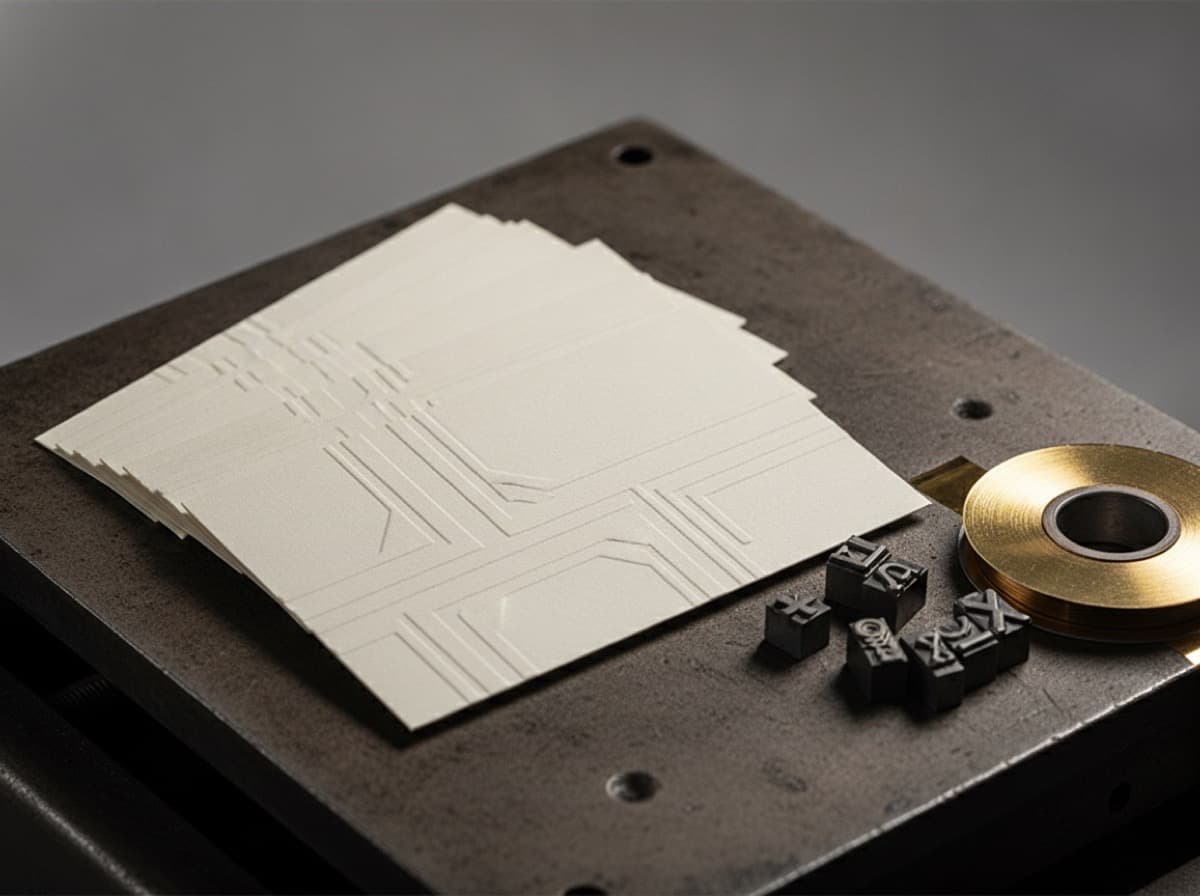
Letterpress printing and foil stamping are the premium printing and finishing techniques that transform a business card into a luxury tactile object — creating the debossed impression of letterpress, the metallic brilliance of foil, and the physical texture that makes people want to pick up and hold the card long after your first meeting. These are not everyday print techniques; they add cost, require specific design files, and demand certain paper stocks — but for the right professional and brand, the investment pays back in lasting impression.
Letterpress Printing
How Letterpress Works
Letterpress is one of the oldest printing techniques — and one that produces a uniquely contemporary premium result. In letterpress:
- A die is created from the design (photopolymer plate from a digital design, or traditional metal/wood type)
- The die is inked with letterpress ink
- The inked die is pressed firmly into the card stock under pressure
- The result: the design is both printed with ink AND physically impressed (debossed) into the paper
The physical impression (debossing) is the key characteristic of letterpress. Running your finger across a letterpress-printed surface, you feel the design as it presses into the paper. The tactile quality is impossible to replicate digitally.
What Letterpress Produces
Debossed impression: The primary letterpress effect — elements are pressed into the paper, creating a tactile depression. Most visible from an angle where light catches the impression.
Ink on impression: The die also deposits ink, so the letterpress element is both tactile and colored. Common ink choices: black, navy, a single brand color.
Blind deboss: A die pressed into the paper without ink — creates a subtle, texture-only impression with no ink color. Elegant and refined.
Letterpress + flat printing: Often letterpress is combined with standard offset or digital printing — the main design is printed digitally, and the logo or key element receives letterpress treatment.
Design Requirements for Letterpress
Line weight: Letterpress works best with bold, solid elements. Very thin lines (under 0.5pt) may not print consistently under the die pressure. Avoid hairlines, very fine serifs at small sizes, and highly detailed illustrations.
Reversal / knockouts: Thin reversed-out elements (white text on colored background) in letterpress can be tricky — the die presses into the paper which can spread slightly. Design with slightly heavier strokes than you would for offset printing.
Number of colors: Each color in letterpress requires a separate die run. Two-color letterpress = two die impressions. To control cost, most letterpress cards use 1–2 colors maximum.
Paper stock required: Letterpress requires thick, uncoated, soft paper stock to accept the impression. Cotton paper (100% cotton) is the premier letterpress substrate — luxuriously soft and accepts deep impression beautifully. Crane & Co., Lettra paper (by Crane), and Colorplan are classic letterpress papers. Minimum: thick uncoated stock (110–130 lb cover weight or higher). Coated stocks (glossy or matte laminate) do not work for letterpress — the coating is too hard to accept impression.
Design files: Provide vector art (Adobe Illustrator AI or EPS, or PDF with all elements as vectors). No raster images for letterpress elements.
Foil Stamping
How Foil Stamping Works
Foil stamping (hot foil stamping) applies metallic or colored foil to a card through a heat-and-pressure process:
- A metal die is made from the design
- A roll of metallic foil (gold, silver, rose gold, copper, holographic, matte black, colored) is placed between the heated die and the card stock
- The heated die presses down, bonding the foil to the card surface through heat activation
- The die is released; foil adheres only where the die made contact; the rest peels away
The result is a brilliantly metallic, precisely defined element that cannot be achieved through printing.
Foil Colors and Effects
Gold foil:
- Gloss gold — the classic; warm, traditional, prestigious
- Matte gold — warm gold without the mirror shine; sophisticated and modern
- Rose gold — warm pinkish-gold; popular in contemporary premium branding
- Antique gold — a slightly darker, more oxidized gold tone
Silver foil:
- Gloss silver — classic silver, mirror-like
- Matte silver — subdued silver; modern, tech-adjacent
- Platinum — lighter, cooler silver
Other colors:
- Copper / Bronze
- Holographic — shifts colors as the angle changes; eye-catching
- Colored foils (red, blue, green, black) — offer sheen without metallic color
- White foil — adds sheen to white elements, especially visible on dark cards
Matte black foil: An increasingly popular option — applies a rich, deep matte black surface that reads differently from printed black, with subtle sheen.
Design Requirements for Foil
Bold, solid shapes: Similar to letterpress, foil works best on bold, solid shapes. Very fine lines and extremely small text may not foil cleanly — the heated die can have difficulty adhering foil precisely to very thin areas.
Minimum line weight: 0.5pt minimum for foil lines; bolder is more reliable.
Reversed small text: White text (knockout) out of foil is difficult at small sizes — the foil area cannot be cut precisely to extremely thin letter shapes. Design important small text in a non-foil element.
File format: Separate die file required — identical to spot UV setup: a separate black-on-white vector file showing exactly where foil should be applied.
Foil + Other Techniques
Foil stamping is frequently combined with other premium techniques:
- Foil + letterpress: Logo in gold foil + name/contact in letterpress impression — extremely premium combination
- Foil + matte laminate: Gold foil logo on matte black card — the contrast is stunning
- Foil + spot UV + matte: Triple finish — matte base + spot UV on one element + foil on logo — the ultimate complexity
Cost of Letterpress and Foil Cards
These are premium production techniques:
Letterpress (single color), 250 qty:
- Estimate: $150–400+ depending on impression complexity
Foil (single foil), 250 qty:
- Estimate: $120–350+
Letterpress + foil combination, 250 qty:
- Estimate: $250–600+
Per-card cost at 250 qty: $0.60–$2.40+ per card
Compared to standard 16pt cards at $25–50 for 250 ($0.10–0.20/card), letterpress and foil are 6–20× more expensive per card. But given that cards last 1–3 years and the impression created can directly influence high-value client relationships, the ROI can be extremely favorable for the right professional.
Who Benefits Most from Letterpress and Foil
High-margin service professionals: Private wealth managers, luxury real estate agents, executive coaches, boutique consulting firms, luxury hospitality — any professional where a single client relationship is worth thousands or tens of thousands of dollars.
Creative professionals: Art directors, brand designers, creative directors, photographers, architects — professionals for whom the card demonstrates their appreciation for craft and detail.
Wedding and luxury event professionals: Wedding planners, event designers, luxury florists — industries where aesthetic sophistication is the core value delivered.
Personal brands with strong mark or monogram: A gold foil initial monogram on a thick matte card is a powerful personal brand statement.
Design Checklist for Letterpress/Foil
- [ ] Vector design file (no raster for letterpress or foil elements)
- [ ] Separate die file: black on white, solid shapes, for each technique
- [ ] Line weight minimum: 0.5pt for foil and letterpress; bolder is safer
- [ ] Paper stock: uncoated, thick cotton or cover weight for letterpress
- [ ] Foil color specified: gloss gold / matte gold / rose gold / silver / holographic
- [ ] Number of foil/letterpress colors minimized (each = separate die cost)
- [ ] Small text: not in foil or letterpress (or if letterpress, in bold weight)
- [ ] Combination considered: foil + matte laminate, letterpress + foil
- [ ] Registration between foil/letterpress and digital printing verified
- [ ] Physical proof ordered and approved before full print run
Get 10% off your first order
Join our list for practical printing guides, new finish ideas, and a welcome coupon for your first order.
No spam. Unsubscribe anytime.
Ready to put these tips into print?
Order Business CardsNot sure which option fits? Ask Pro Card Crafters