Metallic, Kraft, and Textured Paper Stocks for Business Cards: A Material Guide
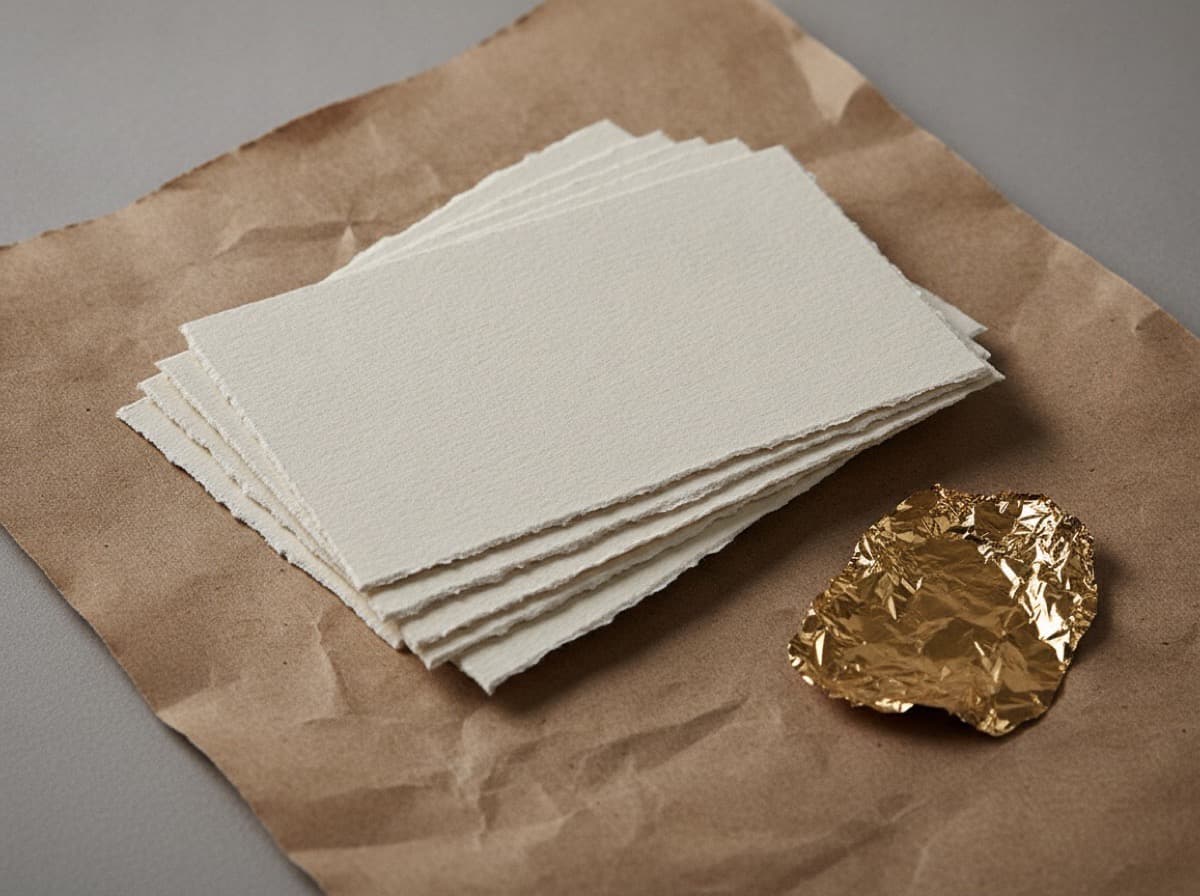
The paper stock you print a business card on is a physical, tangible message — before anyone reads a word, they've already felt the weight, texture, and quality of the material in their hand. Standard coated cardstock (14pt gloss or matte) is the reliable professional baseline. But specialty stocks — metallic, kraft, linen, cotton, recycled, and plastic — communicate distinct things about your brand and position you differently in the mind of whoever receives the card.
This guide explains the major specialty paper and material options available for business cards and which professional context best fits each.
Standard Stock (The Baseline)
Before specialty stocks make sense, understand the baseline:
- 14pt coated stock — the most common business card stock; firm, professional; available in gloss, matte, or soft-touch coating
- 16pt coated stock — slightly heavier; more substantial feel; still the most common "premium" default option
- Uncoated stock — no coating layer; paper texture is visible and tactile; writes easily; matte-only
Standard coated stocks are appropriate for virtually any professional context. They're reliable, universally understood, and allow for vibrant full-color printing.
Specialty Paper Stocks
Metallic Stock
Metallic cardstock has a reflective, shimmery base layer built into the paper itself — distinct from a metallic coating applied after printing.
How it looks: The base paper has a silvery or gold sheen visible through and around the printed elements. Photos and colors printed on metallic stock have a luminous quality. Dark colors pop dramatically against the metallic background; white areas appear to glow.
What it communicates: Premium, luxurious, celebratory, cutting-edge. Metallic cards signal investment and intentionality — these are not cheap cards.
Best for: Luxury retail, high-end personal brands, entertainment and nightlife, fashion, jewelry, beauty brands, event professionals. Less appropriate for conservative professional contexts where the sheen may read as flashy.
Considerations: Metallic stock doesn't work well with light colors or pastels, which disappear against the shiny base. Works best with bold designs, high contrast, and dark colors. Standard digital printers may not be able to print on metallic stock — you need a printer that specifically offers it.
Kraft Paper Stock
Kraft paper is the natural brown paper used in shipping boxes and shopping bags — unbleached, uncoated, and visually associated with sustainability and artisanal craft.
How it looks: Warm brown cardstock with a natural texture. Printed colors appear slightly muted (the brown base affects color reproduction). White ink printed on kraft creates a striking two-tone look.
What it communicates: Natural, sustainable, craft-oriented, handmade, farm-to-table, artisanal. Very strongly associated with the natural products, sustainability, organic food, and handmade goods industries.
Best for: Organic farms and farmers markets, artisan food and beverage producers, zero-waste and sustainability brands, natural beauty products, handmade craft sellers, woodworkers and craftspeople. The aesthetic is immediately recognizable and creates a powerful association with natural, earthy values.
Considerations: Full-color photography doesn't print well on kraft — the brown base muddles colors. Kraft cards work best with simple designs, white ink, earthy color palettes, or spot color. Text-heavy designs are difficult; keep it minimal.
Linen Texture Stock
Linen-finish cardstock has a woven fabric texture embossed into the paper surface — not actual fabric, but a fine grid of micro-ridges that gives the card a cloth-like feel.
How it looks: Standard white or off-white cardstock with a subtle crosshatch texture. Colors print normally (the texture is very fine and doesn't affect color reproduction significantly). The difference is primarily tactile.
What it communicates: Classic, formal, traditional, refined. Linen texture is particularly associated with legal, financial, and consulting sectors — the texture feels like a fine business letterhead.
Best for: Attorneys, financial advisors, consultants, CPAs, insurance professionals, traditional professional services. A linen-finish card with clean serif typography sends an unmistakable signal of professional establishment.
Considerations: The texture is subtle — it reads more on touch than visually. Don't choose linen for its visual impact; choose it for the tactile signal it sends when someone runs their finger across the card.
Cotton / Rag Stock
Cotton paper (often called "rag stock") is made from cotton fibers rather than wood pulp — the same material used for currency and fine art prints. It has a natural, slightly textured feel with good archival stability.
How it looks: Off-white or natural white, softer texture than coated stock, slight give when flexed. Colors print well with a softer, more matte quality.
What it communicates: Artisan, premium, fine craft, analog quality. Cotton stock carries associations with quality letterpress printing, fine art, and handmade print media.
Best for: Fine artists, letterpress printers, photographers, wedding industry professionals, luxury hospitality, high-end creative professionals. Pairs extremely well with letterpress or thermography printing, which gives the card a three-dimensional tactile quality.
Considerations: More expensive than standard cardstock. Limited availability at mainstream online printers — often requires a specialty printer. Not appropriate for vibrant full-color digital printing.
Recycled / Post-Consumer Waste (PCW) Stock
Recycled cardstock made from post-consumer waste content — typically 30%, 50%, or 100% PCW.
How it looks: Very similar to standard uncoated or coated stock depending on which recycled option. Some recycled stocks have a slightly warm or off-white tone; FSC-certified options are often indistinguishable from standard stock.
What it communicates: Environmental commitment, sustainability, responsible sourcing. Carrying an FSC certification logo or "100% recycled" mention signals values alignment.
Best for: Environmental organizations, sustainability consultants, eco-conscious brands, B Corps, green architecture and design firms, any brand for whom sustainability is a core brand value. The eco signal is most powerful when it's consistent with other brand messaging.
Considerations: Recycled stock doesn't inherently look different from standard stock — its message must be stated explicitly on the card or inferred from brand context. If sustainability is a key differentiator, consider adding an FSC certification mark or "100% recycled" to the card.
Plastic / PVC Cards
Rigid plastic business cards (similar in material to credit cards).
How it looks: Glossy, rigid, transparent or colored. Very distinctive — doesn't feel or flex like any paper card.
What it communicates: Premium, modern, tech-forward, substantial, durable. Plastic cards don't get lost in a pile of paper cards; they stand out immediately.
Best for: Financial services, technology companies, automotive, real estate, any brand where durability and distinctiveness matter. Particularly popular in real estate where cards are frequently retained for longer periods.
Considerations: Significantly more expensive than paper ($300+ per 500 cards at quality printers). Not appropriate for brands with strong sustainability positioning. Frosted plastic (translucent) is a striking variation.
Choosing the Right Stock
The stock should match the message your brand sends: | Brand Values | Best Stock | |---|---| | Natural, sustainable, artisan | Kraft or recycled | | Luxury, premium | Metallic or cotton | | Classic professional (law, finance) | Linen or standard thick matte | | Modern technology | Standard soft-touch or plastic | | Creative fine art | Cotton or letterpress uncoated | | Eco-committed | FSC-certified recycled | | Memorable, distinctive | Metallic or frosted plastic |
When unsure, order samples from your printer before committing to a full order. Almost all quality print shops offer sample packs — holding the stock in hand is worth far more than looking at product photos online.
Get 10% off your first order
Join our list for practical printing guides, new finish ideas, and a welcome coupon for your first order.
No spam. Unsubscribe anytime.
Ready to put these tips into print?
Order Business CardsNot sure which option fits? Ask Pro Card Crafters