Offset vs. Digital Printing: Let Quantity Decide
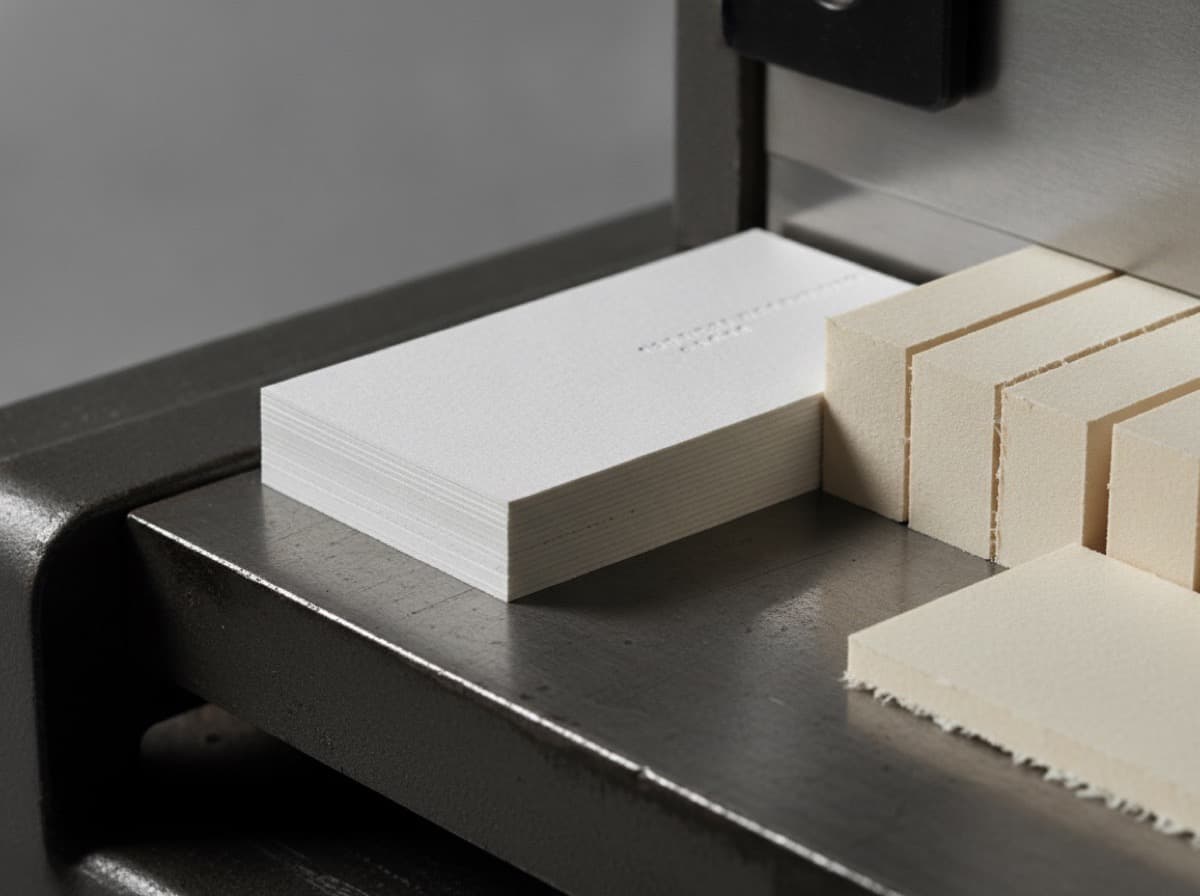
You can get wildly different quotes for the same order of business cards depending on where you look. One of the biggest drivers of that price gap is whether the job runs on offset or digital. The right answer depends almost entirely on quantity.

How Offset Printing Works
Offset printing uses a separate plate for each ink color. Ink is transferred from the plate to a rubber blanket and then onto the paper. Creating the plates carries an upfront cost, but once the press is running, the per-unit cost drops dramatically.
- Per-unit cost falls sharply as quantity grows
- Excellent color consistency and uniformity; spot colors available
- Broad paper and finishing compatibility
- Downside: expensive for short runs, and setup takes time
How Digital Printing Works
Digital printing bypasses plates entirely — the file is output directly via toner or inkjet. Think of it as an industrial-grade version of a desktop printer.
- No plate cost, so even a single copy is economical
- Immediate output, fast turnaround
- Supports variable data printing (e.g., different names on each business card)
- Downside: per-unit cost doesn't fall with volume; spot colors and some specialty finishes not available
Side-by-Side Comparison
| Factor | Offset | Digital | |--------|--------|---------| | Plates | Required (setup cost) | Not required | | Short-run unit cost | High | Low | | Long-run unit cost | Very low | Stays flat | | Turnaround | Longer (setup) | Fast | | Spot colors | Yes | Limited | | Variable data | No | Yes |
The Cost Crossover Point
From practical experience, the break-even point typically falls somewhere in the 500–1,000 copy range.
- Under 500 copies: Digital is almost always cheaper
- 500–1,000 copies: Depends on the product and finishing specs
- 1,000+ copies: Offset starts to pull ahead
- Larger runs: Offset wins decisively
These aren't fixed rules. Small-format items like business cards can be ganged up (multiple designs on one sheet), which lowers the offset break-even point.
Quick Selection Guide
- 50–300 business cards, fast turnaround needed → Digital
- 1,000+ flyers or brochures → Offset
- Each card needs a different name → Digital (variable data)
- Multiple special finishes: spot color, foil stamping, embossing → Offset
Frequently Asked Questions
Q. Is digital quality worse than offset? A. It used to be a meaningful gap, but modern high-end digital presses are difficult to distinguish from offset on most print jobs. That said, offset still has an edge for large flat-color areas and spot color accuracy.
Q. I need 1,000 copies urgently — offset makes sense cost-wise, but I'm short on time. What should I do? A. If turnaround is the top priority, choosing digital at a slightly higher unit cost is perfectly rational. There's no plate setup or drying time to wait for.
Q. Wouldn't it be cheaper to place one large offset order instead of reprinting small digital runs? A. If your design changes frequently or you want to avoid sitting on inventory, small digital runs are the smarter approach. If the design is stable and you'll use the pieces over a long period, a large offset run will cost less overall.
Get 10% off your first order
Join our list for practical printing guides, new finish ideas, and a welcome coupon for your first order.
No spam. Unsubscribe anytime.
Ready to put these tips into print?
Order Business CardsNot sure which option fits? Ask Pro Card Crafters