Business Card Paper Weight Guide: Understanding 14pt, 16pt, 18pt, 32pt and Paper Stock Options
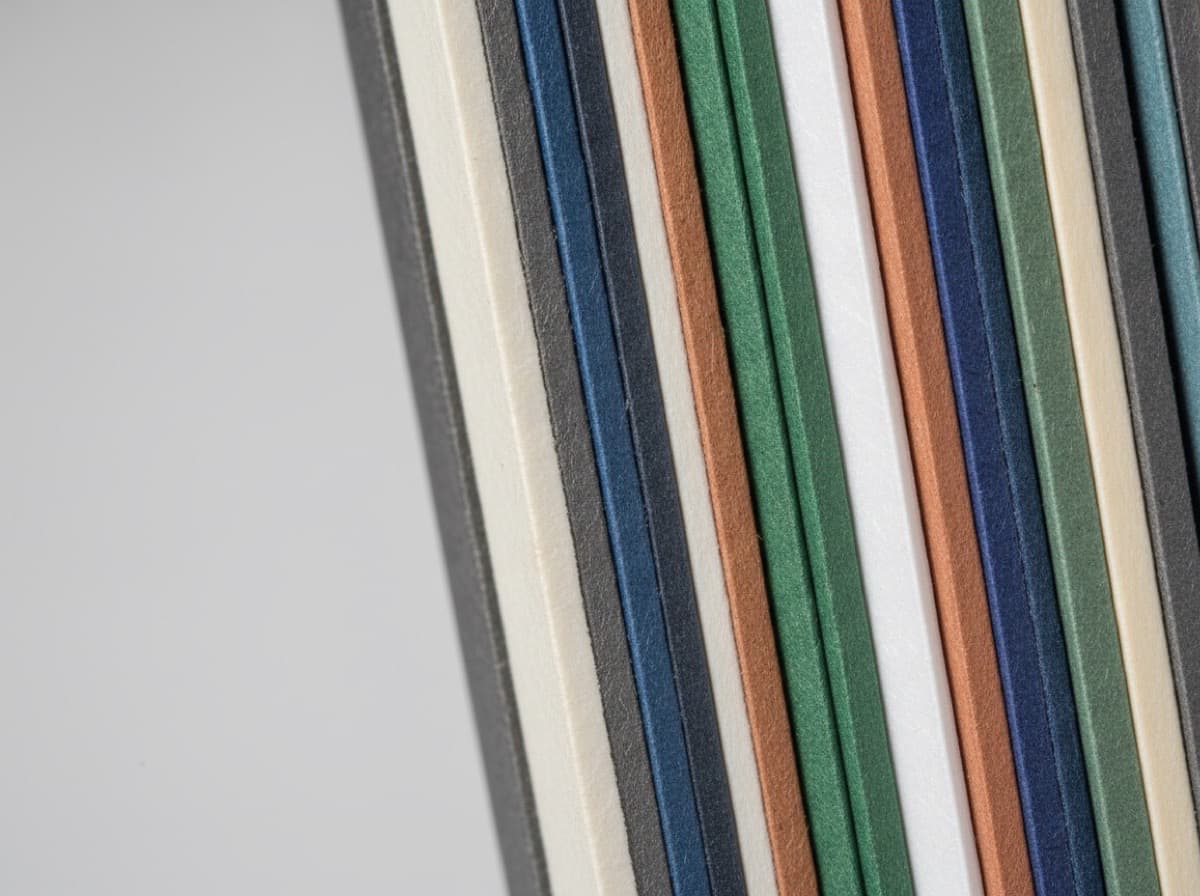
When you hold a business card, the first thing you notice — before you read the name, before you see the logo — is the weight and feel of the paper. A heavy, substantial card communicates quality and confidence. A thin, flimsy card suggests the opposite. Paper weight and thickness are among the most powerful and underappreciated elements of business card design. This guide explains how paper weight measurement works, what each standard thickness level actually feels like in your hand, and how to choose the right stock for your professional needs.
How Paper Weight Is Measured
The "lb" (Pounds) System — Cover Weight
In the United States, paper weight for business cards is typically expressed in cover weight pounds (lb cover) — measured by the weight of 500 sheets of paper at a standard size (20" × 26" for cover stock). This is confusing because cover weight and text weight are measured at different standard sheet sizes, meaning a 100 lb cover stock and a 100 lb text stock are dramatically different thicknesses.
For business cards specifically, you'll encounter:
- 80 lb cover — lighter; below professional standard for business cards
- 100 lb cover — minimum professional standard; some economy cards
- 110 lb cover — common for standard-quality business cards
- 130 lb cover — quality standard; most 16pt cards are in this range
The "pt" (Point) System — Caliper
For business cards specifically, most printers use the point (pt) system to describe card thickness. One point = 1/1000th of an inch. This is a direct physical measurement of card thickness, which makes it more intuitive than lb cover:
| Thickness (pt) | Inches | mm | Typical Use | |----------------|--------|-----|-------------| | 12pt | 0.012" | 0.3mm | Economy cards; below standard | | 14pt | 0.014" | 0.35mm | Entry-level standard | | 16pt | 0.016" | 0.4mm | Professional standard | | 17pt | 0.017" | 0.43mm | Premium standard | | 18pt | 0.018" | 0.45mm | High-quality premium | | 24pt | 0.024" | 0.6mm | Ultra-premium | | 32pt | 0.032" | 0.8mm | Double-thick luxury | | 38pt | 0.038" | 0.97mm | Triple-thick or specialty |
The GSM System (Grams per Square Meter)
In Europe and much of the world, paper weight is expressed in gsm (grams per square meter) — the weight of a square meter of the paper. GSM is an absolute measurement not dependent on sheet size, making it more consistent internationally.
Common gsm equivalents for business card paper:
- 200–250 gsm: lighter business card stock
- 300–350 gsm: standard professional business card
- 400–450 gsm: premium business card
- 600–650 gsm: extra-thick / double-thickness
What Each Thickness Feels Like
12pt (0.012") — Economy
12pt is noticeably thin. You can feel it flex slightly when you hold it. This is the weight of heavy copier paper or thin paperback book covers. For professional business cards, 12pt communicates economy rather than quality. Many budget online printers use 12pt as their base stock. Not recommended for professional impression-critical cards.
14pt (0.014") — Entry-Level Standard
14pt is the entry point for professional business cards. It has meaningful substance — it won't flop in your hand — but it won't impress someone who handles a lot of cards. Many "standard" business cards from economy printers are 14pt. Adequate for high-volume distribution or cards where design is the primary investment (not material quality). The weight of a typical playing card.
16pt (0.016") — Professional Standard
16pt is the most common professional business card thickness. It has clear physical substance — firm, doesn't flex easily, feels intentional. This is approximately the weight of a standard credit card (though credit cards are around 30pt — 16pt is about half that). When someone says "business card stock," they typically mean 16pt. The right choice for the majority of professionals who want a quality card at a reasonable price. Most quality printing shops default to 16pt.
17pt (0.017") — Enhanced Professional
17pt is a half-step up from 16pt — noticeably more substantial without the significant cost jump to 18pt. Some printers use 17pt as a "premium" offering. The difference between 16pt and 17pt is subtle but perceptible when handling both.
18pt (0.018") — Premium Standard
18pt has clear premium substance. Compared to 16pt, the difference is immediate — you can feel the extra thickness and rigidity. 18pt cards communicate elevated quality, more so than 16pt. The right choice for professionals where the tactile first impression is particularly important (creative professionals, attorneys, financial advisors, luxury real estate). At 18pt with a soft-touch matte laminate, the card has a refined, serious quality that's immediately apparent.
24pt (0.024") — Ultra-Premium
24pt is substantially thicker than a standard card. This is the approximate thickness of a typical business card found in premium corporate environments or used by luxury brands. Very firm, very substantial, extremely high-end impression. Typically requires specialty printing and is more expensive. Often found with soft-touch matte laminate or other premium finishes. The right choice for professionals where "ultra-premium" is the deliberate brand signal.
32pt (0.032") — Double-Thick Luxury
32pt cards are approximately double the thickness of a standard 16pt card. They have a distinctly luxurious, solid feel — almost the weight of a thin piece of cardboard. In common parlance: "felt-like-a-card" describes the 16pt experience; 32pt describes something closer to holding a small tile. Often produced as two-ply (two sheets laminated together), which can also allow two different paper stocks on front and back. The definitive luxury business card thickness.
38pt and Beyond
Some specialty printers offer cards up to 38pt (sometimes marketed as "triple thick" or "extra luxe"). These are specialty items — not standard catalog stocks — and require specific vendors. Extremely tactile and notable; used in luxury contexts.
Finishes and How They Interact with Weight
Paper weight alone doesn't tell the whole story — the finish significantly affects perceived thickness and quality:
Gloss laminate + 16pt: The laminate adds a small amount of thickness and rigidity; glossy cards have a slick feel that emphasizes the laminate over the paper
Matte laminate + 16pt: The most common premium card combination; matte laminate softens the paper surface and adds slight stiffness; less slick than gloss; very professional
Soft-touch matte laminate + 16pt (or 18pt): The premium tactile experience; the soft-touch coating adds a velvety, slightly rubbery feel that is immediately distinctive; transforms a 16pt card into a card that feels more premium than its weight alone would suggest; highly recommended for professionals who want premium feel without extra weight cost
Uncoated + 16pt: Natural paper texture; shows the paper grain; warmer and more organic; appropriate for creative, hospitality, and sustainability-focused professionals
Gloss UV coating + 16pt: Similar to gloss laminate but applied digitally; slightly different feel; good protection
Special Stock Options
Kraft Paper
Brown unbleached kraft stock — eco-aesthetic, artisanal, organic. Typically 100–130 lb cover (14–16pt equivalent). Popular for food, natural beauty, sustainability, and artisan brands.
Linen / Canvas Texture
Embossed texture patterns on standard card stock; add visual and tactile dimension; available at various weights.
Cotton Paper
100% cotton fiber paper (like Crane's Lettra) — no wood pulp; distinctly different from wood-based papers; used in letterpress and premium stationery; 220–400 gsm range; very high-quality feel; more expensive per sheet.
Clear / Transparent
Plastic (usually PVC or PET) substrate instead of paper; 100% clear; usually 0.3–0.5mm thick; PVC clear has very different feel from paper cards; interesting novelty value; used effectively in some industries (tech, creative, retail).
Pearl / Metallic
Papers with a metallic sheen from metallic pigment in the paper surface or coating; available in various weights; the metallic sheen adds visual richness independent of print inks.
How to Choose Your Paper Weight
For most professionals:
- 16pt + matte laminate or soft-touch matte laminate — the optimal professional balance of quality, feel, and cost
For high-end professionals (luxury real estate, finance, law, creative, executive):
- 18pt + soft-touch matte laminate — a clear step up with excellent tactile quality
For maximum luxury impact:
- 32pt (double-thick) — unambiguous luxury, meaningful cost premium
For sustainability-focused:
- 16pt uncoated FSC-certified or 100% recycled — professional and environmentally responsible
For volume distribution (trade shows, direct mail):
- 14pt or 16pt economy stock — acceptable quality at lower cost per card for high-volume distribution
Paper Weight Checklist
- [ ] 12pt — not recommended for professional cards
- [ ] 14pt — budget professional; adequate for high-volume
- [ ] 16pt — the professional standard; the right choice for most
- [ ] 17pt or 18pt — enhanced premium; for impression-critical professionals
- [ ] 24pt — ultra-premium; luxury positioning
- [ ] 32pt — double-thick luxury; maximum impact
- [ ] Finish: gloss, matte, soft-touch matte, uncoated
- [ ] Soft-touch matte at 16pt: the best value for premium tactile feel
- [ ] Consider cotton paper for letterpress and premium stationery aesthetics
- [ ] Match weight to your professional brand positioning
Get 10% off your first order
Join our list for practical printing guides, new finish ideas, and a welcome coupon for your first order.
No spam. Unsubscribe anytime.
Ready to put these tips into print?
Order Business CardsNot sure which option fits? Ask Pro Card Crafters