Rounded Corners and Special Finishes: Premium Business Card Options Explained
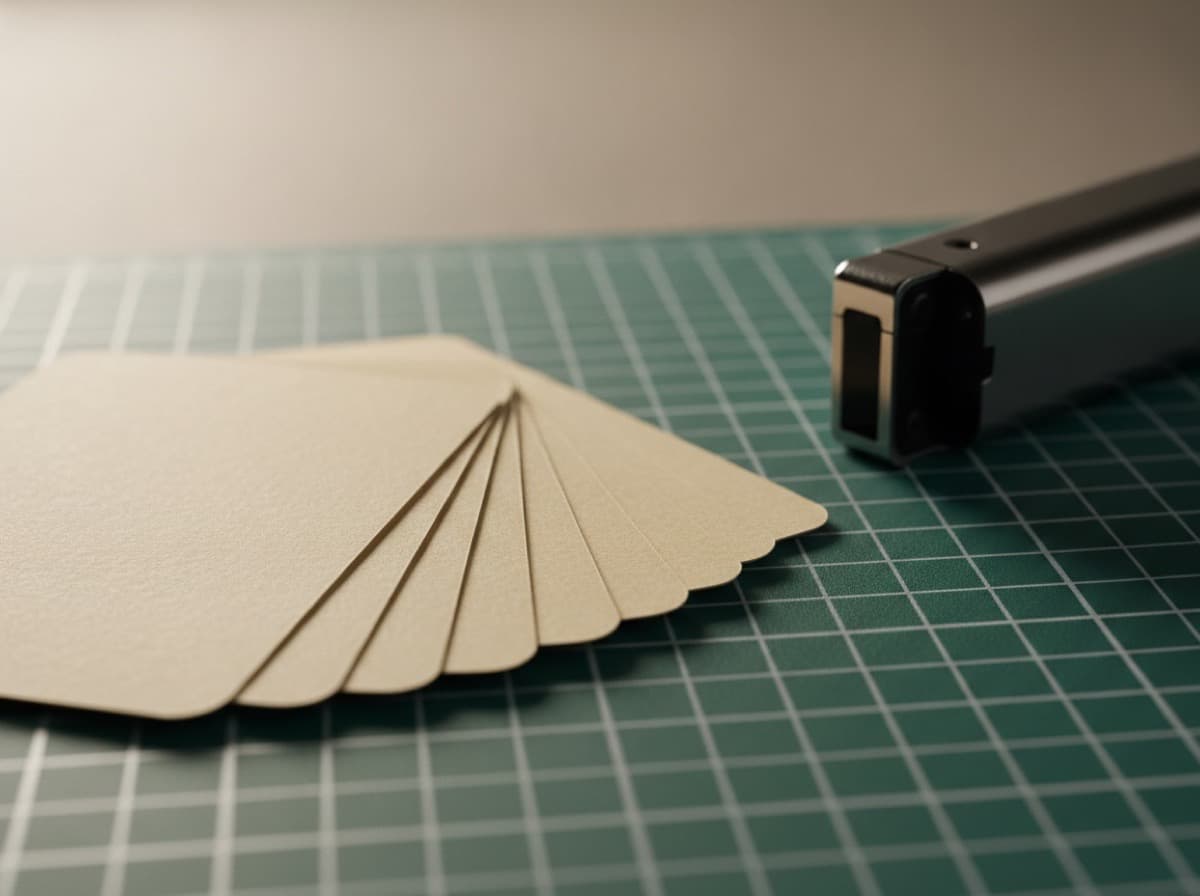
Standard business cards are rectangular, printed on one or two sides, with a coating of matte or gloss. This is the baseline — the format that most cards follow. But premium business card printing offers a range of special finishes, textures, and shape options that transform a flat piece of cardstock into an object that people notice, remark on, and keep.
This guide explains each premium option: what it looks like, when it works, and whether the additional cost makes sense for your context.
Shape Options
Rounded Corners
The most commonly requested shape modification. Instead of sharp 90° corners, the card has a small radius curve at each corner.
The effect: Rounded corners feel softer, more modern, and slightly more approachable than standard square corners. They also hold up better physically — sharp corners are the first part of a standard card to dent, fold, or fray.
Radius options: 3mm is the most standard and subtle; 8mm is more distinctive; 10mm+ starts to look significantly different.
Best for: Consumer-facing brands, wellness and lifestyle professionals, tech companies, personal brands, creative professionals. Less appropriate for very formal or traditional professional contexts (law firms, surgery, finance).
Cost premium: Usually $10–30 above standard for a 500-count order.
Die-Cut Shapes
A custom shape cut from the card stock using a die — circles, ovals, house shapes, camera shapes, anything custom.
The effect: Extremely distinctive. A circular business card gets picked up and examined. A card shaped like the product you sell is unforgettable.
Trade-off: Die-cut cards often don't fit in standard card holders or wallets. People may admire them and then set them aside because they don't fit anywhere. Also significantly more expensive.
Best for: Brands where the unusual shape reinforces the identity — a photographer with a camera-shaped card, a hair salon with a scissors-shaped card. Not appropriate for anyone who expects cards to be easily stored.
Surface Finishes
Soft Touch (Velvet / Suede Coating)
A matte laminate that gives the card a silky, velvety feel — similar to the surface of a matte luxury book cover.
The effect: Immediately tactile and distinctly premium. When someone picks up a soft touch card and feels the texture, there's an involuntary sensory response. It feels expensive.
Trade-off: Fingerprints show easily, and the soft coating can scratch over time. Not ideal for cards you'll be handing out in bulk at high-traffic events.
Best for: Luxury brands, high-end professional services (law, finance, design, architecture), anyone where a premium first impression is worth the cost. This is now very popular in tech and startup cultures as well.
Cost premium: Usually $15–40 above standard matte for a 500-count order.
Spot UV (Selective Gloss)
A matte-coated card with gloss UV coating applied only to specific elements — a logo, a name, an icon, an abstract shape.
The effect: The contrast between matte and gloss creates a visual and tactile detail that rewards close attention. The logo appears to rise off the card surface. At an angle, the gloss elements catch light distinctively.
Best for: Anyone who wants the sophistication of matte with a design detail that catches attention — law firms, financial advisors, luxury brands, creative professionals. Works best when the spot UV element has strong graphic form (a clean logo, a geometric shape, a bold initial).
Trade-off: Requires careful file setup — you need a separate spot UV mask layer in your artwork. If the matte and gloss areas aren't precisely registered, the effect looks off-center.
Cost premium: Usually $20–50 above standard for a 500-count order.
Foil Stamping (Gold, Silver, Rose Gold, Holographic)
Metallic foil applied to specific areas via heat and pressure — a die presses the foil into the stock. The result is a true metallic sheen.
The effect: Nothing else replicates the reflective quality of real foil. Gold foil on a dark card looks genuinely luxurious. Holographic foil is distinctive and very on-trend in certain creative markets.
Best for: Luxury, high-end personal brand, wedding industry, nightlife and entertainment, financial advisory firms. Foil says "premium" more explicitly than almost any other finish.
Trade-off: Foil doesn't work well on fine text or very small details — the foil adhesion process requires minimum stroke widths. Very expensive at smaller printers; more cost-effective for 500+ orders.
Cost premium: Usually $40–100+ above standard for a 500-count order, depending on foil area and color.
Embossing and Debossing
Embossing: The design element is pressed from behind, creating a raised surface. Debossing: The design element is pressed from the front, creating an indented surface.
The effect: Purely tactile — you feel the texture with your fingers before you see it. A debossed logo on thick, uncoated stock feels architectural and precise.
Best for: Architects, designers, luxury brands, law firms — professionals where the quality of craftsmanship in the card signals the quality of work they deliver. Very popular in architecture and high-end real estate.
Trade-off: Works best on thick, uncoated stock (16pt+). Doesn't combine easily with full-bleed printing. Requires separate die setup fee, usually $50–100.
Cost premium: Usually $40–80 above standard for a 500-count order, plus die setup fee.
Edge Painting
The edges of the card stack are painted — a thin line of color visible on the edge of the card.
The effect: When the card is picked up, the colored edge is the first visible detail from the side. It's an unexpected detail that rewards the person who looks closely. A black card with a gold painted edge is a signature object.
Best for: Premium personal brands, luxury services, design professionals, attorneys, architects. Very popular in startup culture.
Trade-off: Edge painting requires thick stock (32pt double-thick or triplex preferred) to be visible. The paint can occasionally chip or scratch on cards carried in pockets. Available at fewer printers than standard finishes.
Cost premium: Usually $30–60 above standard for a 500-count order.
How to Choose
| Profile | Best Premium Option | |---|---| | Luxury / high-end brand | Soft touch + spot UV or foil | | Creative professional | Rounded corners + soft touch | | Architect / designer | Debossing on thick uncoated stock | | Startup / tech | Soft touch or edge painting | | Medical / law / finance | Soft touch matte OR standard professional (don't over-engineer) | | Wedding vendor | Foil or rose gold + rounded corners | | Consumer brand | Rounded corners + spot UV or standard | | Real estate | Soft touch or thick gloss with edge painting |
Rule of thumb: Choose one premium element and execute it flawlessly. Soft touch + spot UV is a proven combination. Foil + rounded corners works. But stacking multiple premium effects (foil + spot UV + embossing + edge painting) tends to look overwrought rather than refined. Restraint is the mark of good design.
Get 10% off your first order
Join our list for practical printing guides, new finish ideas, and a welcome coupon for your first order.
No spam. Unsubscribe anytime.
Ready to put these tips into print?
Order Business CardsNot sure which option fits? Ask Pro Card Crafters