Beyond Paper: Plastic, Metal, and Wood Business Cards — When to Use Them
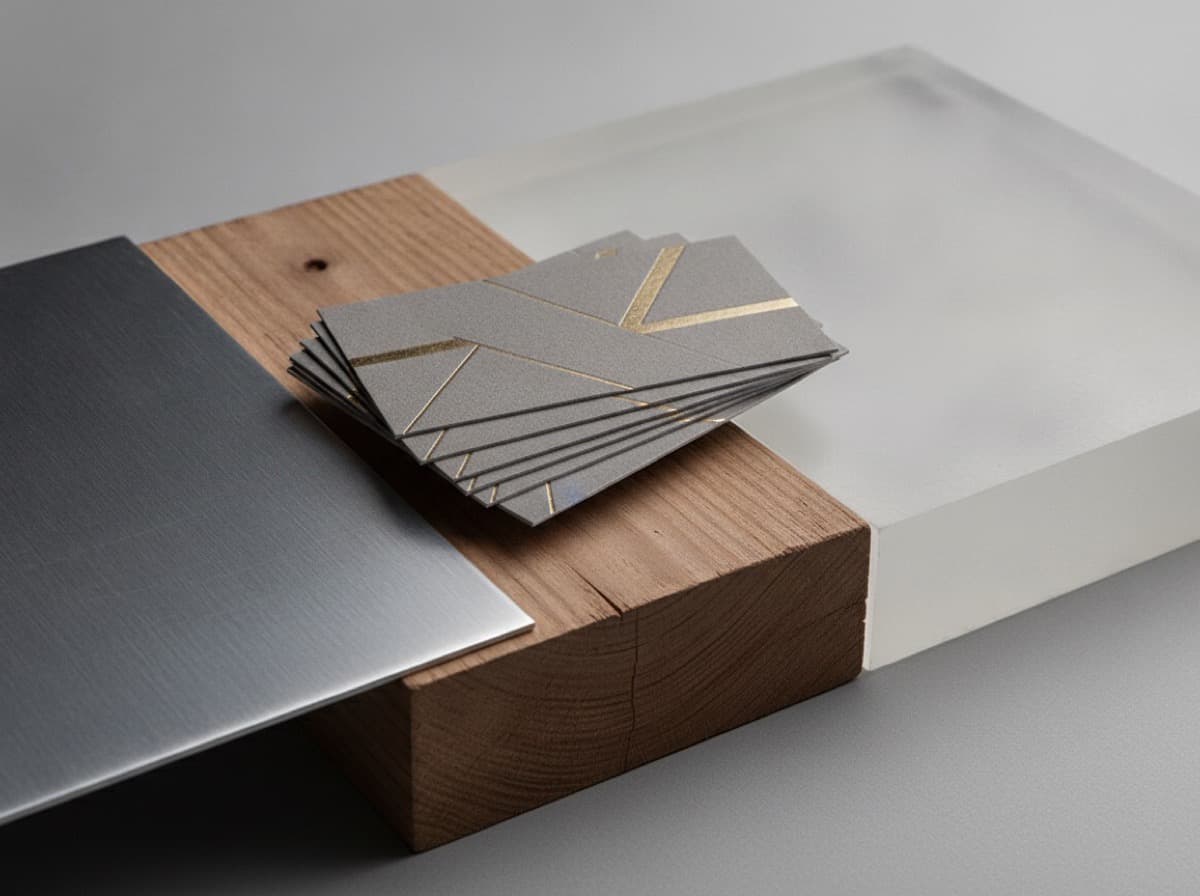
Standard paper cards work for most businesses. But for a small number of professionals, a specialty material card is so on-brand and so memorable that the 10-20× price premium is completely justified.
Here's a breakdown of every major specialty card material — what they look and feel like, what they cost, and who should use them.
Plastic (PVC) Business Cards
What they are: Cards made from the same PVC plastic as credit cards. Completely waterproof, rigid, and durable.
Standard thickness: 30pt (same as a credit card)
Feel: Rigid, substantial, credit-card-like. Familiar weight that communicates stability.
Finishes Available on Plastic
- Standard matte or gloss: Clean, professional look
- Frosted (translucent): Partially see-through. Professional and distinctive.
- Full-color printing: Vibrant colors on plastic print differently than paper — often more saturated
- Spot UV on plastic: Adds depth and dimension
When Plastic Cards Make Sense
Pool/spa businesses: Cards that survive contact with water and chlorine Personal trainers and gyms: Survive sweat, water bottles, and gym bags Outdoor tradespeople: Won't get destroyed in work pants or rainy job sites Finance / banking: Credit card format signals your industry Nightclubs and events: Durable enough to survive a night out
When Plastic Doesn't Work
Professionals in traditional industries (law, medicine, academia) where the plastic card feel can seem gimmicky or out of place.
Cost Range
$0.50-1.50 per card for 100-500 quantity. 3-5× the cost of standard paper cards.
Metal Business Cards
What they are: Actual metal sheets (stainless steel, aluminum, brass, copper, titanium) laser-cut or etched to business card dimensions.
Thickness: 0.3-0.8mm depending on metal and finish
Weight: Noticeably heavier than paper or plastic. You feel it the moment it's placed in your hand.
Types of Metal Cards
Stainless Steel: Most popular. Silver color, highly durable, laser engravable, can be brushed or polished.
Aluminum: Lighter than steel. More affordable. Available in anodized colors (black, blue, red, gold).
Brass: Warm gold color. Traditional prestige aesthetic.
Copper: Distinctive reddish tone. Patinas over time (which can be a feature or a bug depending on your use case).
Black Steel: Stainless steel with a PVD black coating. Striking, modern, and masculine.
Design on Metal Cards
Metal cards use laser engraving (removes coating to reveal metal) or screen printing for color. Full-color printing is possible but limited compared to paper.
Most effective metal card designs: Minimal. The metal does the talking. Your name, title, and one contact method laser engraved on brushed stainless steel is more impressive than a complex color design on the same material.
When Metal Cards Work
- Tech entrepreneurs and executives: Metal card at a VC pitch meeting is a statement
- Luxury goods: Jewelers, watch dealers, luxury auto sales
- High-end hospitality: Boutique hotels, private clubs, luxury travel
- Defense, security, and tactical industries
- Architects and product designers: The card IS a material sample
- Anyone whose story involves precision and manufacturing
When Metal Cards Backfire
- Industries where warmth matters more than power (therapy, pediatrics, community services)
- Small businesses where the cost seems disproportionate
- Industries where traditional materials are expected (certain legal, academic contexts)
Cost Range
$3-20+ per card depending on metal type and design complexity. Consider them for high-value client contexts, not bulk handouts.
Wood Business Cards
What they are: Thin wood veneer sheets (usually birch, bamboo, walnut, cherry, or maple) cut and printed/engraved to business card dimensions.
Thickness: 0.5-1mm of real wood veneer
Feel: Lightweight but distinctly organic. The grain texture is visible and tactile. Smells faintly of wood.
Design on Wood
Laser engraving: Burns designs into the wood. Creates permanent, tactile marks that show the natural wood color beneath.
Printing on wood: UV printing can add color to wood surface while maintaining the grain texture visible through printing.
When Wood Cards Work
Carpentry and woodworking: Obvious and brilliant brand alignment Architects and builders: Shows material sensibility Eco-conscious businesses: Sustainable positioning (especially bamboo) Outdoor brands: Hunting, fishing, hiking, camping businesses Farm-to-table restaurants: Natural, artisanal positioning Breweries and wineries: Craft and natural branding Holistic and wellness practices: Natural, organic, warm brand values
Cost Range
$1.50-5.00 per card. Requires minimum orders (often 50-100 minimum). Best ordered in small quantities for select clients.
Material Comparison Chart
| Material | Feel | Price/Card | Durability | Best Market | |---|---|---|---|---| | Paper (standard) | Familiar | $0.05-0.15 | Moderate | Universal | | Plastic PVC | Rigid, waterproof | $0.50-1.50 | Excellent | Active, outdoor, finance | | Aluminum | Light metal | $2-5 | Excellent | Tech, modern luxury | | Stainless Steel | Heavy metal | $5-10 | Excellent | Luxury, executive | | Wood veneer | Organic, warm | $1.50-5 | Good | Craft, eco, outdoor | | Brass/Copper | Warm metal | $8-15 | Excellent | Traditional luxury |
The Rule of Specialty Materials
Specialty material cards work when the material is on-brand. A metal card from a tech hardware company makes sense. A metal card from a daycare center is jarring.
Ask yourself: "Does this material communicate something true about my business?" If yes, order. If no, invest in an exceptional paper card with a premium finish instead — it will outperform an off-brand material card every time.
Get 10% off your first order
Join our list for practical printing guides, new finish ideas, and a welcome coupon for your first order.
No spam. Unsubscribe anytime.
Ready to put these tips into print?
Order Business CardsNot sure which option fits? Ask Pro Card Crafters