Spot UV Business Cards: How to Design Stunning High-Gloss Contrast Finishes
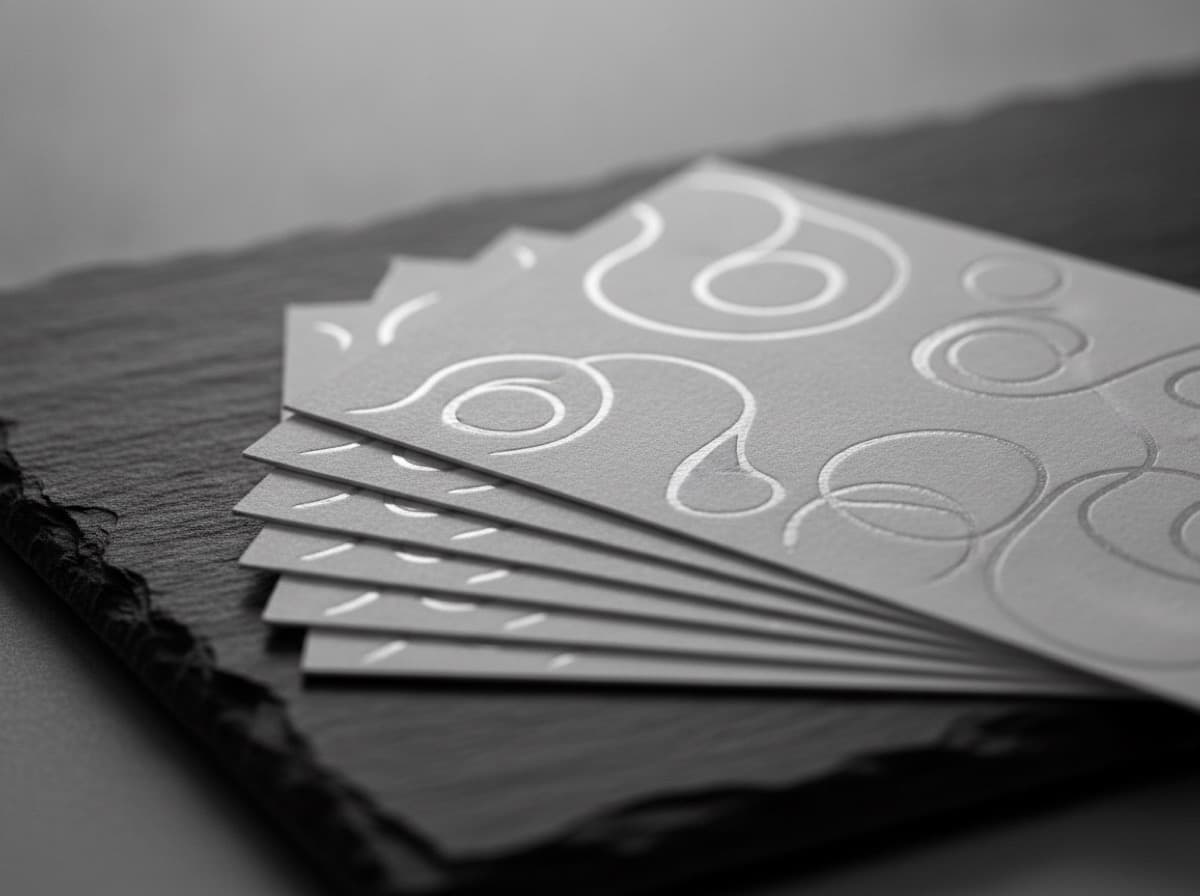
Spot UV is one of the most visually dramatic finishes available for business cards — a selective high-gloss coating applied to specific design areas over a matte base, creating a tactile and visual contrast that makes cards memorable.
Unlike full-coverage gloss or matte laminates, spot UV is selective: your logo might be glossy while the rest of the card is matte, or your abstract design element catches the light while your text stays readable on a flat surface.
What Is Spot UV?
Spot UV (Spot Ultra-Violet) is a clear, thick coating applied selectively to printed cards using a UV-cured varnish. The process:
- The card is printed and base-coated (typically matte laminate for maximum contrast)
- A spot UV mask is applied to specific areas (logo, icons, textures, patterns)
- UV light cures and hardens the coating instantly
- The result: glossy, raised (slightly) areas against the matte background
The UV coating is clear but creates a visible and tactile difference — you can feel the raised gloss layer with your fingertip.
Why Spot UV Works
The power of spot UV is contrast:
- The eye is drawn to shiny — the spot UV area becomes the visual focal point
- The tactile difference makes the card feel more premium when held
- Matte + gloss contrast communicates design sophistication
Cards with successful spot UV treatment are often kept rather than discarded — the finish creates enough tactile interest to be worth holding onto.
Spot UV Design Rules
Rule 1: Contrast Is the Point
Spot UV works by contrast with the non-UV surface. The classic combination:
- Matte laminate base + spot UV elements — maximum contrast, maximum effect
- Gloss base + spot UV: very subtle, often invisible. Not recommended.
- Soft-touch laminate + spot UV: dramatic and luxurious — the velvet matte against hard gloss
Rule 2: Use UV on Solid or Dense Areas
Spot UV is a flood fill within the mask shape:
- Works best on: logos, icons, large initials, abstract shapes, texture patterns
- Can be used on: body text (legibility considerations apply), borders
- Does not work as: a gradient, a photographic element, a detailed illustration
Rule 3: Don't UV Small or Thin Elements
The UV coating has physical thickness — thin lines below ~0.5pt may not hold cleanly or may bleed. Apply spot UV to:
- Bold type: minimum 12pt, sans-serif or high-contrast serif
- Simple icons with clear edges
- Solid shapes and blocks
- Abstract patterns
Rule 4: Cover Interesting, Not Everything
Selective is more elegant than comprehensive:
- Logo or brand mark in UV, company name in standard print
- Abstract geometric background pattern in UV
- Initials as a large UV element on a simple card
- Corner geometric accent in UV
Full-coverage UV on both sides makes the "spot" irrelevant — it's no longer contrast, it's just gloss on matte, which reads as texture, not design.
Rule 5: UV Can Be Invisible (In Some Designs)
If the spot UV shape is in the same color as the background:
- White UV on white matte: subtle embossed-feel effect, no color differentiation — intentional and beautiful
- Black UV on black matte: nearly invisible except by feel and angle — premium "stealth" look
- Dark UV on dark: same stealth effect
This is an advanced design choice — done intentionally, it's sophisticated. Done accidentally, it's a wasted coating.
Spot UV Combinations
Spot UV + Matte Laminate (Classic)
The most popular combination:
- Base: matte laminated card stock
- UV: on logo, brand elements, or abstract pattern
- Result: luxury matte feel with high-gloss brand element pop
Spot UV + Soft-Touch Laminate (Premium)
The most luxurious tactile combination:
- Base: soft-touch velvet laminate
- UV: selectively applied over the velvet surface
- Result: the contrast between silk-smooth velvet and hard-gloss UV is the most dramatic tactile business card experience
Spot UV + Foil (Ultimate Premium)
Gold foil for the logo + spot UV for a background pattern:
- Two-pass premium print process
- Very high cost; reserved for high-ticket professional categories
- Extremely memorable
Raised Spot UV (3D / Embossed Effect)
Spot UV can be applied in multiple passes to create a visible raised ridge:
- Standard spot UV: slightly raised (barely perceptible)
- Raised spot UV: multiple coats — visible as a 3D element
- Effect: logo or letters appear embossed without a die
File Setup for Spot UV
You need to prepare a separate spot UV mask file:
- A black-and-white file with black = UV, white = no UV
- Same dimensions as your card
- Your printer may call this the "spot UV layer," "UV mask," or "spot varnish layer"
- Submit as a separate PDF or as a spot color layer in your print-ready file
Bleed: Include standard 0.125-inch bleed on your spot UV mask if the UV extends to the card edge.
Pricing
Spot UV carries a premium over standard printing:
- Setup fee: $20-60 (one-time for first order)
- Per-unit premium: 20-60% above base card cost
- Typical spot UV card (500 qty): $80-200 above standard pricing
- Soft-touch + spot UV combo: $150-350 above standard
When Spot UV Is Worth It
Most impactful:
- Attorney, financial advisor, executive, luxury real estate, hotel/hospitality
- Any professional where the card's quality signals the quality of the service
- Brands with a strong logo or graphic mark that benefits from being highlighted
- Professionals who attend premium networking events where card quality is noticed
Lower impact:
- Very high card volume (cost multiplies at scale)
- Minimalist designs with nothing worth highlighting
- Professionals whose clients receive hundreds of cards and don't examine them
Checklist Before Ordering Spot UV
- [ ] Matte or soft-touch base laminate confirmed (for maximum contrast)
- [ ] Spot UV mask file prepared (black areas = UV)
- [ ] Minimum line weight in UV areas: 0.5pt+
- [ ] UV applied to bold, solid elements — not fine detail
- [ ] UV element is intentionally visible (not accidentally invisible)
- [ ] Budget includes setup fee
- [ ] Proof reviewed and approved before print run
Get 10% off your first order
Join our list for practical printing guides, new finish ideas, and a welcome coupon for your first order.
No spam. Unsubscribe anytime.
Ready to put these tips into print?
Order Business CardsNot sure which option fits? Ask Pro Card Crafters