Sustainable and Eco-Friendly Business Card Printing: FSC Certified, Recycled, and Soy Ink Guide
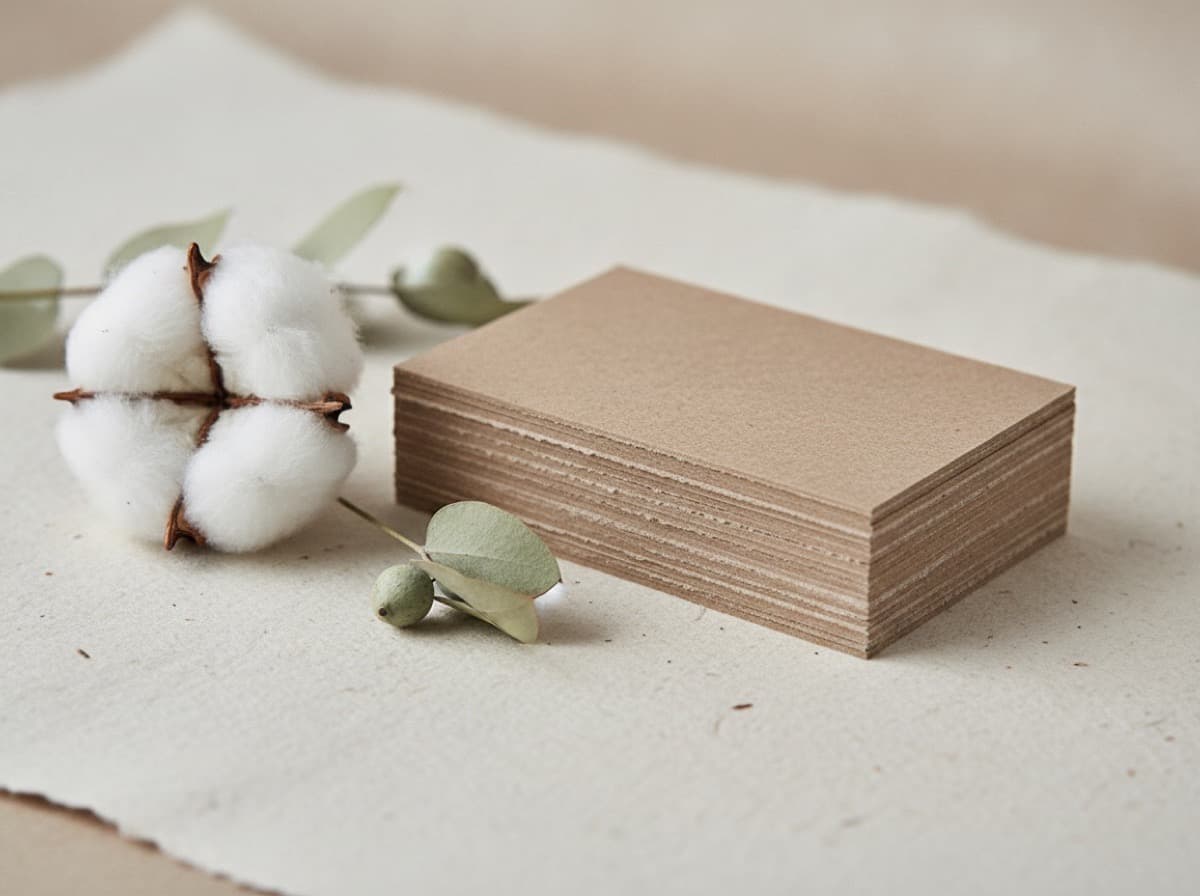
Printing business cards doesn't have to come with a significant environmental footprint. The sustainable printing industry has matured to the point where eco-friendly business cards are equal to — and in some dimensions superior to — conventionally produced cards. This guide breaks down every sustainable printing option, what the certifications mean, what trade-offs to expect, and how to match your values with the right sustainable card choice.
Why Sustainable Business Card Printing Matters
Standard business card production involves:
- Paper production: Traditional paper production requires tree harvesting (clear-cutting), water-intensive pulping, and chemical bleaching processes
- Ink: Petroleum-based inks (most standard printing inks) are made from non-renewable resources and release volatile organic compounds (VOCs)
- Lamination: Standard gloss or matte laminate is a plastic film (not recyclable; not biodegradable)
- Waste: Short-run printing with setup waste; cards that never get distributed end up in landfills
Sustainable printing addresses each of these impact points.
Sustainable Paper Options
FSC-Certified Paper
FSC (Forest Stewardship Council) is the gold standard for responsible forestry certification. FSC-certified paper guarantees that the paper was produced from forests managed to FSC standards — which include:
- Prohibition of old-growth forest harvesting (in most certifications)
- Maintenance of forest biodiversity
- Protection of wildlife habitat
- Protection of water quality and watersheds
- Fair treatment of forest workers
- Indigenous rights protections
FSC certification types you'll see:
- FSC 100% — the paper comes entirely from FSC-certified forests; the strongest claim
- FSC Recycled — paper made from 100% recycled material (post-consumer waste) certified by FSC
- FSC Mix — a combination of FSC-certified virgin fiber, recycled fiber, and/or FSC Controlled Wood (a lower bar than FSC-certified but avoiding the worst sources)
What to look for: Ask your printer if their stock is FSC-certified, and which certification type. FSC 100% or FSC Recycled are the strongest choices.
Recycled Content Paper
Post-Consumer Waste (PCW) recycled paper is made from paper that has already been used, collected in recycling programs, and reprocessed. The PCW percentage tells you how much of the paper comes from previously used consumer paper:
- 100% PCW recycled — the most environmentally beneficial; all fiber has already been used once (or more)
- 30% PCW / 50% PCW — partial recycled content; still beneficial over virgin fiber
Pre-consumer waste refers to paper scraps from manufacturing processes that never reached consumers. While technically recycled, pre-consumer waste has less environmental benefit than post-consumer waste because it was never used.
What to look for: "100% post-consumer waste recycled" for the strongest claim. Many printers offer 30–50% PCW on standard stocks and 100% PCW on specialty eco stocks.
Tree-Free Papers
For those who want to avoid wood fiber entirely, tree-free alternatives are available:
Cotton paper (rag paper):
- Made from cotton linters (a byproduct of cotton ginning — the short fibers left after long-fiber cotton is removed)
- Cotton is not a tree crop; cotton linters are a byproduct that would otherwise be wasted
- Crane's Lettra paper (used in letterpress) is 100% cotton — an inherently sustainable option as a byproduct material
- Premium tactile quality; takes printing inks beautifully; no need for bleaching to whiten
Sugarcane bagasse paper:
- Made from bagasse — the fibrous residue of sugarcane stalks after juice extraction
- A true agricultural byproduct; would otherwise be burned or composted
- Good quality paper; gaining traction in sustainable printing markets
Hemp paper:
- Hemp produces more fiber per acre than trees and grows much faster
- Durable paper with a distinctive natural texture
- Specialty item; not available from most commercial card printers
Bamboo paper:
- Bamboo is technically a grass (not a tree) and grows extremely fast (can grow to harvestable size in 3–5 years vs. 20–60 years for trees)
- Available in some sustainable printing specialty options
- Generally good quality; slightly more texture than standard paper
Seed Paper
Seed paper is an innovative paper product embedded with wildflower or herb seeds:
- After the card has served its purpose, the recipient plants it in soil, waters it, and it grows into plants
- Biodegradable; no landfill waste
- Limited to uncoated printing (seed viability depends on maintaining moisture access)
- Paper quality is slightly lower than standard stock; texture is more organic
Sustainable Ink Options
Soy-Based Inks
Soy inks replace petroleum-based carrier oils with soybean oil. Benefits:
- Soy is a renewable agricultural crop; petroleum is non-renewable
- Soy inks produce brighter, cleaner color (according to the American Soybean Association) because soy oil has better light transmittance
- Soy inks have lower VOC (volatile organic compound) emissions than petroleum inks
- Soy inks are easier to de-ink from recycled paper — supporting the paper recycling process
What to look for: "Soy-based inks" or "vegetable-based inks" from your printer. SoySeal certification from the American Soybean Association.
Vegetable-Based Inks
The broader category includes soy oil, linseed oil, corn oil, and other plant oils as carrier alternatives to petroleum. "Vegetable-based inks" may or may not be primarily soy.
Aqueous Inks (Water-Based)
Water-based inks used in digital printing have a lower VOC profile than solvent-based inks. Many modern digital printing presses (HP Indigo, for example) use liquid-toner based processes that have different — and often lower — environmental profiles than traditional litho inks.
UV-Curable Inks
UV inks cure (harden) instantly under UV light rather than drying through evaporation. Pros: no solvents, very low VOC emissions, excellent color accuracy. The UV curing process uses electricity, but the absence of VOC emissions is a benefit.
Sustainable Finishes and Coatings
The Laminate Problem
Standard gloss or matte laminate (the plastic film applied to cards for durability and finish) is not recyclable and not biodegradable. It's essentially plastic-coated paper, which:
- Cannot be recycled with paper
- Persists in landfills
- Reduces the sustainability of otherwise eco-friendly paper
Alternatives to plastic laminate:
Aqueous coating (AQ): A water-based coating applied during printing that provides some protection and a gloss or matte appearance; biodegradable and recyclable with the paper; not as durable as laminate but excellent for cards that will be used quickly and not kept for years.
UV coating (soft-touch UV, gloss UV): UV-cured; lower environmental impact than laminate; technically a plastic cured by UV, so not as biodegradable as AQ, but better than laminate because it's thinner and more integrated.
Uncoated / no coating: The most sustainable option; uncoated paper accepts printing well, is fully recyclable, and has a pleasing natural texture. Caveat: less durable; smudges and wear are more visible.
Third-Party Environmental Certifications for Printers
When choosing a printer for sustainable cards:
SFI (Sustainable Forestry Initiative): A forest management certification; similar to FSC but considered somewhat less stringent; still far better than uncertified sources.
PEFC (Programme for the Endorsement of Forest Certification): An international umbrella certification; members include FSC and SFI.
Rainforest Alliance Certified: For printers whose paper supply chain includes tropical forestry.
Certified B Corporation (Printer): Some sustainable printers are B Corp certified — meeting high standards for environmental and social performance overall.
Carbon-neutral printing: Some printers offer carbon-neutral options through verified carbon offset programs (Gold Standard, VCS — Verified Carbon Standard).
Making the Right Choice
For maximum environmental benefit:
- Paper: FSC 100% or 100% PCW recycled; or cotton linter paper
- Ink: Soy-based or vegetable-based
- Coating: Aqueous (AQ) coating or uncoated — avoid plastic laminate
- Quantity: Order the right amount; don't overproduce (cards that are never used represent wasted resources)
For communicating eco values on the card:
- Add a small eco note on the back: "Printed on 100% recycled FSC paper with soy inks"
- This signals values alignment to clients and partners who care about sustainability
Checklist for Sustainable Business Card Printing
- [ ] Paper: FSC-certified (FSC 100% or FSC Recycled preferred)
- [ ] Paper: Post-consumer waste recycled content (30%, 50%, or 100% PCW)
- [ ] Paper alternative: Cotton linter, sugarcane bagasse, bamboo, or seed paper
- [ ] Inks: Soy-based or vegetable-based inks (request from printer)
- [ ] Finish: Aqueous (AQ) coating or uncoated — avoid plastic laminate
- [ ] Printer: Choose a printer with FSC chain-of-custody certification
- [ ] Printer: Consider B Corp certified or carbon-neutral printing option
- [ ] Quantity: Order the realistic amount you need (avoid over-ordering)
- [ ] Disclose on card: "Printed on [X]% recycled FSC paper with soy inks" (optional)
Get 10% off your first order
Join our list for practical printing guides, new finish ideas, and a welcome coupon for your first order.
No spam. Unsubscribe anytime.
Ready to put these tips into print?
Order Business CardsNot sure which option fits? Ask Pro Card Crafters