UV Spot Coating and Special Finishes Guide for Business Cards
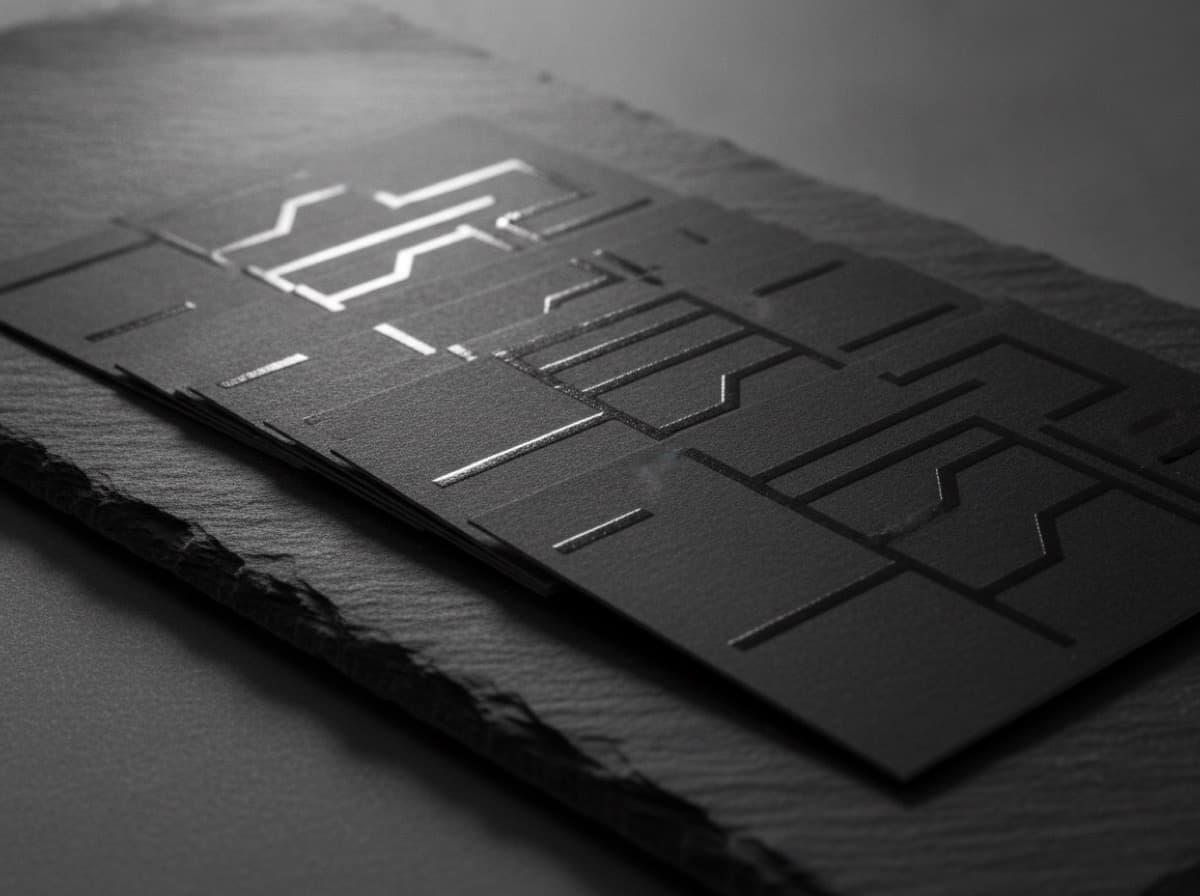
A standard business card printed on 16pt matte or glossy cardstock is respectable. A business card with UV spot coating on your logo, blind embossing on your initials, and soft-touch matte lamination on the background is something people hold for a moment — they touch it, turn it, notice it. Special finishes transform a card from information delivery into a brand experience.
The Major Special Finishes
UV Spot Coating (UV Spot)
UV spot coating applies a clear, high-gloss coating to specific areas of your card — usually your logo, name, or a design element — leaving the rest of the card with a contrasting matte finish. The result: your highlighted elements gleam, creating a visual and tactile contrast that draws the eye.
How it works: A UV-reactive liquid polymer is applied only to the designated area, then instantly cured under UV light. The result is a hard, high-gloss surface that's slightly raised and catches the light.
Best for:
- Logo highlight (the most common use)
- Your name
- A geometric pattern or texture element
- A photo or illustration that benefits from vibrancy enhancement
Design requirement: You need to provide a separate "spot" file — either a die-cut path or a grayscale knockout showing exactly where the UV coating should go. Work in layers: base card layer + spot coating layer.
Pro tips:
- UV spot on a matte-laminate background creates maximum contrast (matte vs. glossy)
- UV spot on a glossy background creates a subtle texture shift (gloss vs. ultra-gloss) — more subtle but still tactile
- UV spot on dark backgrounds (black, navy) creates dramatic highlight
- Avoid UV spot on very fine detail (hairlines under 1pt may not hold)
- QR codes and UV spot: avoid spotting over a QR code — it can interfere with scanning
Foil Stamping (Hot Foil)
Foil stamping transfers a metallic foil onto the card surface using heat and pressure — creating genuinely metallic elements that no ink can replicate. Gold, silver, rose gold, copper, holographic, and specialty foil options create premium effects.
Colors available:
- Gold foil — most requested; classic, luxury, warm
- Silver foil — modern, cool, professional
- Rose gold foil — bridal, beauty, fashion
- Copper foil — warm metallic, artisan
- Holographic foil — multicolor iridescent, modern
- Black foil — subtle luxury on dark or light backgrounds
- Custom Pantone metallic foils (at premium)
Design requirement: Foil areas are typically provided as solid fills in a separate layer or file. The foil die exactly matches your provided artwork. Very fine detail (lines under 1pt) may drop out.
Best for:
- Logo and monogram
- Your name
- Borders and frames
- Stars, laurels, and decorative elements
- "Gold standard" professional categories (attorneys, executives, luxury brand)
Gold foil on black (or navy) cardstock is the most consistently impressive combination — the deep background makes the gold luminous.
Embossing and Debossing
Embossing raises elements above the card surface; debossing presses elements below the surface. Both are created by pressing the card between a male and female die under high pressure.
Embossing: Raised texture — your logo or design element pops off the surface. Can be "blind" (no ink or foil underneath — just the raised shape) or combined with foil.
Debossing: Sunken texture — your element is pressed into the card. Creates a more subtle, architectural feel than embossing. Popular for minimalist luxury cards.
Blind emboss/deboss: No color at all — just the shape and texture. The most understated finish; works best on thick stock (32pt+) with a single, bold element.
Design requirement: Provide the die-cut path as a clean vector, with minimum element size (usually 1/16") because fine detail is lost in die-pressing.
Best for:
- Monogram (letterpress/blind emboss)
- Simple logo marks (geometric shapes, initials)
- Card borders and edge frames
- Minimalist luxury cards where the form itself is the statement
Soft-Touch (Velvet) Lamination
Soft-touch lamination is a matte laminate film that gives the entire card surface a velvety, silky feel — like the cover of a premium book or the back of a high-end phone case.
Tactile impact: Immediately noticeable; when someone picks up a soft-touch card, they instinctively rub it. The texture alone communicates premium quality before they read a word.
Best combined with: UV spot coating — the contrast between the velvety matte surface and the glossy spot coating is the most popular premium business card finish combination.
Color effect: Soft-touch slightly dulls colors (like all matte laminates) but adds a sophisticated, desaturated feel. Very dark colors (black, navy, dark green) look especially rich under soft-touch.
Not compatible with: Post-printing writing. The laminate surface repels most pens. If you need to write on your cards, choose uncoated or matte without laminate.
Letterpress
Letterpress printing physically presses the type or design into the card, creating an indent visible and tactile on both sides. Originally the dominant printing technology, now a specialty premium finish.
Best for: Minimalist cards — typically white or cream stock with 1-2 color inks. The indent is the feature.
Not for: Full-color photography or complex gradient work. Letterpress is for typographic and simple graphic elements.
Edge Painting
The edges of a thick card stock are painted with a single color (often gold, black, red, or custom colors). The painted edge is invisible when the card lies flat but visible when held — an unexpected luxury detail.
Best for: Thick cardstocks (32pt cotton or 32pt duplex) Colors: Solid color; holographic and multi-color edge available at premium
Combining Finishes
The most impactful combinations:
- Soft-touch matte + UV spot on logo: Premium-accessible combination that punches well above its price point
- Foil stamping + blind emboss: Logo in gold foil with the shape also embossed beneath — maximum tactility
- Soft-touch + edge painting: Velvety surface with a surprise pop of color at the edge — a favorite of luxury real estate and finance professionals
- Letterpress on cotton stock + foil: The definitively premium business card — cotton stock, pressed type, and gold foil
Designing for Special Finishes
Layer separation: Always design with special finish layers separated. In Illustrator or InDesign, put your UV spot / foil / emboss elements on a dedicated, clearly named layer. Use a spot color (typically named "die cut," "UV spot," "foil") to mark these elements.
Minimum element size: UV and foil: 1pt minimum strokes; emboss: 1/16" minimum element size. Fine hairlines and thin serifs can drop out.
Test with intent: Consider how finishes appear in different lighting. UV spot that's invisible under fluorescent office light dramatically reveals under raking side light or sunlight. Test your card under multiple conditions.
Quantity: Special finishes often require setup fees that make them less economical at very low quantities. 250+ cards typically offers the best per-unit economics for specialty finishes.
Get 10% off your first order
Join our list for practical printing guides, new finish ideas, and a welcome coupon for your first order.
No spam. Unsubscribe anytime.
Ready to put these tips into print?
Order Business CardsNot sure which option fits? Ask Pro Card Crafters