Foil-Stamped Business Cards: Colors, Cost, and Design Tips
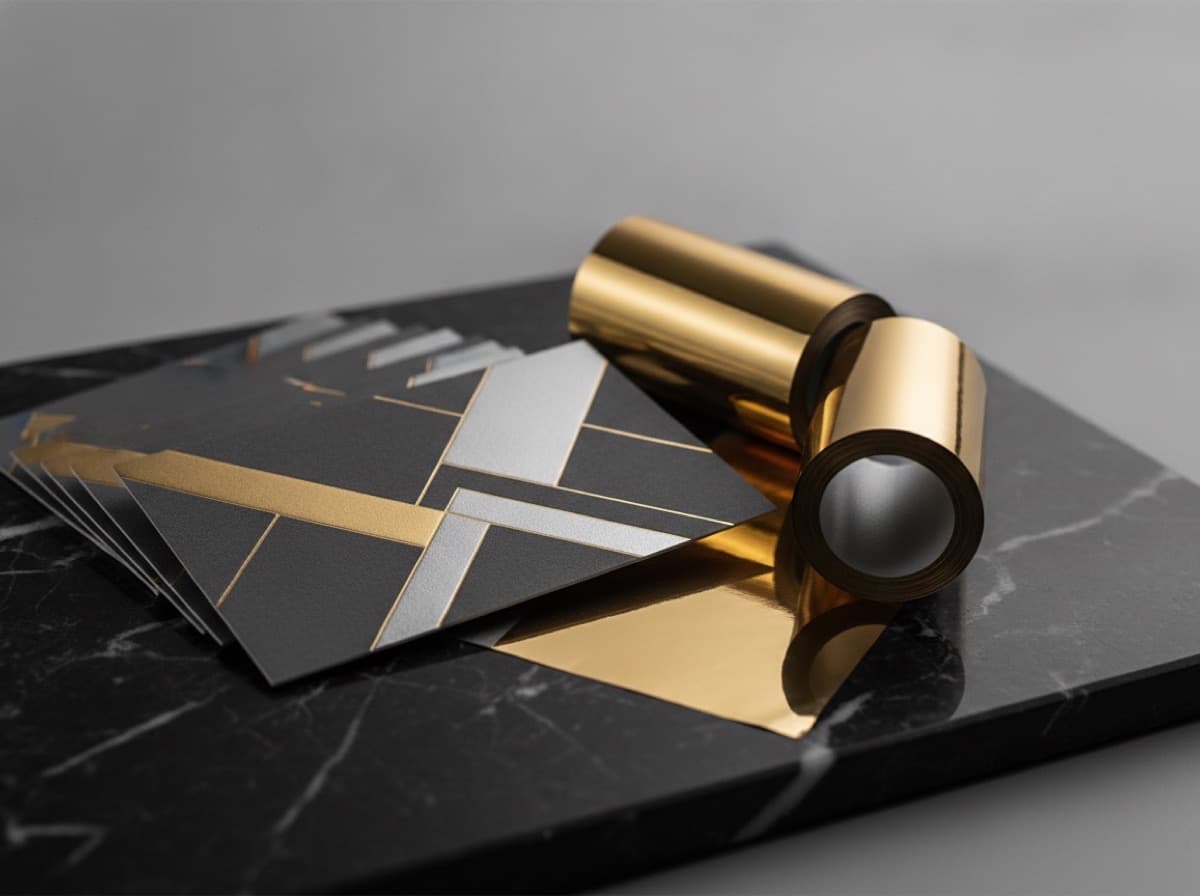
Foil-stamped business cards use heat and pressure to press a thin metallic or pigmented film into the paper, leaving a bright, reflective mark that ordinary ink cannot match. If you are weighing gold foil business cards or another metallic accent for a premium card, the short answer is that foil is one of the highest-impact finishes you can add: it reads as luxury at a glance, feels slightly recessed under a fingertip, and works best when used sparingly on a logo or name. This guide walks through the foil colors available, what drives cost, and the design rules that keep a foil card looking sharp instead of muddy.
What are foil-stamped business cards?
Foil stamping (also called hot foil stamping) is a specialty finishing process. A custom metal die is engraved with your artwork, heated, and pressed against a roll of foil film that sits on top of the card. The heat and pressure release the foil's color layer onto the paper only where the die makes contact. The result is a crisp, opaque area of metallic or matte color that sits flush with or slightly below the surface.
Unlike printed metallic ink, real foil actually reflects light, so a gold or silver mark shifts and shines as the card is tilted. That optical quality is why foil is a staple of luxury business cards and why it pairs so well with dark, uncoated, or textured stocks that make the shine pop.
A few characteristics set foil apart from other finishes:
- It is a solid color area, not a gradient or photo. Foil lays down one flat tone per die.
- It has no ink of its own to align with, so foil is often used on top of an unprinted stock or as a standalone element.
- It leaves a subtle tactile impression because the die presses into the paper.
What foil colors are available?
Most print shops stock a broad palette of foil films, and the selection is wider than many buyers expect. The common families are:
- Metallics: gold (in several warmths, from bright to antique), silver, copper, rose gold, and bronze. These are the most requested for a reason — they carry the strongest "premium" signal.
- Gloss pigment foils: solid colors like black, white, red, and navy that have a lacquered shine but no metallic sparkle.
- Matte pigment foils: the same solid colors with a flat, sophisticated finish.
- Holographic and specialty: rainbow, prismatic, and pattern foils for playful or creative brands.
Here is a quick way to think about matching foil to intent:
| Foil type | Feel | Works well for | |-----------|------|----------------| | Gold / rose gold | Warm, premium | Luxury, beauty, hospitality | | Silver / bronze | Modern, industrial | Tech, architecture, consulting | | Black gloss | Sleek, understated | Minimalist and monochrome brands | | White matte | Clean, subtle | Cards on dark or colored stock | | Holographic | Bold, eye-catching | Creative and event brands |
One important limit: foil colors are chosen from a physical film library, so they do not map one-to-one to a screen color or a Pantone number. If exact brand-color matching matters more than shine, printed ink or a spot color may serve you better than foil. When you want both a metallic accent and a precise brand color elsewhere on the card, it is common to combine foil with standard printing.
How much do foil-stamped business cards cost?
Foil stamping costs more than standard printing, and the reason is the tooling. Every foil design needs a custom die, which is a one-time setup expense. Because the die cost is fixed, the per-card price of foil drops as your quantity rises — small runs carry the full tooling cost across fewer cards, while larger runs spread it out.
Several factors move the price:
- Number of foil colors. Each additional foil color usually needs its own die and its own pass through the machine, so a two-color foil card costs more than a single accent.
- Coverage area. Larger foil areas use more film and more pressure. A small logo is far more economical than a fully foiled background.
- Stock and other finishes. Thick cotton stock, soft-touch lamination, edge painting, or combining foil with letterpress all add cost.
- Sides. Foil on both the front and back roughly doubles the finishing work.
Because foil is a made-to-order specialty process, expect a longer turnaround than a plain digital card. Exact pricing and lead time depend on the shop, your specs, and your quantity, so treat any single number you see online as a starting point rather than a promise. For a broader look at how foil stacks up against other upgrades, our overview of premium finishes compares the tradeoffs side by side.
Design tips for foil business cards
Foil rewards restraint. The most common mistake is treating it like ink and covering the card in metallic — which flattens the effect and inflates the cost. Use these principles instead.
Keep foil elements bold and simple
Foil needs enough weight to hold a clean edge. Very thin lines, tiny serif details, and small point sizes can fill in or break up under the die's pressure. As a rule of thumb, keep foiled text at a comfortable reading size and keep strokes reasonably thick. Logos with fine hairlines may need a slightly weightier version for the foil layer.
Let contrast do the work
Foil shines brightest against a background that sets it off. Gold and copper look extraordinary on black, navy, charcoal, or deep jewel tones. Silver and white foil stand out on colored or dark stocks. On a bright white card, subtle matte foils can read as elegant, but high-shine metallics may look washed out. If your card is part of a networking kit, the same contrast principles in our guide to networking card design apply directly to where you place the foil.
Pair foil with the right stock
Uncoated, textured, and cotton stocks make foil feel richer because the shine contrasts against a matte surface. Foil also sits beautifully on soft-touch laminate. Highly glossy coatings, on the other hand, compete with the foil's reflectivity, so the accent can get lost. Your paper choice matters as much as the foil color — our paper and coating comparison covers which stocks flatter specialty finishes.
Set up artwork as a separate layer
Foil artwork is prepared as a distinct spot layer, typically as 100% solid vector shapes with no gradients, screens, or transparencies. Convert foiled text to outlines, and clearly label the foil layer so the shop knows exactly what to turn into a die. Do not send a raster (photo) version of a foil element — foil needs clean vector edges.
When should you choose foil over other finishes?
Foil is the right call when you want unmistakable shine and a premium first impression, especially for logos, monograms, and names. It excels where reflectivity is the point.
Reach for a different finish when your goal is something foil cannot do:
- If you want a raised, glass-like clear accent rather than color, look at spot UV, which adds shine and texture without a metallic tone.
- If you want a deep tactile impression with heritage character, letterpress presses your design into thick stock.
- If you want a purely dimensional, monochrome effect, compare embossing vs debossing, which reshapes the paper without adding color.
Many premium cards combine methods — foil for the logo, letterpress for the type, edge painting on the sides. Combining finishes multiplies both the wow factor and the cost, so decide which single element should be the hero and let the rest support it.
Bottom line
Foil-stamped business cards deliver a level of shine and perceived value that printed ink cannot replicate, with gold, silver, copper, and dozens of pigment and specialty colors to choose from. Cost is driven by the custom die, the number of foil colors, and coverage, so a single bold accent on a dark, textured stock gives you the strongest impact for the money. Keep foil elements simple, high-contrast, and set up as clean vector artwork, and your card will read as premium the moment someone picks it up.
Frequently Asked Questions
Can I get an exact Pantone match with foil?
Not precisely. Foil colors come from a physical library of films, not from a mixed ink, so they do not map exactly to a Pantone or screen color. If you need shine, pick the closest foil; if you need an exact brand color, use printed ink or spot color for that element and reserve foil for accents where the metallic look matters more than the exact hue.
Does foil work on both sides of a card?
Yes, foil can be applied to the front, the back, or both. Because each foiled side is a separate finishing pass, double-sided foil adds cost and time. Many brands foil only the front logo and use standard printing on the back to balance impact against budget.
What stock works best for foil business cards?
Uncoated, textured, cotton, and soft-touch stocks make foil look richest because the shine contrasts against a matte surface. Dark and colored stocks amplify metallic foils especially well. Very glossy coatings tend to compete with the foil's reflectivity, so the accent can get lost.
Is foil stamping the same as metallic ink printing?
No. Metallic ink is a printed pigment that simulates a sheen, while foil stamping presses a real metallic film into the paper using a heated die. Foil is far more reflective, has a subtle tactile impression, and holds a crisper edge, which is why it reads as more premium.
How should I set up my file for a foil element?
Prepare the foil artwork as a separate spot layer using 100% solid vector shapes — no gradients, screens, or photos. Convert any foiled text to outlines, keep strokes bold enough to hold an edge, and clearly label the layer so the shop can turn it into a die. A clean vector file is essential for sharp foil.
Why does a small foil run cost so much per card?
Every foil design requires a one-time custom die, and that fixed tooling cost is spread across your order. On a small run, few cards share the die cost, so the per-card price is high; as quantity rises, the same tooling cost is divided among more cards and the unit price drops significantly.
Get 10% off your first order
Join our list for practical printing guides, new finish ideas, and a welcome coupon for your first order.
No spam. Unsubscribe anytime.
Ready to start your print order?
Browse Printing ProductsNot sure which option fits? Ask Pro Card Crafters